Asia Pacific’s rapidly aging population is creating economic opportunities while placing growing pressure on healthcare systems, prompting calls for greater investment in disease prevention and healthy longevity.
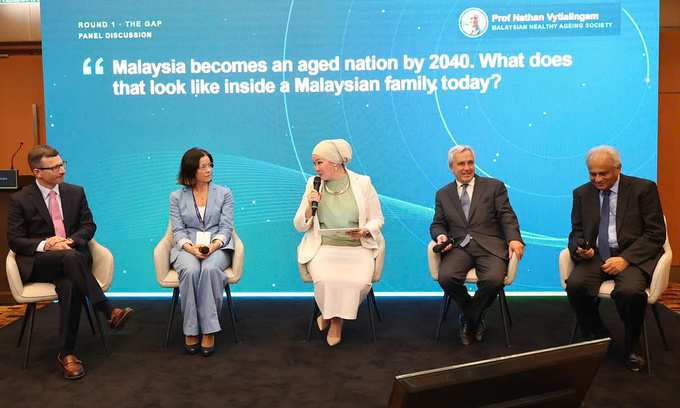
The challenges were discussed at the Silver Economy Forum 2026, held at the Kuala Lumpur Convention Centre on Nov. 11-12. Organized by the Global Coalition on Aging (GCOA) and the Malaysian Healthy Ageing Society (MHAS), the event brought together policymakers, business representatives and healthcare experts to discuss how countries can support longer, healthier and more productive lives.
|
The Silver Economy Forum 2026 in Kuala Lumpur. Photo by Thuy Duong |
Nearly 1.3 billion people in Asia Pacific, or about a quarter of the region’s population, are expected to be aged 60 or older by 2050.
Globally, people aged 60 and above account for an estimated US$19 trillion in annual consumer spending, projected to reach US$34 trillion by 2036. However, realizing this economic potential will depend partly on whether older people can remain healthy and economically active.
Research by the Economic Research Institute for ASEAN and East Asia (ERIA) in Vietnam and the Philippines found that 30-50% of older people were still working. Among those who had stopped, about half cited health problems.
Dr. Liem Nguyen, ERIA’s program manager for social welfare, said discussions about the silver economy should go beyond older people’s purchasing power.
“It is not just about savings and how older people are spending money, but it is about employment for older people,” Nguyen said.
He identified health conditions, financial insecurity and gaps in social protection as barriers to older adults remaining in the workforce.
Closing the gap between longer lives and healthier lives
Against this backdrop, Bayer hosted a media discussion titled “Longer Lives, Better Years: Reimagining Healthcare for Asia Pacific” in Kuala Lumpur on Nov. 11, focusing on chronic diseases and the importance of early intervention.
“Asia Pacific is going through one of the fastest demographic shifts in the world. We need to make sure that longer lives are also healthier lives,” said Simon Rosof, head of Bayer Pharmaceuticals’ Asia Pacific region.
“That means finding disease earlier, treating it effectively, and recognizing prevention as an investment in people, health systems, and economies. The time to act is now.”
The challenge is reflected in the widening gap between life expectancy and healthy life expectancy.
A Global Burden of Disease study published in The Lancet Public Health in July 2026 found that people worldwide spend an average of 10.7 years in poor health, up from 8.8 years in 1990. The gap widened in 203 of the 204 countries and territories studied.
Across Asia Pacific, people reaching 60 can expect to spend nearly five of their remaining years living with disease or disability, according to figures presented at the forum.
“Most people think aging is about living longer. The real challenge is staying healthier for longer,” said Dr. Maria Borentain, global vice president and head of cardiovascular and renal clinical development at Bayer.
She stressed the importance of early diagnosis and appropriate treatment in helping older people maintain their independence and quality of life.
Non-communicable diseases account for nearly 90% of deaths in the World Health Organization’s Western Pacific Region, according to figures cited at the event. Risk factors including high blood pressure, high cholesterol and elevated blood sugar can be detected through routine health checks.
Malaysia’s 2023 National Health and Morbidity Survey found that about one in three adults had high cholesterol, with more than half unaware of their condition.
Bayer encouraged adults over 40 to monitor their blood pressure, cholesterol and blood sugar, and seek medical advice when necessary.
 |
|
Simon Rosof (L), head of Bayer Pharmaceuticals’ Asia Pacific region, and Melissa Gong Mitchell (R), executive director of the Global Coalition on Aging, discuss opportunities for healthy longevity at the Silver Economy Forum 2026. Photo by Hoang Minh |
Tackling the growing burden of stroke
Stroke was highlighted as a major health concern as populations age.
Asia accounted for 61% of global stroke deaths in 2020, or approximately 4.1 million deaths. The annual toll is projected to reach 6.6 million by 2050, representing 69% of the global total, according to figures cited by Bayer.
High blood pressure is a major stroke risk factor, while diabetes can further increase the risk. Preventing another stroke is also a key part of long-term care for survivors.
Bayer cited research indicating that 10-16% of stroke survivors experience another stroke within a year.
Borentain highlighted an international clinical trial published in The New England Journal of Medicine in April 2026. It involved more than 12,000 patients across 37 countries, including over 3,500 participants from Asia Pacific, and examined a new approach to preventing recurrent stroke.
Beyond its impact on patients, stroke carries substantial economic costs. Its global economic burden exceeds US$890 billion annually and could reach US$2.31 trillion by 2050, according to figures presented at the forum.
In Malaysia, non-communicable diseases are estimated to cost the economy RM64.2 billion (approximately US$15.73 billion) annually, equivalent to 4.2% of GDP. Lost productivity accounts for around 80% of the burden, underscoring the economic impact of chronic diseases beyond direct healthcare spending.
For patients and families, stroke can also bring long-term care needs, financial pressure and changes to daily life.
 |
|
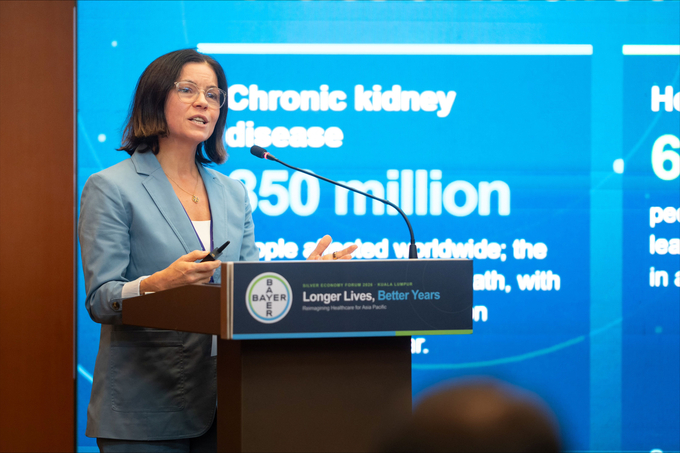
Dr. Maria Borentain discusses the importance of early diagnosis and treatment in improving health outcomes across Asia Pacific. Photo by Hoang Minh |
Prevention and innovation as shared priorities
Forum participants called for closer cooperation among governments, healthcare providers, researchers and businesses to address the challenges of population aging.
Michael Hodin, CEO of the Global Coalition on Aging, said healthy longevity should be treated as an economic priority as well as a healthcare issue.
“Longevity is the great achievement of our time, and Asia Pacific is where that story is moving fastest,” he said.
“Whether those extra years are healthy, active, and productive depends on the choices governments, industry, and communities make now.”
He urged governments to include healthy longevity in economic development strategies and strengthen policies supporting older people’s health and participation in society.
Priorities discussed at the forum included routine screening for blood pressure, cholesterol, blood sugar and kidney function from midlife, alongside timely treatment and continued follow-up care. Participants also stressed that prevention could ease pressure on healthcare systems and reduce the wider economic costs of chronic diseases.
Healthcare innovation was another focus. Bayer said it was exploring artificial intelligence to accelerate medicine development, a process that traditionally takes approximately 12-15 years. The company aims to shorten development timelines by around 30% by combining AI with scientific expertise.
Speakers cautioned that technological advances must be accompanied by stronger cooperation to improve access to prevention, diagnosis and treatment.
Prof. Nathan Vytialingam, president of the Malaysian Healthy Ageing Society, encouraged individuals and families to take a more active role in preventive healthcare.
“Living longer is a gift, and families everywhere want those years to be good ones,” he said.
“The most useful thing anyone can do this year is simple. Go for a health check, know your numbers, look after your eyes as well as your heart, and take your parents with you.”
 |
|
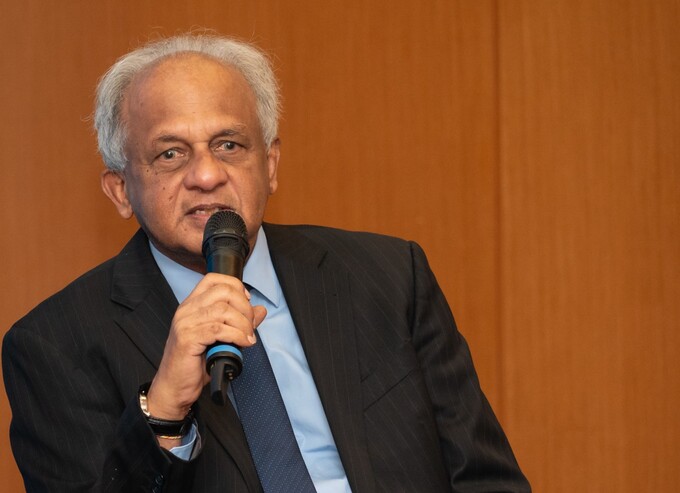
Prof. Nathan Vytialingam, president of the Malaysian Healthy Ageing Society, discusses how families and healthcare systems can prepare for population ageing. Photo by Hoang Minh |
As Asia Pacific’s population continues to age, the forum highlighted the need to ensure longer lives are accompanied by better health, greater independence and opportunities for older people to remain active in society and the economy.