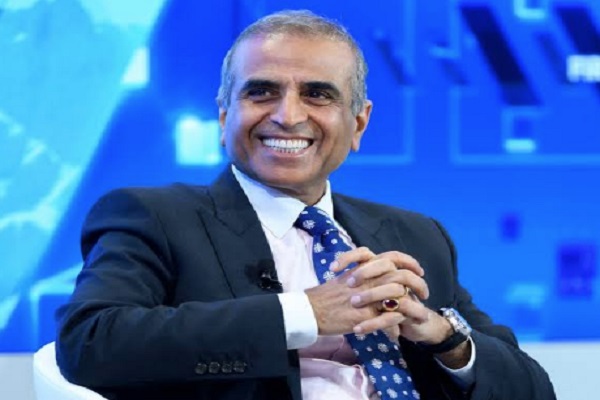
New Delhi, 14 November 2026: Bharti Enterprises Chairman Sunil Bharti Mittal has said in an important statement that it is mandatory for the 'kill switch' of the satellite communication network in India to be completely under the control of the country. That is, if necessary, the Indian government should have the right to shut down satellite internet services or limit their speed and access. At present, the government is seriously considering all security related aspects and conditions before starting satellite broadband services in the country.
In an interview given on the occasion of completion of 50 years of Bharti Enterprises, Mittal had made it clear that the 'kill switch' of internet services should not be in the hands of any other foreign organization or company. India must have complete control over its space security future. Although, while giving this statement, he did not directly name any specific company, but described the security of the country as paramount.
Kill switch is a technical system through which any satellite network can be controlled remotely or it can be shut down immediately if the need arises. These can be used at different levels; Such as controlling the services of a single user terminal, a particular sensitive geographical area or even the entire country. For reasons of security or national interest, it is very important for the country's own agencies to have the authority for such control.
-
Explained the need by giving the example of Ukraine
During the interview, Sunil Bharti Mittal had explained the need for network control by citing the example of Ukraine. He said that apart from Starlink, OneWeb is also being used in Ukraine. Earlier, Ukraine had accused Elon Musk's company SpaceX of affecting its defensive capabilities by limiting the speed of connectivity. India wants to avoid any such external uncertainty or dependence.
In the same interview, Mittale discussed about the country's telecom sector by increasing the average monthly revenue per user (ARPU) to about Rs. Emphasis has been laid on Rs 350 per month. He says that the current tariff rates are very low considering the rising costs of network expansion and huge capital restrictions. However, he did not clarify when these revised rates would be implemented.