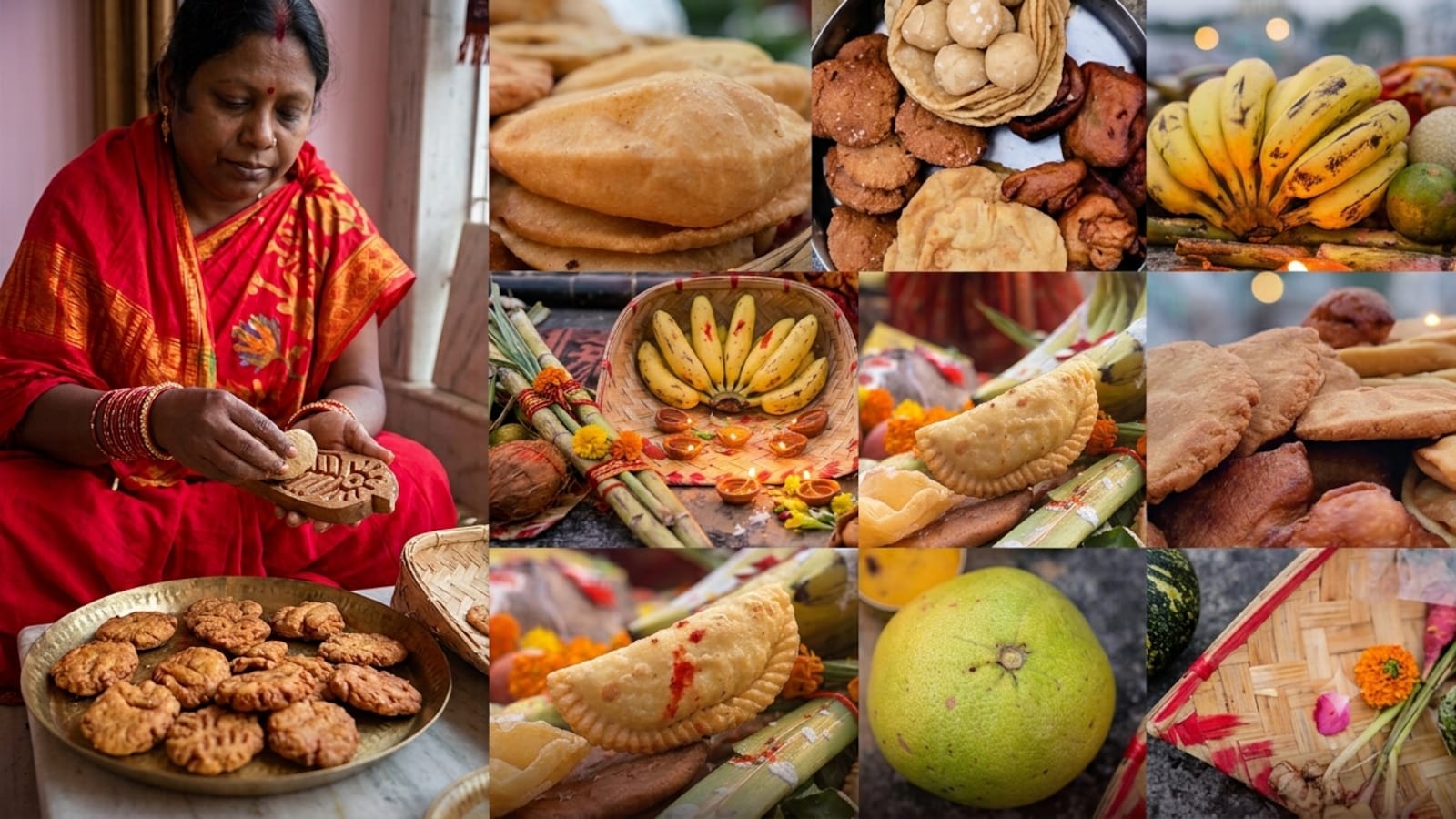
When Ajeet was asked to talk about Chhath celebrations back home in Muzaffarpur, his eyes lit up. “There is so much to share,” he said, before wondering where to start. While Chhath is a fasting festival, food plays a key role in the grand celebrations, which are bigger than even Diwali for many.
The 37-year-old UI engineer, who now works in Delhi, recalled how his grandmother introduced him to the festival when he was a young boy.
“For Chhath preparations, my dadi used everything from our own fields. She and my mother would wake up at 3 am to grind wheat at home into fresh atta for the prasad – thekua.
“We even had a banana plant at home and would ripen the bananas ourselves using natural techniques.
“Before Shaam Wala Ghatmy grandmother would wash and clean all the fruits and arrange them for the puja. A young child in the house was given the duty of guarding the fruits so that no person or animal could touch the offerings.
“The fruits were then arranged in a bamboo daura (basket), and we would take them to the ghat. The young people would carry these baskets on their heads while the women followed behind, singing traditional Chhath songs.
“In the evening, we would follow the ritual of 'kosi bharna'. An earthen elephant is placed, and five sticks of sugarcane are tied over it like a tent. We would arrange small earthen plates around the elephant, fill them with fresh fruits and place some diyas.
“We would then enjoy ourselves, singing traditional Chhath songs with friends, neighbors and relatives,” he added, showing a picture from the 'kosi bharna' ritual in his phone's gallery.
'Kosi Bharna' Setup showing earthen elephant, sugarcane tied together, diyas, and fruit offerings. Photo Credit: Ajeet Kumar
When asked if the celebrations were greater during his childhood, he shook his head.
“Now the celebrations are even grander. I believe this is the only festival that makes zero to minimal use of Chinese items. We still use traditional items – bamboo, sugarcane, earthen elephants and plates – that have been used for years.”
The four days of Chhath are Nahay Khay, Kharna, Sandhya Arghya and the final day, Usha Arghya.
For Ravisha Poddar, who also hails from Muzaffarpur, the second day, Kharna, always brings back a classic family tale from her childhood.
“Back when my mamu and I were young, he was very particular about his gym diet and insisted that he needed his daily protein intake,” the 27-year-old communications professional shared.
“So, on the day of Kharna, he and I went out to eat eggs. Ideally, you are not supposed to eat eggs or non-vegetarian food during the four days of Chhath, but we did.
“Later in the day, only the two of us got food poisoning. Now, it could have been regular food poisoning, but because it happened during Chhath, it has become a classic family tale that we narrate every year on the evening of Kharna. Everybody has heard it, yet every year we repeat how we got punished and laugh about it.”
Undeniably, what makes Chhath special for Ravisha is something everyone looks forward to – spending quality time with family, just like in the good old childhood days.
“Everyone has grown up and is now living in different cities. This is the only time of the year when we all get together in the same house. It's a great time to share stories, laugh, catch up on gossip and spend time with each other,” Ravisha shares.
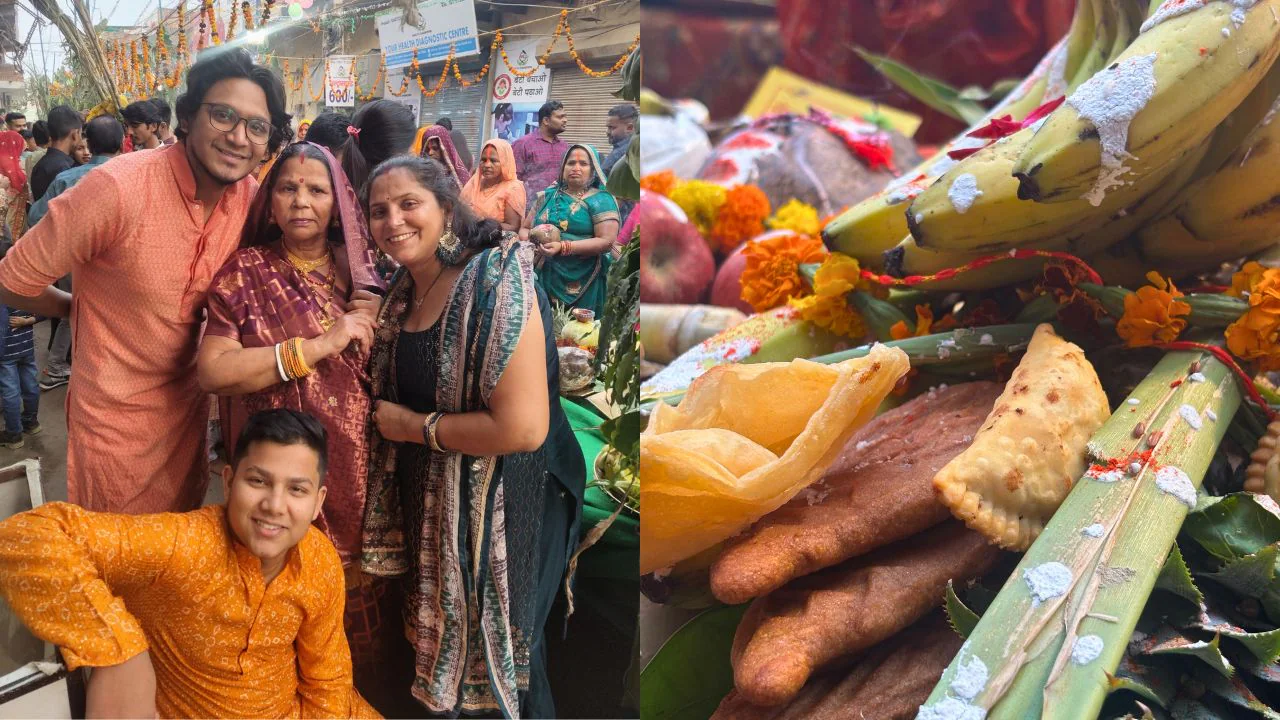
Chhath is the perfect time of the year to spend time with family. Photo Credit: Ravisha Poddar
There is another fun, food-related family activity she looks forward to every Chhath.
“On the final day, after the puja, the entire family sits together in a circle. The prasad platter, filled with seasonal fruits, is placed in the centre, and everyone picks their favorite fruit. For me, it's pineapple; for my mamu, it's gargar lemon. Someone else will pick sugarcane. Then everyone makes their own fruit plate, and we enjoy it together. It's a fun family activity, and it happens only once a year, during Chhath.”
The preparations for this grand and important festival are no easy task. In almost every story I heard, people spoke fondly about their nannies and dadis. Women are the heart and soul of Chhath – from observing a 36-hour fast without food or water to overseeing every preparation, from cooking to cleaning, down to the minutest detail.
“Cooking the prasad has to be done very carefully,” explains Anwesha Singh, a journalist whose hometown is Patna. “You should always maintain cleanliness and hygiene, and all the ingredients used should be fresh. The kitchen should be clean, too. So, hygiene is a very important factor in observing Chhath rituals.”
Anwesha adds that Chhath is incomplete without teamwork, and this is when neighbors and relatives come together to make everything possible.
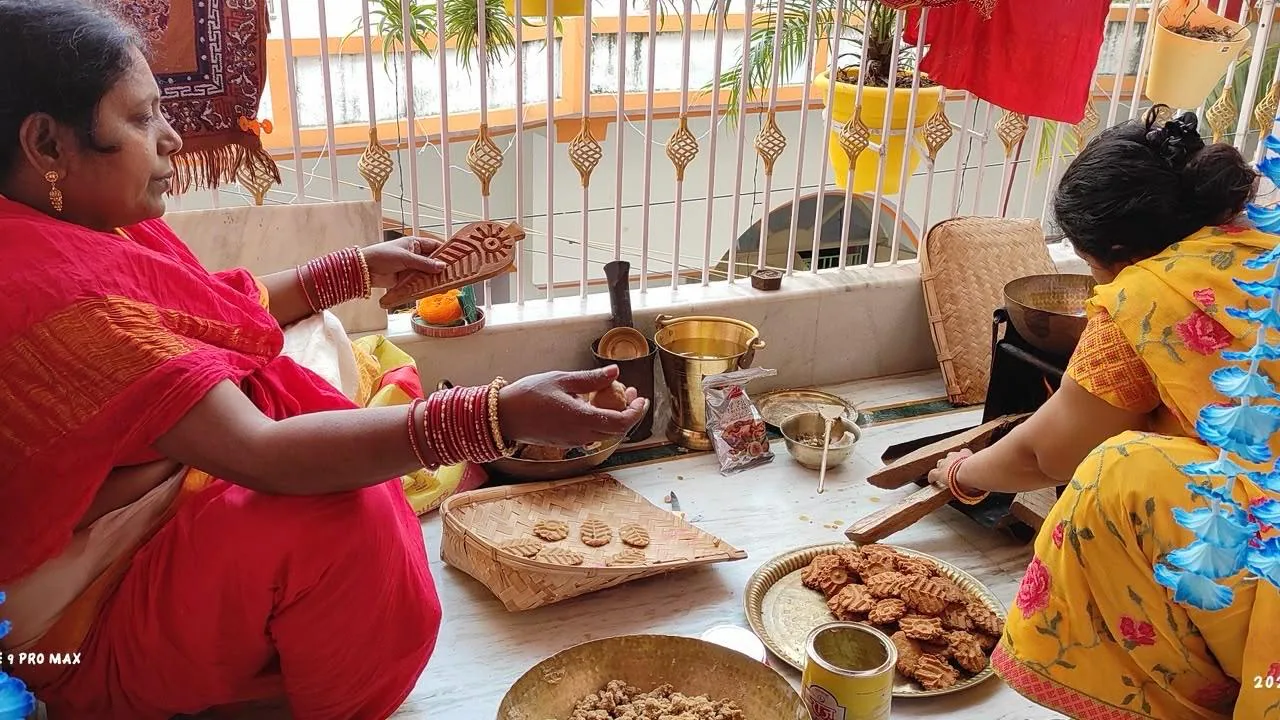
Women come together to prepare the pakwans for Chhath.Photo Credit: Anwesha Singh
“Cooking all the festive pakwans takes time and effort. It's a big puja, and if you think just mummy, papa and I can pull it off together, it's not happening. You need your family's help and your neighbours' help. The house should be clean at all times, and there is a lot of cooking to be done. The woman who is fasting for such long hours cannot possibly manage all the work alone. She takes care of the basic cooking required. for the puja, while the rest is taken care of by other women in the family. You kind of need a joint family to successfully pull off Chhath.”
For Mayank Kumar, a student living in Delhi who goes back to Lucknow every year for Chhath, the festival begins with humble satvik food and ends with delicious thekuas.
“On the first day, the person fasting is supposed to have lauki and kaddu with rice. So, the whole family gets to eat simple, no-masala food as the festivities begin. This actually makes everything that's prepared on the final day look even more delicious,” he shares.
All the delicious Chhath food memories come rushing back to him. “Mom fondly remembers our nani making big puas – the taste of which, she says, she has never experienced anywhere else. Nani would prepare the batter a day in advance and let it ferment a little. Then, in a kadhai, she would fry just one pua at a time, with all the patience in the world, cooking it slowly until it became fluffy and gooey. We still make puas every Chhath, but they always fall a little short of what our nani's tasted. like.”
On the last day of Chhath, after offering arghya to the rising sun, the 36-hour fast without food or water comes to an end, followed by a feast of delicious prasad.
“There's this tradition of making a subzi in the morning after the fast, using all the vegetables and dals that were used in the puja. The sheer variety of ingredients that go into it – water chestnut, sweet potato, root turmeric and ginger, suthni (lesser yam), chana, and a dozen more – along with simple masalas, makes the first meal not only nutritious but also something we get to enjoy just once a year, during Chhath,” Mayank shares.
And finally, who can resist the delicious thekuas?
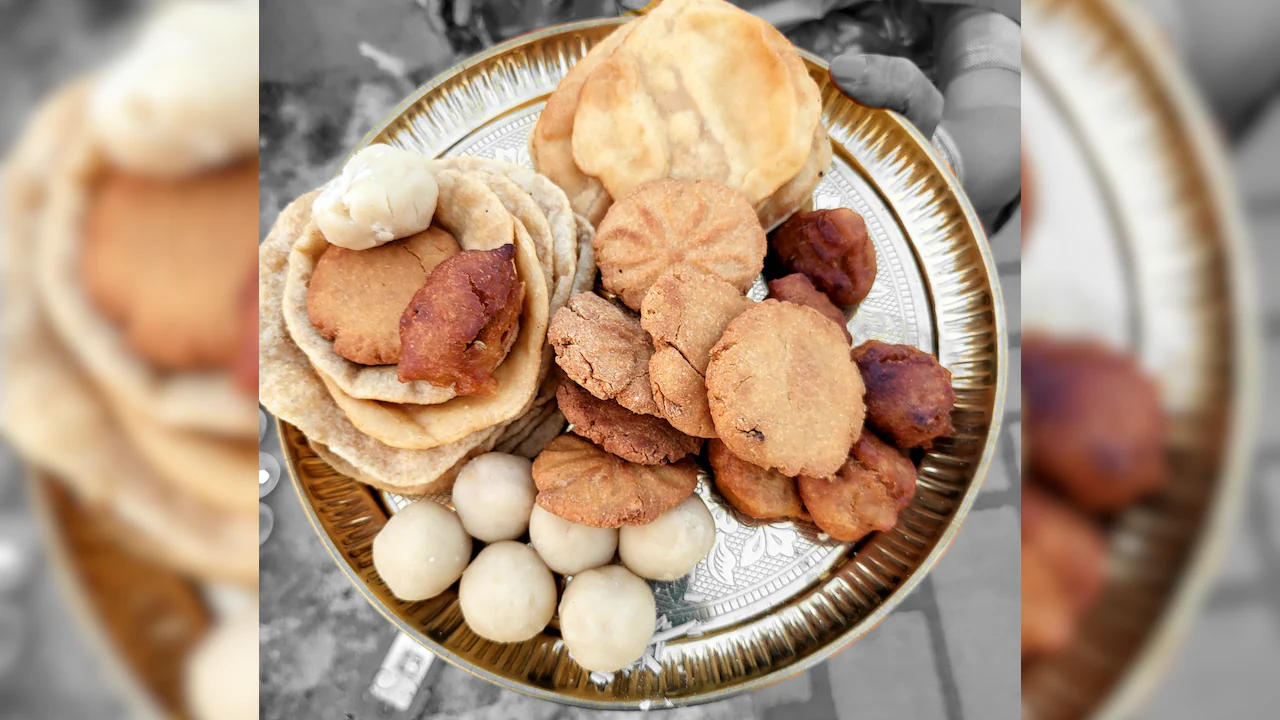
A platter full of delicious Chhath Puja prasad. Photo Credit: Mayank Kumar
“The aroma of freshly fried thekua, the caramelising sugar and the slightly golden pieces of dry coconut are made even more tempting by the fact that we're not allowed to have it until after the puja the next day. The wait makes the humble thekua taste better than any fancy ingredients ever could. I just love it,” he signs off, mentally already on the last day of Chhath, chomping on one too many thekuas.
As we celebrate another year of Chhath, it is the perfect time to spend a few wholesome days with family, run on little sleep, sing songs, help each other with a million chores, dress up, share stories, laugh together, pray, express gratitude, fast and feast – all together.
Happy Chhath Puja!