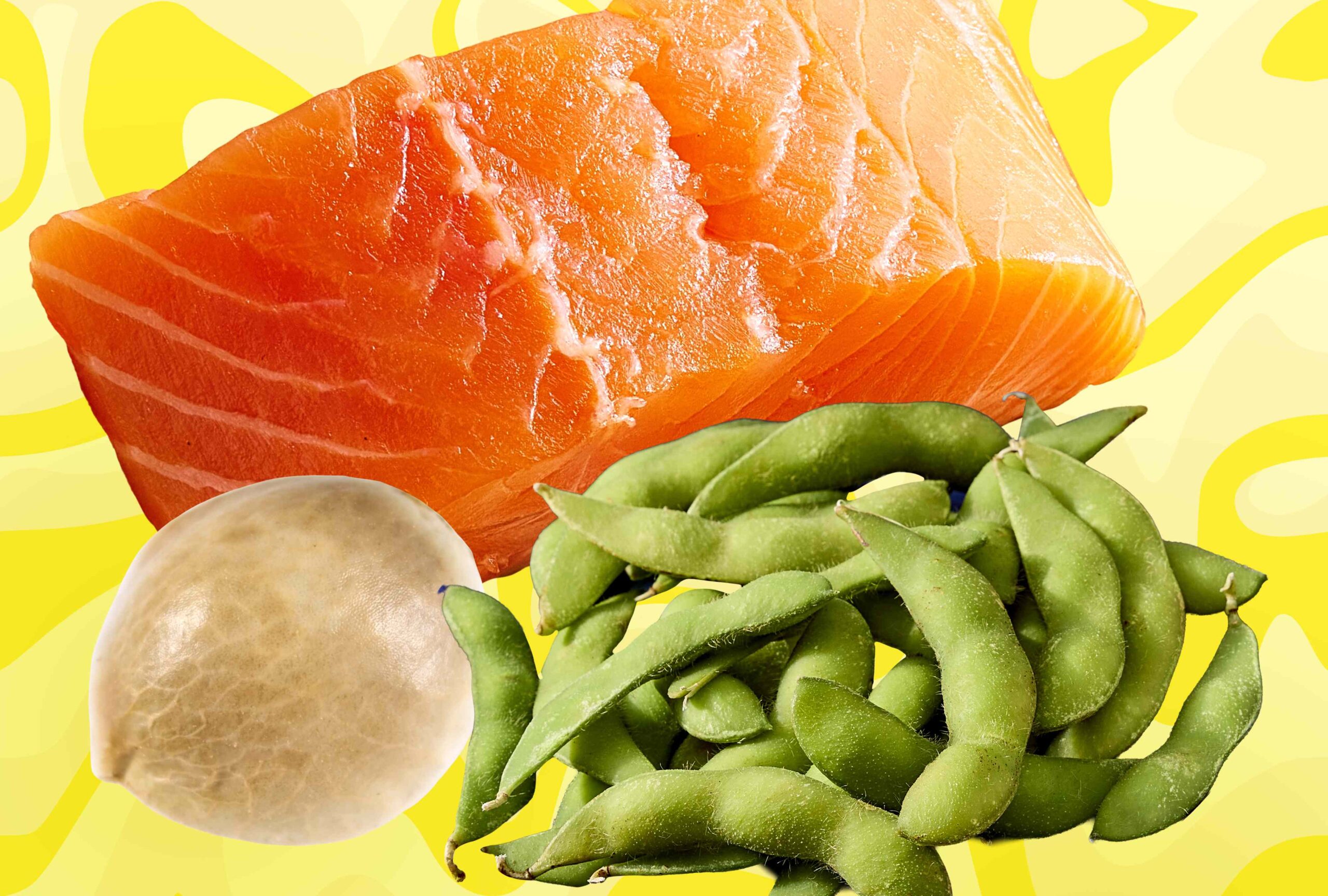
You can meet your protein goals without neglecting your heart health.
Reviewed by Dietitian Casey Wing, RD, CD
Key Points
- Some protein sources, like edamame and lentils, offer heart-healthy fiber and essential nutrients.
- Omega-3-rich proteins like salmon and sardines help reduce inflammation and support heart health.
- Hemp seeds provide plant-based protein, omega-3s and antioxidants for cardiovascular benefits.
Protein, protein and more protein! It’s everywhere nowadays—in chips, bars and drinks—but all protein isn’t the same. Certain protein sources are high in saturated fat and sodium, which can worsen cholesterol and blood pressure over time. Other protein sources can do the opposite. Eggs can certainly be a good choice, with about 6 grams of protein per egg, but there are many other foods that can do the job as well. Loaded with heart-healthy fats and other essential nutrients, these other sources are the best of both worlds, providing quality protein and heart-health benefits. Here are five heart-healthy foods that contain more protein than an egg.
1. Edamame
Edamame is a legume, but it stands out from others in its category. Why? It’s much higher in protein, with 9 grams per half-cup shelled edamame. Plus, “edamame is one of the few plant foods that provides all nine essential amino acids, making it a complete protein,” says Courtney Smith, M.S., RDN, CLC, CPT.
Besides being high in protein, legumes like edamame are also great for your heart. “Legumes support heart health because they contain fiber, phytosterols and stanols, which can help lower cholesterol levels,” says Madeline Blasingame, M.S., RDN, LD. Research shows that eating more legumes and soy foods—like edamame—is linked with lower rates of cardiovascular disease. “Edamame is also low in saturated fat and rich in potassium, magnesium and fiber, nutrients that support healthy blood pressure,” says Smith. A 2026 review backs this up: It found that eating more legumes and soy foods is a worthwhile intervention for preventing high blood pressure.
We also love that edamame satisfies the need for convenience. “Frozen edamame in the pods can be microwaved for a quick high-protein snack, and shelled edamame can be added to salads as well as rice or noodle bowls,” says Annie Lu, RD, LDN.
2. Hemp Seeds
A 3-tablespoon serving of hemp seeds has about 9 grams of plant protein—a few more grams than an egg. “Not only are they rich in protein, but they also have omega-3 fat, which helps reduce the risk of heart disease and other chronic conditions,” says Theresa DeLorenzo, D.C.N.RD. They’re one of the few plant sources of these anti-inflammatory fatty acids. Besides healthy fats, hemp seeds also have tocopherols, phytosterols and polyphenols—antioxidants that provide added benefits for heart health.
Hemp seeds are a heart-healthy protein that’s easy to add to meals, snacks and even desserts. “Hemp seeds can act as a mild nutty topping in dishes like salads, grain bowls, yogurt bowls and oatmeal, but can just as easily be blended into your favorite smoothie recipe,” says Patricia Kolesa Vivar, M.S., RDN.
3. Lentils
Lentils, another legume, pack 9 grams of protein and almost 8 grams of fiber per half-cup. “Lentils are a great source of fiber, which binds to cholesterol in the digestive tract and eliminates it from the body, lowering total and LDL [“bad”] cholesterol levels,” says Kolesa Vivar. They’re also rich in antioxidants and other anti-inflammatory plant compounds that promote heart health and blood sugar regulation.
For such an affordable food, they’re impressively nutrient-dense and versatile. “Precooked lentils can be added to dishes with ground beef or turkey for a fiber boost, and they are great in soups as well,” says Lu. For example, Kolesa Vivar suggests combining them with ground meat in recipes like meatballs, burgers and Bolognese.
4. Salmon
Salmon’s protein content rivals that of meats like beef and chicken—about 21 grams per 3-ounce serving—but it provides more heart-healthy benefits. It’s one of the best sources of omega-3s, the heart-healthy fats that fight inflammation and help prevent cardiovascular disease. “The American Heart Association recommends eating fish at least twice a week, and salmon is a great way to meet that goal,” says Smith.
Salmon makes for a satisfying meal that’s remarkably easy and quick to prepare. Roast a salmon fillet on a sheet pan with veggies, or toss it straight from the freezer into the air fryer for a heart-healthy, high-protein weeknight meal. And don’t forget about canned salmon. “Canned salmon is a budget-friendly option that works well in salmon patties or mixed with plain Greek yogurt, lemon and dill for a quick heart-healthy salmon salad,” says Smith.
5. Sardines
Tinned fish is having a moment, and dietitians are all for it! In addition to canned salmon, DeLorenzo recommends sardines, which provide about 23 grams of protein per 3.75-ounce can. “They are rich not only in protein but [also in] omega-3 fat and calcium,” she says. “The omega-3s [can] help to increase good cholesterol levels and decrease bad cholesterol, reducing risk for cardiovascular disease.” Sardines also contain nutrients like potassium, magnesium, zinc, iron, taurine and arginine. According to a 2023 study, these nutrients work together to fight inflammation and oxidative stress and ultimately improve cardiovascular health. So it’s not just the omega-3s alone—it’s the synergy among all these nutrients that makes sardines worth adding to your diet.
At a loss for how to start eating sardines? “They work great on a lunch or snack plate with crackers, veggies and olives,” says DeLorenzo. You can also cook them in tomato sauce and enjoy over crispy toast for a heart-healthy lunch.
Our Expert Take
Some protein sources can harm your heart health when consumed in excess, while others boast heart-health benefits. Dietitians’ favorite heart-healthy protein foods include edamame, hemp seeds, lentils, salmon and sardines. These foods offer at least 9 grams of protein per serving along with heart-healthy nutrients like fiber, antioxidants and omega-3s. Leaning more on these protein sources can help keep your heart healthy and your stomach satisfied.