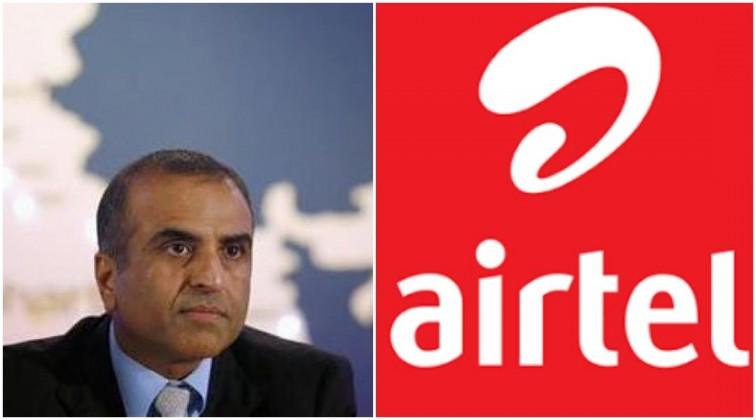
Bharti Airtel Founder and Chairman Sunil Bharti Mittal has urged India to retain control over the shutdown mechanism, commonly known as the ‘kill switch’, for satellite communication networks operating within the country, citing national security and technological sovereignty concerns.
In an interview with PTI marking 50 years of Bharti Enterprises, Mittal said India should not allow the authority to disable critical satellite communication services to remain with foreign operators or entities outside the country.
“The kill switch, as we call it, should not be sitting somewhere else,” Mittal said, stressing that India must have control over its own space infrastructure and communications.
A satellite internet kill switch refers to the ability to suspend, restrict or disable connectivity for individual users, specific geographical regions or an entire network. The mechanism can become particularly important during military conflicts, security emergencies and other sensitive situations.
Mittal argued that India must establish domestic security safeguards, including secure ground infrastructure, communication monitoring and routing arrangements. He also cautioned against depending on a single company or country for critical satellite connectivity.
“Importantly, it may need to have different players. You can’t just depend on one country or one company,” he said.
Ukraine conflict highlights satellite internet security concerns
Highlighting the growing importance of satellite communication in modern warfare, Mittal referred to the ongoing conflict in Ukraine and the country’s dependence on satellite-based connectivity.
He pointed out that Ukraine uses both Starlink and Eutelsat OneWeb for satellite communication.
His remarks come amid concerns over the role of privately controlled satellite networks in military operations. Ukraine had previously accused Elon Musk’s SpaceX of restricting Starlink connectivity, alleging that the move affected its military operations and disrupted the functioning of certain drones.
Mittal said modern warfare increasingly depends on space-based infrastructure, including satellite communications used to manage drones, guided missiles and cyber operations.
He maintained that India must establish appropriate safeguards to protect its strategic interests and ensure that critical communication infrastructure remains under its control.
OneWeb ready for India launch, awaiting government clearance
Mittal also spoke about Eutelsat OneWeb’s satellite communication capabilities and its readiness to expand services in India.
He said OneWeb’s services were technically available in the country, with government agencies occasionally using its satellite terminals for emergency requirements.
Citing an example, Mittal mentioned economic adviser Sanjeev Sanyal carrying a satellite terminal during a boat journey to Oman, allowing him to remain connected throughout the trip.
He said OneWeb had fulfilled the government’s requirements and was awaiting the final approval to commence commercial services.
India currently has three companies holding provisional satellite communication licences: Bharti-backed OneWeb, Reliance Jio and Elon Musk’s Starlink. Their commercial rollout is subject to regulatory and security clearances.
Satellite internet to complement mobile networks
Mittal also clarified that satellite broadband would not replace conventional mobile networks in the foreseeable future. Instead, it would complement existing fibre and wireless infrastructure by providing connectivity in remote and underserved locations.
He highlighted the potential of satellite internet in areas with limited or no mobile coverage, including forests, mountains, rural hinterlands, high seas and aviation routes.
According to Mittal, satellite connectivity could help bridge digital connectivity gaps by providing internet access in regions where conventional telecom infrastructure is difficult to establish.
He also pointed to Europe’s investment of approximately 14-15 billion euros in secure satellite communication infrastructure, highlighting the growing global focus on resilient and secure space-based networks.

As India prepares to introduce commercial satellite broadband services, security requirements, domestic infrastructure and control over critical communication systems are expected to remain central to the regulatory framework.
In a separate development, Bharti Airtel founder Sunil Bharti Mittal has called for mobile tariffs in India to increase to an average of ₹350 per month, arguing that the daily cost of telecom services remains affordable for consumers.
Mittal said mobile connectivity costs around ₹10-12 per day, comparing the expense with everyday purchases such as a packet of chips or a bottle of Pepsi. He argued that consumers should be able to pay this amount for an essential service that provides connectivity, communication and access to digital platforms.
His remarks come amid continued discussions within the Indian telecom industry over tariff rationalisation and the need to improve average revenue per user (ARPU). Telecom operators have been pushing for higher tariffs to support investments in network infrastructure, 5G expansion and improved services.
Airtel has previously highlighted the importance of improving ARPU to maintain financial sustainability and fund future network investments. Mittal’s latest comments reinforce the industry’s position that higher mobile tariffs are necessary to support the long-term growth of India’s telecom sector.