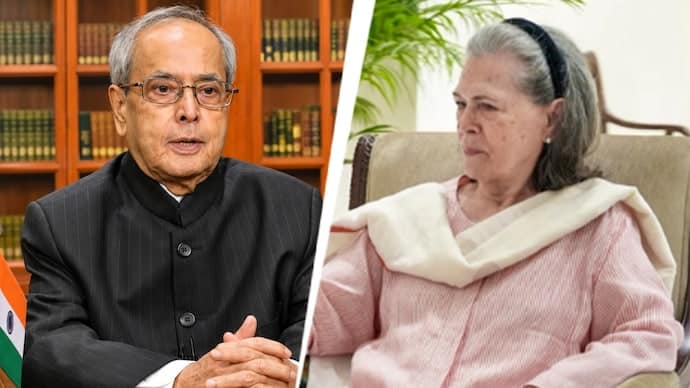
A revelation in Sonia Gandhi’s recently published autobiography, Belongingclaiming that the late Pranab Mukherjee expressed a desire in 2010 to replace Manmohan Singh as Prime Minister, has ignited a fresh political debate over the complex, decades-long equation between the veteran Congress stalwart and the Gandhi family.
Responding sharply to the excerpt, Mukherjee’s daughter, Sharmistha Mukherjee, defended her father’s aspirations on social media platform X, questioning whether political ambition backed by decades of administrative experience should ever be treated as a flaw—or whether leaders outside the Gandhi family are discouraged from aspiring to India’s highest executive office.
Political Utility vs. Personal Trust at 10 Janpath
In an analytical piece examining the historical roots of the divide, veteran political commentator Jayanta Ghosal notes that while Indira Gandhi, Rajiv Gandhi, Sonia Gandhi, and Rahul Gandhi all relied heavily on Pranab Mukherjee’s intellect and crisis-management skills, the post-Indira leadership never extended him unconditional personal trust:
-
- The ‘Trust Deficit’ Factor: Within Congress circles, colleagues famously remarked that Sonia Gandhi never worried about Pranab Mukherjee’s fiscal deficit as Finance Minister—his real hurdle was a persistent “trust deficit” with 10 Janpath. Unlike leaders such as Manmohan Singh, Priya Ranjan Dasmunsi, or Mallikarjun Kharge—who were viewed as unwaveringly loyal to the family’s authority—Mukherjee’s stature was treated as professional utility rather than emotional trust.
- Crisis Manager Kept at Number Two: Despite engineering Sitaram Kesari’s constitutional ouster as Congress president in 1998 and firefighting major UPA-II crises during the 2G and coal allocation rows, Mukherjee remained permanently cast as the government’s indispensable number two before eventually being elevated to the ceremonial post of President of India in 2012.
- Origins After Indira Gandhi’s Assassination: The suspicion dates back to 1984, when Rajiv Gandhi’s inner circle—including Arun Nehru and ML Fotedar—fuelled rumours that Mukherjee harboured prime ministerial ambitions immediately after Indira Gandhi’s death, even though former Principal Secretary PC Alexander later clarified that Mukherjee had fully backed Rajiv’s immediate swearing-in.
”Once, when asked by me whether he wanted to become PM, he very candidly answered that any politician worth his salt has this ambition.”
— Sharmistha Mukherjee, responding to Sonia Gandhi's memoir Belonging
The Missing Mass Base Factor
Beyond palace intrigue and loyalty dynamics, political observers point out a structural limitation in Mukherjee’s career: while he possessed unmatched bureaucratic mastery and legislative command, he lacked a pan-India electoral mass base, particularly in the Hindi heartland. Similar to the historical contrast between LK Advani and Atal Bihari Vajpayee, the absence of independent mass charisma made it far easier for the Congress high command to confine Pranab Mukherjee to the role of chief strategist rather than Prime Minister.