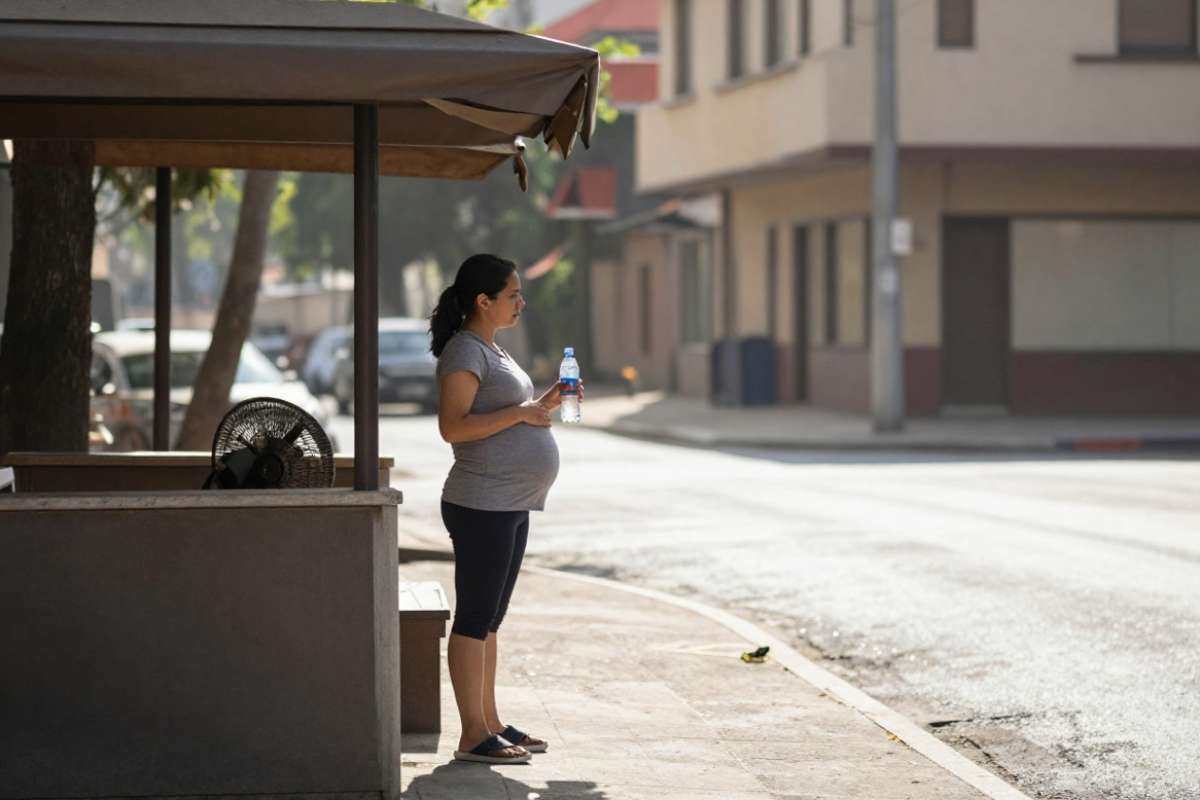
Antalya (Turkiye): Exposure to extreme heat during pregnancy can lead to severe outcomes, including preterm birth, stillbirth and congenital abnormalities in newborns, prompting experts at the United Nations Climate Change Conference (COP31) to highlight maternal health risks and call for targeted adaptation strategies.
To advertise here,
The issue comes into focus as countries at COP31 prepare to discuss progress towards the Global Goal on Adaptation, a framework to help nations develop key adaptation measures, including those needed to address the health impacts of climate change.
However, translating growing recognition of climate-related health risks into action remains a challenge, particularly in the absence of adequate financial support.
According to the United Nations Framework Convention on Climate Change (UNFCCC), only about one percent of formal climate finance under its financial mechanism is currently directed towards health.
The broader issue of adaptation finance for developing nations is also expected to feature prominently in discussions in the coming days.
Speaking to PTI Videos on the sidelines of COP31, Alan Dangour, Director of Climate and Health at the Wellcome Trust, said the foundation is seeking to highlight the evidence of heat-related impacts on pregnant women through three key areas — elevating the issues as a risk for women, developing guidelines and preparing health systems.
“We have three key points: recognizing that pregnant women are a particularly vulnerable group when it comes to climate-driven extreme heat, developing guidelines to help nurses, midwives and doctors respond to the challenges pregnant women face during heatwaves, and prepare health systems for a new world shaped by climate change, and identify the most vulnerable people so they are protected,” Dangour said.
He said pregnant women were not always recognized as a particularly vulnerable group and stressed that health systems must specifically account for their needs and risks during heatwaves.
“At the moment they are not recognized as such, and they need to be included in clinical guidelines. When it comes to data, we are keen that countries record the impacts of climate change on pregnant women and then work out how their guidelines and processes can protect them,” he said.
“That evidence is important because we can see what works and what doesn't in different parts of the world, and share that knowledge,” he said.
Former World Health Organization (WHO) chief scientist Soumya Swaminathan stressed the importance of highlighting the issue at COP31, saying the health impacts of climate change were already being felt and required immediate action.
“It is good that for the last three COPs or so we have had a day focused on health and climate, because everyone is increasingly recognizing that the health impacts of climate change are already happening and need immediate action. They are also hitting certain vulnerable groups disproportionately, and pregnant women are one of them,” Swaminathan told PTI.
Citing studies showing that exposure to extreme heat can affect pregnant women's health, pregnancy outcomes and the health of newborns, she said the WHO had recently released a document identifying pregnant women as a high-risk group and recommending measures countries should take to protect them.
She also stressed the need to integrate climate and health data, saying policymakers must urgently start linking exposure to extreme heat and air pollutants with their effects on human health.
“When heat and air pollution occur together in the same place, the impacts are three times as high as from either risk factor alone. India has many places with both heat and bad air pollution, so we must start looking at these data and correlating exposure to climatic and weather variables, such as heat and pollutants, with health outcomes,” the former WHO chief scientist told PTI.
Swaminathan said there was an urgent need for a research program to address the issue, adding that sufficient evidence was already available to warrant action. She also called for the government's and states' Maternal and Child Health Program to factor in heat exposure and take proactive and preventive measures to minimize its impact on pregnant women.
Youssef Nassef, Director of the Adaptation Program at UN Climate Change, said the first 1,000 days, from conception until a child turns two, were considered the most critical period, as climate-related harm could begin even before birth.
“A lot of what we're talking about in terms of climate impacts in general, but heat in particular, has a severe impact on maternal health, on newborn babies. Unfortunately, in climate finance, about 1 per cent of formal climate finance under the financial mechanism goes to health. There is an incongruence between the needs, the demand and the supply,” he said.
Bhavreen Kandhari, an environmentalist and the co-founder of the 'Warrior Moms' movement, underlined that heatwaves have had a significant impact on pregnant women, particularly those living in more vulnerable areas or working in more vulnerable occupations, such as daily-wage workers, construction workers and farmers.
“Daily-wage workers, for instance, have to earn a living. They have to continue working because they simply cannot afford to stop. There is no looking back for them. Vulnerable mothers and other at-risk groups are not thinking about the future, but simply trying to survive this particular season, or, at most, looking ahead to the next one,” she said.
(This story has not been edited by Mathrubhumi and is published from a syndicated feed.)