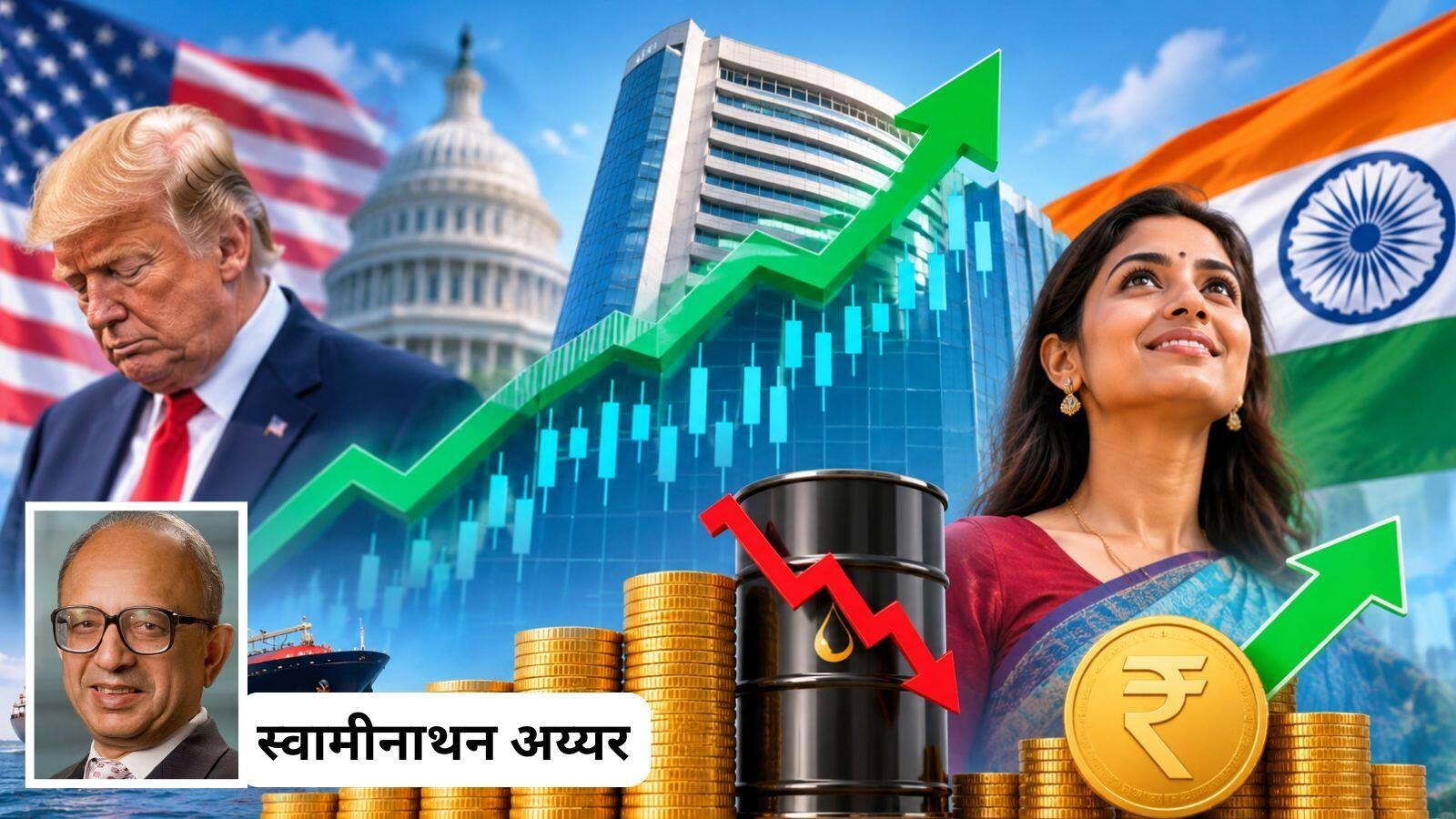
The relationship between global politics and economy has always been very deep and interesting. Major political changes taking place in any corner of the world directly affect emerging economies. Famous economist and columnist Swaminathan S. Anklesaria Iyer has thrown light on this global equation in detail in his famous column 'Swaminomics'. According to his analysis, the changes in the American political scenario and the political shocks faced by the Trump administration are having an unexpectedly positive impact on the Indian economy. From stock market movements to softening of crude oil prices and health of rupee, relief news is emerging for the Indian market on many fronts. American political shocks and the condition of global markets. Whenever there is a major change in international politics, it first impacts the financial markets. There has been a big change in the thinking of global investors after recent US political developments and midterm or political shocks. While on one hand there was an atmosphere of sluggishness and selling in many major markets of the world, on the contrary, the Indian stock market has shown its strong flexible capability. Amidst the volatility in the shares of technology and AI companies globally, India has emerged as a safe and attractive investment option. Analysts believe that this stability of the Indian market amid global uncertainties reflects the country's strong domestic demand and strong macroeconomic fundamentals. The return of foreign investors in the stock market and the jump of Nifty had been quite volatile for the Indian stock market for some time now, but the recent figures have surprised even the market experts. At one time, foreign institutional investors (FIIs) had withdrawn a huge amount of capital from the Indian markets, due to which there was sluggishness here. But now the picture is changing rapidly and foreign investors have started showing interest in Indian stocks again. According to preliminary data, foreign investors have invested billions of dollars in the Indian market, which is considered to be the largest monthly investment inflow in the last few months. Its direct impact has been visible on Indian benchmark indices, where Nifty and Sensex have registered a strong rise. While there is recessionary pressure in other markets of the world, this return of FIIs in India strengthens the confidence of investors. Relief to India due to huge fall in crude oil prices: The biggest relief news for the Indian economy is coming from the Crude Oil front. Since India imports about 90 percent of its total energy and oil needs, crude oil prices in the international market directly determine the country's fiscal deficit and inflation. Some time ago, the prices of Brent crude had skyrocketed to a high level per barrel, posing a serious threat of increase in India's import bill and inflation. However, changes in the American political scenario and global diplomatic pressures raised hopes of easing of war-like tensions, following which a sharp decline in crude oil prices was recorded. The fall in oil prices has not only reduced the burden on India's import bill, but there is every possibility of strengthening the country's balance of payments and GDP growth. With the strengthening of the rupee and opportunities to curb inflation, the equation of demand and supply of dollars in the foreign exchange market has also started improving due to cheap crude oil and return of foreign investors to the Indian markets. When foreign investors invest money in the Indian market, the inflow of dollars into the country increases, which naturally strengthens the Indian rupee. Apart from this, due to low prices of crude oil, the cost of petrol, diesel and transportation within the country remains under control, thereby keeping retail inflation under control. This situation is also considered quite favorable for the Reserve Bank of India (RBI), because keeping inflation under control increases the scope for keeping interest rates stable or taking favorable decisions on policy rates in future. However, economists also believe that there is still a need to be cautious in view of the uncertainties of the global market, but for now this analysis of 'Swaminomics' has presented a bright and positive picture for the Indian economy.