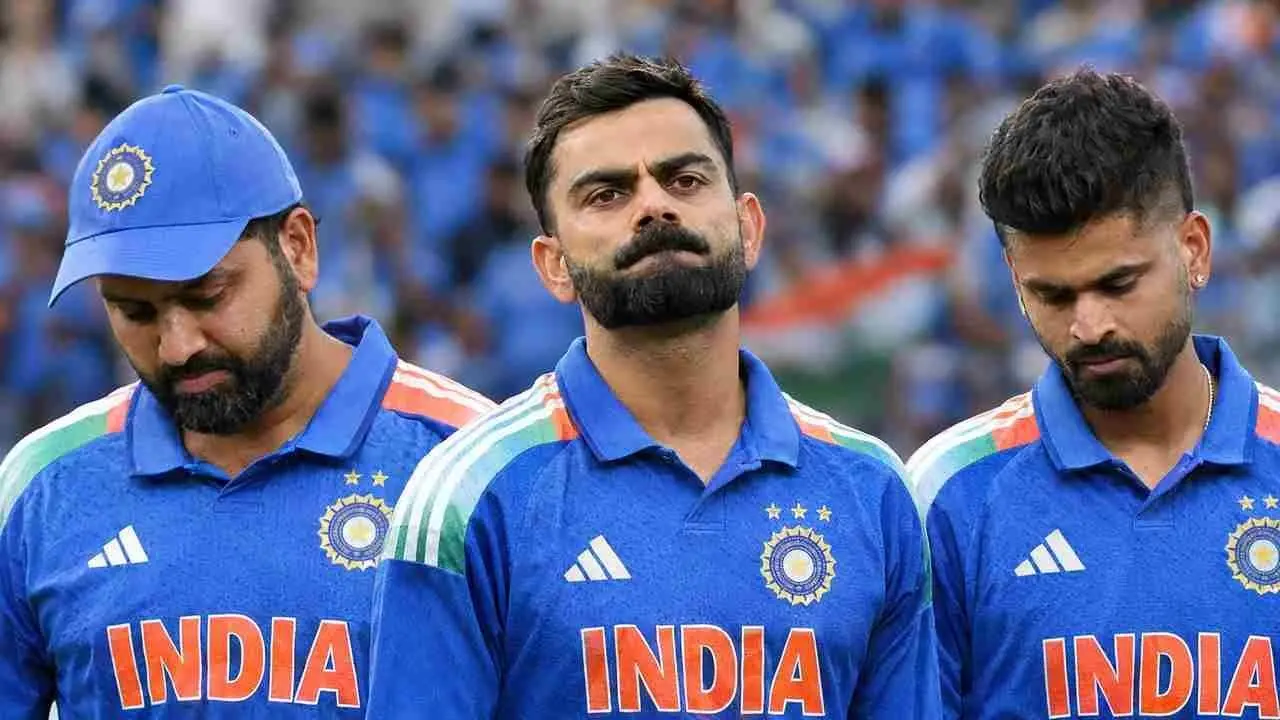
If I say India’s batters will be their biggest problem at the World Cup, you might think I am joking. We have Virat Kohli, Rohit Sharma, Shreyas Iyer, Shubman Gill and KL Rahul. How can these players be the problem? Surely bowling is the bigger concern when, apart from Jasprit Bumrah, there is uncertainty over who leads the attack.
But look closely at the performances and that perception should change. India’s batting is the bigger concern, particularly when the pitch offers movement or bounce.
The New Zealand ODI series exposed that difference. An inexperienced bowling attack helped India win the series 3–1, while a batting line-up full of established names struggled to handle the conditions.
Flat Pitches Can Hide India’s Batting Problems
During the West Indies series, bowlers faced criticism when the opposition chased big totals. But the conditions needed to be considered before deciding who was responsible.
When a batter such as Shai Hope can score at a strike rate above 220, India’s attacking batters must also be judged against what the surface allows. Hope is not usually considered the most destructive batter around. If he can score that quickly, a famous batting line-up cannot assume it has done enough simply because the total looks big.
Read alsoShreyas Iyer Is a Burden on Team India: Play Ishan Kishan, Save IndiaShreyas Iyer’s ODI form and short-ball struggles raise questions as Ishan Kishan makes a stronger case for India selection ahead of the 2027 World Cup.
On pitches offering little movement or turn, bowlers have limited help. Batters can hit through the line with confidence, and the side making better use of those conditions gains the advantage.
That was the argument during the West Indies series: India’s batters also had to take responsibility for whether their scoring rate was competitive. Blaming the bowlers alone ignored the nature of the pitches.
New Zealand Gave the Bowlers Help—and They Delivered
Once the conditions offered something to the bowlers in New Zealand, India’s attack showed what it could do.
The clearest example came in the fifth ODI. India were bowled out for 209, leaving New Zealand a target of 210. The bowlers defended it despite dropped catches and secured the series.
Arshdeep Singh impressed throughout the contest. Gurnoor Brar made his opportunities count, while Mohammed Siraj and Yash Thakur contributed when they played the final match. Auqib Nabi initially appeared under pressure but settled into a better line and length as he found his rhythm.
These performances came from an attack that did not have Bumrah. Winning in New Zealand with relatively inexperienced bowlers, and getting the better of the hosts in their own conditions, is an encouraging sign.
The argument is not that every bowling performance was perfect. It is that the attack demonstrated its ability to exploit assistance and win matches. Bumrah’s return would strengthen it further and could make bowling India’s biggest asset at the World Cup.
India’s Batting Numbers Tell a Different Story
The same encouragement was missing from the batting. No Indian batter reached 100 runs across the series, and Kohli’s 74 in the opening ODI was India’s only half-century.
| Player | Innings | Total runs |
|---|---|---|
| Virat Kohli | 4 | 86 |
| Axar Patel | 4 | 74 |
| Ishan Kishan | 2 | 73 |
| Shreyas Iyer | 4 | 67 |
| Plant Man | 4 | 60 |
| Shubman Gill | 2 | 37 |
| Rohit Sharma | 4 | 30 |
| KL Rahul | 2 | 29 |
| Ruturaj Gaikwad | 2 | 23 |
The third ODI was abandoned.
Kohli’s opening innings was the standout performance. On what appeared to be the most demanding batting surface of the series, he showed the quality that separates him from other batters. But he followed that 74 with just 12 runs across his remaining three innings.
Rohit managed only 30 runs in four innings. Iyer scored 67, with his discomfort against bounce adding a technical concern to his modest returns. Gill and Rahul had fewer opportunities, but neither produced a substantial innings.
Kishan and Axar offered resistance, including 46 each in the final ODI. Those contributions mattered, but India still needed their bowlers to rescue a total of 209. The established batting names did not provide the consistent foundation expected of them.
Read alsoNew Zealand Declares Strong Test Squad Against IndiaNew Zealand names its Test squad against India amid injury concerns. Check both squads, key fitness updates and the complete series schedule.

World Cup Preparation Must Include Challenging Pitches
The warning for the World Cup is clear. If India encounter similar pace, bounce and movement in South Africa, reputation will not protect their batting order.
The bowlers have shown they can become dangerous when conditions help them. The batters have shown how quickly they can lose control when conditions challenge them.
Iyer’s reaction to short-pitched bowling is particularly worrying. He often looks uncomfortable as soon as the ball climbs, leaving opponents with an obvious way to put him under pressure. But this is not a problem that can be reduced to one player. India need more reliable performances from the entire batting group.
Scoring freely on flat pitches is useful, but those surfaces allow opposition batters to flourish too. The difference becomes clearer when the ball moves and batters must adjust their technique, shot selection and approach.
India should use the remaining preparation time to bat as much as possible on challenging surfaces. The players need to work through those difficulties before the World Cup, rather than arrive with confidence built mainly on batting-friendly pitches.
This series provided evidence that India’s bowlers can do their job when there is assistance. The more urgent work is with the batters: when the ball starts moving, their technique and confidence cannot move with it.