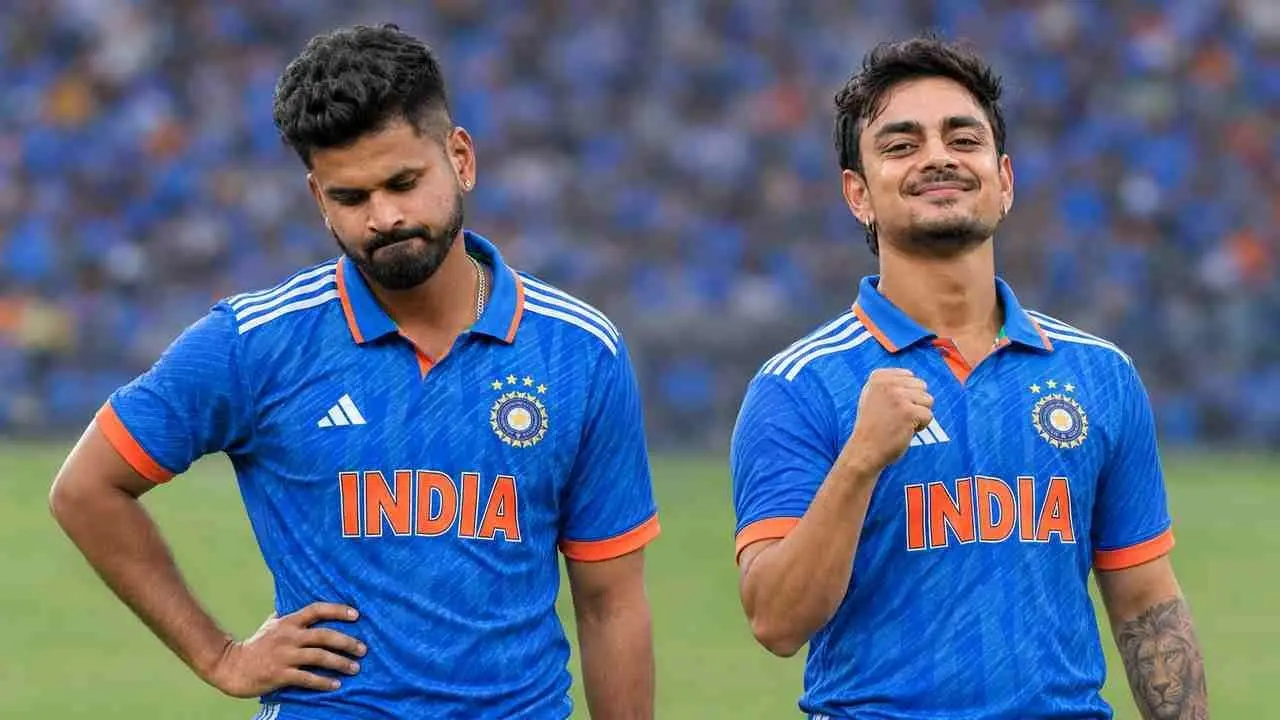
Shreyas Iyer has become a burden on Team India in ODI cricket. This criticism is not simply a reaction to one poor innings. His recent numbers raise a serious question: why does a specialist batter continue to enjoy a secure place when his performances are falling short?
Iyer had a strong 2023, but India cannot keep selecting him on the strength of that year. With Ishan Kishan making his case whenever opportunities arrive, the team must judge its middle-order options on present performance.
Shreyas Iyer’s ODI Record Since 2024 Raises Questions
Since 2024, Iyer has scored 820 runs in 26 innings across 28 ODIs at an average of 32.80. In the comparison of India’s top five over this period, his average is the lowest, with the other four averaging above 45.
An average of 32.80 might be more acceptable from an all-rounder making an important contribution with the ball. Iyer does not provide that regular second role. His primary responsibility is to score runs, and these returns are not enough to make his position unquestionable.
Read alsoTwo-Time Purple Cap Winner Set to Join GT in Major SRH TradeHarshal Patel is set to join GT from SRH in a ₹4 crore all-cash deal. Explore his likely role, recent form and two Purple Cap-winning seasons.
Twenty-six innings represent a substantial opportunity. This is not a case of demanding that a player be dropped after a couple of failures.
Yet India have strengthened Iyer’s position in the leadership group. He is the ODI vice-captain and led the side in the final two matches against New Zealand after Shubman Gill’s departure. Giving him greater responsibility while his batting remains under scrutiny makes the selection approach difficult to understand.
Just 67 Runs in Four Innings Against New Zealand
Iyer finished the New Zealand ODI series with 67 runs at an average of 16.75 and a strike rate of 77.91. He did not score a half-century.
| Match | Runs | Balls |
|---|---|---|
| First ODI | 15 | 13 |
| Second ODI | 30 | 46 |
| Third ODI | Abandoned | — |
| Fourth ODI | 0 | 1 |
| Fifth ODI | 22 | 26 |
| Total | 67 | 86 |
His highest score was 30. Despite getting four innings, he scored fewer runs than Kishan, who made 73 in just two opportunities.
That comparison strengthens the argument for giving Kishan a sustained run rather than treating him as a replacement who plays only when someone else is unavailable.
Ishan Kishan Showed His Value Under Pressure
Kishan’s 46 off 58 balls in the fifth ODI stood out because of the circumstances. India’s top order had failed, and he had to rebuild while wickets continued to fall.
Axar Patel also contributed 46, but among the specialist batters, Kishan provided the resistance India needed. He looked more comfortable at the crease than several of the players above him on a surface that had troubled them.
Once India were eight wickets down, his task became even harder. He needed to find runs before the remaining support disappeared. His eventual dismissal as the ninth wicket came with little room left to build the innings patiently.
The value of that contribution goes beyond missing a half-century by four runs. Kishan showed that he could stay in the contest when India were under pressure.
Yashasvi Jaiswal is another talented option, but his role as an opener makes his selection a separate discussion. Kishan offers a more direct alternative in the middle order.
Read alsoIndia Make Big Change in ODI and Test Squad for New Zealand SeriesIndia change their ODI and Test squad for New Zealand as Gurnoor Brar earns a Test call-up and Kuldeep Yadav is released from the Test squad.

Short-Ball Concern Is Making Him a Walking Wicket in SENA Countries
Iyer’s response to short-pitched bowling is making him look like a walking wicket on bouncy tracks in SENA countries—South Africa, England, New Zealand and Australia. The concern is not only his dismissals, but how uncomfortable he appears when fast bowlers repeatedly target his body.
Too often, he looks occupied with getting out of the ball’s way rather than controlling the shot. At those moments, his batting resembles a tailender trying to survive a hostile spell rather than a specialist trusted to hold the middle order together. An edge flying for four or six does not resolve that technical weakness.
Opponents have a clear plan: keep testing him with short balls and wait for the mistake. He fell to short-pitched bowling in three of his four innings in this ODI seriesincluding his dismissal for 22 against Blair Tickner in the fifth ODI. Repeated dismissals against the same approach make this a problem India cannot overlook.
With the 2027 World Cup approaching, India must assess who can handle overseas conditions reliably. Selecting a batter with an obvious weakness against pace and bounce risks exposing the rest of the batting order to greater pressure.
Kishan deserves a sustained opportunity on the strength of his recent performances. Iyer should have to demonstrate improvement against the short ball and earn his place through runs. Reputation and a leadership designation should not guarantee selection.