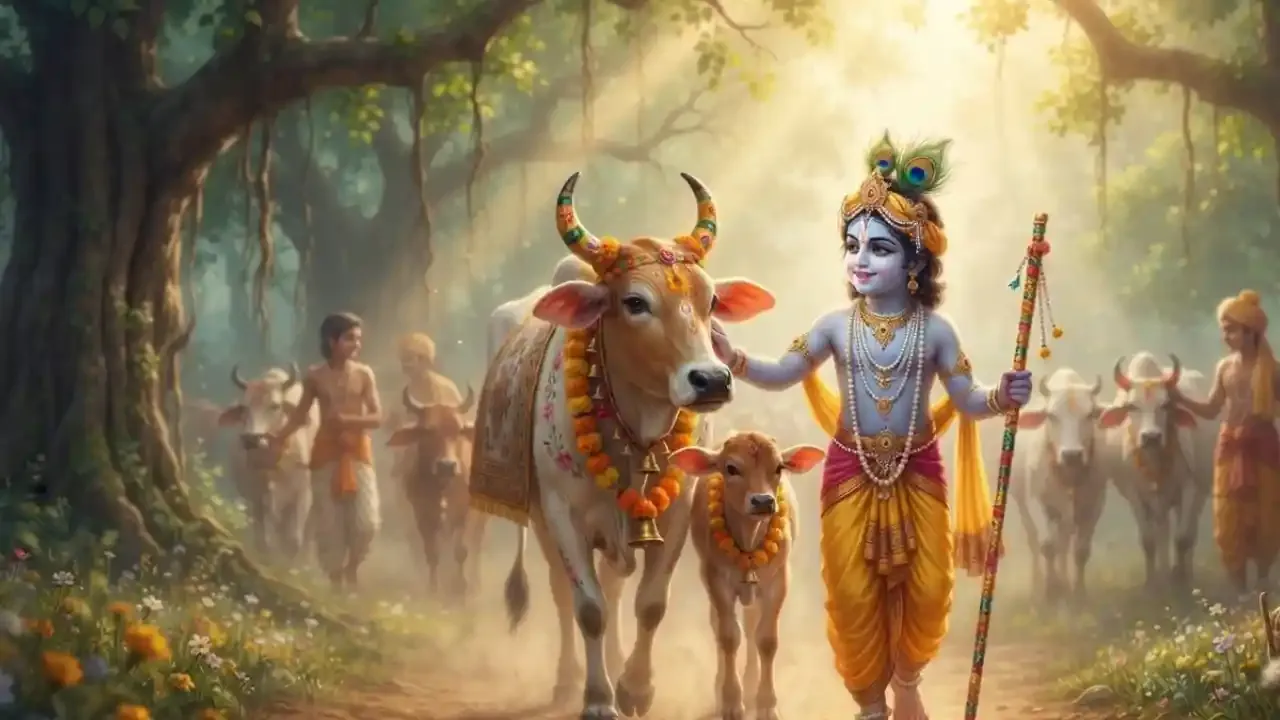
Gopashtami 2026 Date: As soon as the name of Gopashtami comes, the image of Lord Shri Krishna and his cows starts coming to mind. This festival is celebrated with great enthusiasm in Braj. On this occasion, there is a special tradition of decorating cows, worshiping them and feeding them. At some places color is applied on their horns, at other places aarti is performed by garlanding them with flowers. Actually, there is an incident behind this festival related to the life of Lord Shri Krishna. For this reason, Gopashtami is associated with cow love and service. Let us know why the tradition of decorating cows is followed on this day.
What is the relation of Gopashtami with Lord Krishna?
Gopashtami is related to the childhood of Lord Krishna. According to religious beliefs, in childhood, Shri Krishna used to go to graze calves along with Balram and cowherd boys. As Nand Baba grew older, he entrusted him with the responsibility of grazing the cows. It is said that on the day of Kartik Shukla Ashtami, Shri Krishna went to the forest for the first time to graze the cows. Gopashtami is celebrated every year in memory of this incident.
Why are cows decorated on Gopashtami?
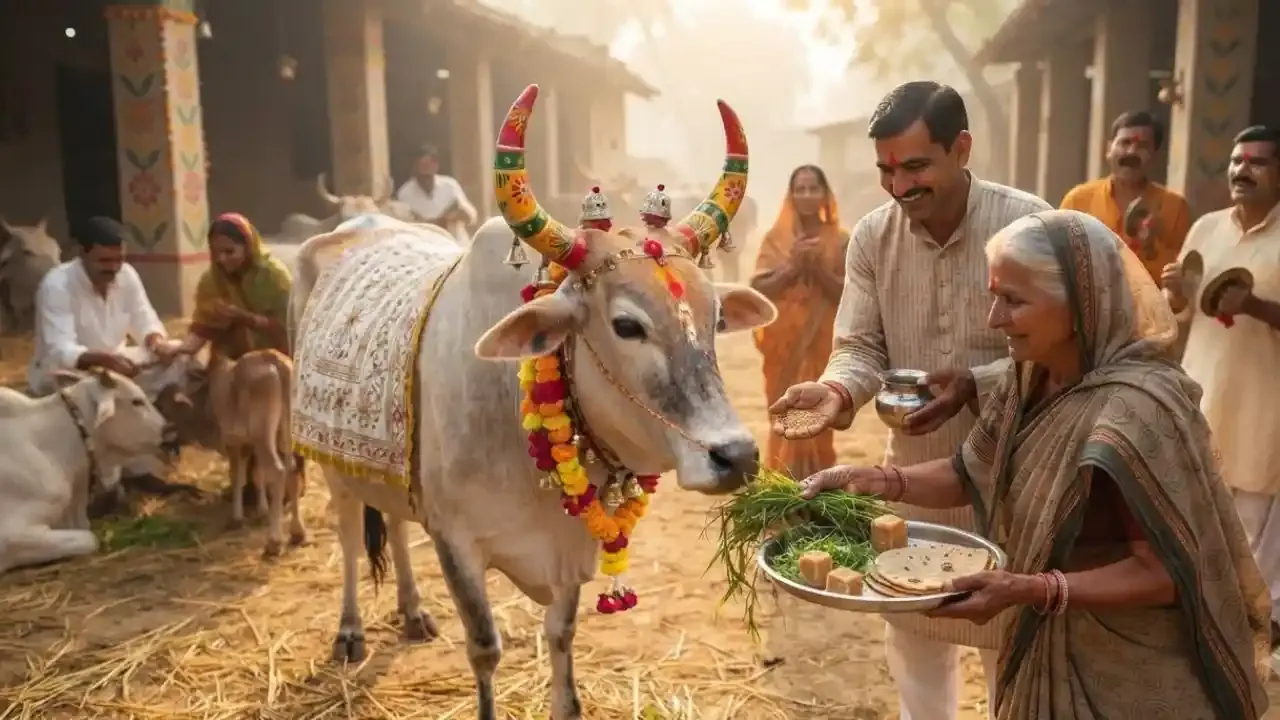
Decorating cows on this festival is considered a way of showing respect towards them. Lord Shri Krishna had a special attachment to cows. He took care of them and spent a lot of time with them. This is the reason why cows are also decorated festively on Gopashtami. On this day, cows are bathed and their bodies are cleaned. Then Tilak is applied on the forehead and color is applied on the horns. Garlands of flowers and decorative bells are worn around their necks. In many places calves are also decorated in the same way. During this time, devotees worship the cows and feed them jaggery, roti and green fodder.
Why is cow service considered special on Gopashtami?
A major objective of Gopashtami is to promote the spirit of cow service. Cow is considered revered in Hindu religious tradition. Therefore, instead of just worshiping on this day, attention is also given to their care. On the occasion of Gopashtami, events are organized in cow shelters in Braj, Mathura and Vrindavan. Devotees feed and serve the cows. In many temples, Lord Krishna is decorated in the form of a cowherd. In this way the entire atmosphere gets colored in the colors of Krishna devotion and cow service.
How to worship cows on Gopashtami?
On the day of Gopashtami, cows are bathed and cleaned in the morning. After this, apply Roli or sandalwood tilak on their forehead and garland them with flowers. During the puja, perform aarti of cows by lighting a lamp. After this, feed them green fodder, jaggery and roti. It is also considered auspicious to serve cows and their calves on this day. If there is no place to keep a cow at home, then you can go to the cowshed and feed them.
When will Gopashtami 2026 be celebrated?
This year the festival of Gopashtami will be celebrated on Tuesday, 17 November. According to the Panchang, Kartik Shukla Ashtami Tithi will start at 4:20 AM on November 17 and end at 6:06 AM on November 18. In such a situation, Udaya Tithi has been considered the basis for determining the date of fast and festival. Accordingly, Gopashtami will be celebrated on 17th November.
FAQ
When will Gopashtami be celebrated in 2026?
The festival of Gopashtami will be celebrated on Tuesday, 17 November 2026. This day is the Ashtami Tithi of Shukla Paksha of Kartik month.
What is the relation of Gopashtami with Lord Krishna?
According to religious belief, on the day of Kartik Shukla Ashtami, Shri Krishna went to the forest for the first time to graze cows. Gopashtami is celebrated in the memory of this incident.
Why are cows decorated on Gopashtami?
Lord Shri Krishna had special love for cows. In the same spirit, on Gopashtami, cows are decorated by bathing them, applying tilak and garlanding them with flowers.
How should cows be worshiped on Gopashtami?
On this day, bathe the cows and apply roli or sandalwood tilak on their forehead. Perform Aarti by garlanding them with flowers and feed them green fodder, jaggery and roti.