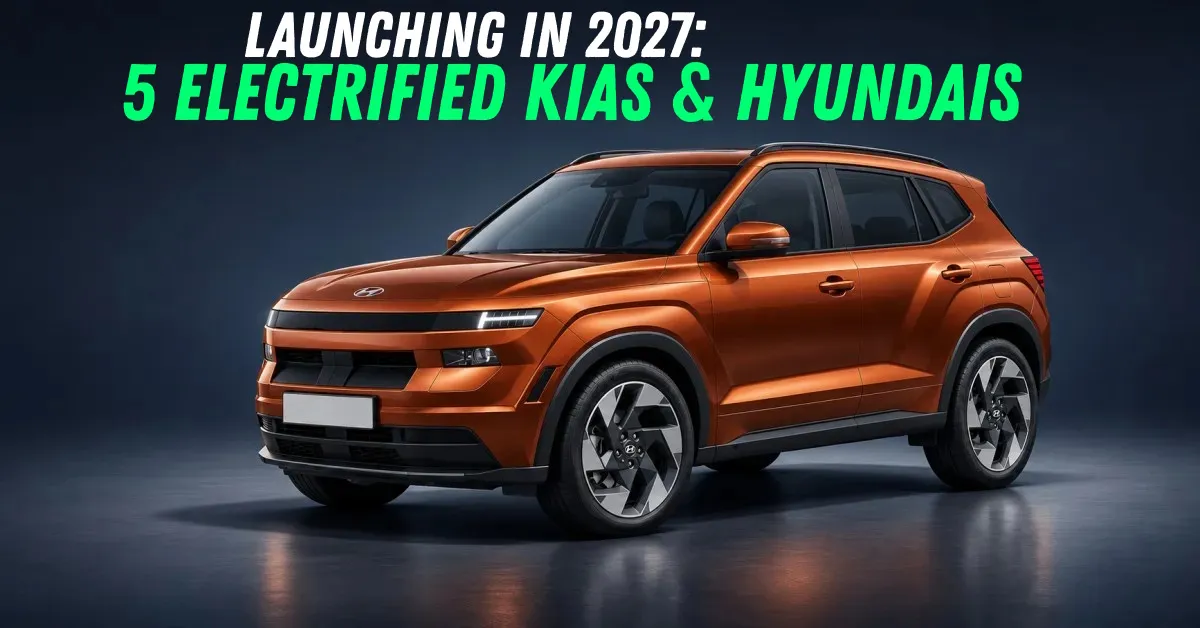
Both South Korean automotive giants, Hyundai and Kia, have been pushing towards the future of hybrid mobility. They have announced their ambitions of launching a number of new hybrid cars in India in the coming years. So, if you are someone who is interested in knowing which new hybrid cars are launching from Hyundai and Kia in the next 12 months, then you have come to the right spot.
Kia, in September of this year, has already commenced the pre-bookings for its premium hybrid MPV, the Carnival Hybrid. This new model will be offered in the same Limousine+ variant as the existing diesel model.
The main mechanical highlight of the Carnival Hybrid will be its 1.6-litre turbocharged petrol engine, which will make 180 bhp and 265 Nm. This engine will come paired with an electric motor that will produce 73.4 bhp and 304 Nm. The powertrain will come mated to a 6-speed torque-converter automatic transmission, and together, it will make 242 bhp and 367 Nm of torque.
As for the exterior, the Carnival Hybrid will look almost identical to the diesel model. It will continue to get the same vertically stacked LED headlights, 18-inch alloy wheels, powered sliding doors and connected LED taillights. The only noticeable difference will be the HEV badge at the rear.
Stepping inside, the MPV will get dual 12.3-inch screens, three-zone climate control, a 12-speaker Bose sound system and eight airbags. It will also offer Level 2 ADAS, a 360-degree camera and new retractable seat-back tables with wireless chargers. The hybrid is expected to cost more than the diesel Limousine+, which is priced at Rs 59.65 lakh (ex-showroom).

The next Kia electrified car on this list is the newly unveiled Seltos Hybrid. The company recently showcased the Seltos Hybrid at the 2026 Paris Motor Show. The SUV is expected to launch in India in 2027 and will be offered alongside the existing petrol, turbo-petrol and diesel engine options.
The international Seltos Hybrid gets a 1.6-litre naturally aspirated petrol engine. It is capable of producing 102 bhp and 141 Nm. It comes paired with an electric motor that makes 129 bhp and 388 Nm. The combined output stands at 178 bhp, and the powertrain uses a 6-speed DCT.
The model showcased at the Paris Motor Show was the version with an all-wheel-drive system, and it offers a mileage of 14.71 kmpl. However, the India-spec Seltos Hybrid is expected to get a front-wheel-drive layout, and its final engine specifications could also differ.
Apart from this, the international hybrid version gets a steering-column-mounted gear selector, which frees up additional space in the centre console. Other features include a triple-screen dashboard, head-up display, ambient lighting, wireless charging and a powered tailgate. The showcased model also misses out on a spare wheel because the hybrid battery is positioned below the boot floor.
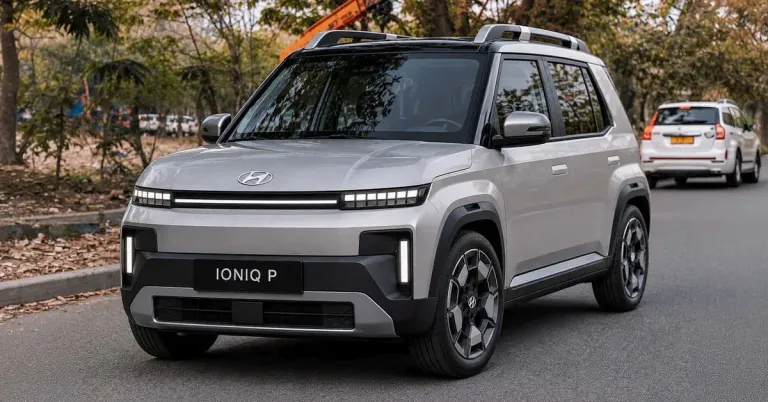
Now, coming to the Hyundai camp, the company is also working on an all-new electric SUV for India, and it is currently known by its internal codename, He1i. However, reports have suggested that the production model could be called the Ioniq P, and it will be positioned as the brand’s entry-level electric SUV.
The upcoming EV will measure less than 4 metres in length and is expected to get a boxy design inspired by the Hyundai Exter and Inster. It will feature split LED headlights, pixel-style LED taillights, thick wheel-arch cladding, roof rails and an upright rear section.
On the inside, the Ioniq P is expected to offer Hyundai’s new Pleos Connect infotainment system, a digital instrument cluster, ventilated seats, wireless charging, a sunroof and a 360-degree camera. Six airbags and ADAS could also be offered.
As for the battery options, reports suggest that the SUV could get a 42 kWh battery pack in its lower variants. The expected real-world driving range is between 300 and 450 km, depending on the variant. The Ioniq P is expected to be unveiled in 2027, with a starting price below Rs 10 lakh (ex-showroom).
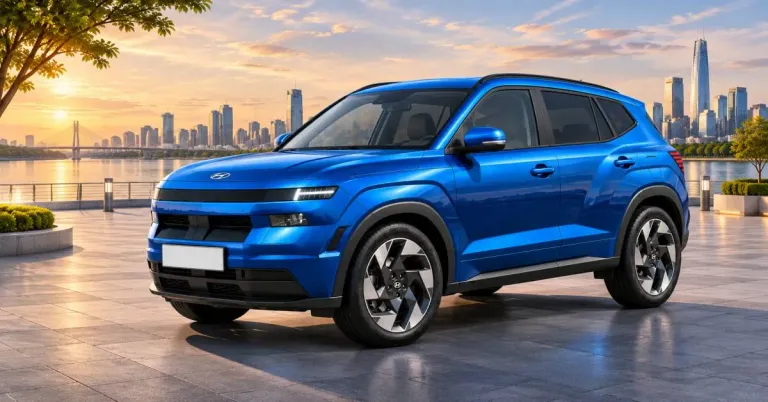
One of the most important upcoming models from Hyundai is the next-generation Creta Hybrid. The third-generation Creta, which has been internally codenamed SX3, has already been spotted testing on Indian roads. It is expected to make its official debut around mid-2027, and this time, a hybrid powertrain will also be joining the line-up.
The new Creta will use the K3 platform shared with the latest Kia Seltos. As a result, it is expected to become larger than the current model and offer more cabin space. Mechanically, the Creta Hybrid is expected to use an electrified version of Hyundai’s existing 1.5-litre naturally aspirated four-cylinder petrol engine.
However, its combined power output, battery capacity and official mileage have not yet been revealed. Apart from this, the next-generation Creta will get a completely redesigned exterior with a boxy grille, split LED headlights, flush door handles and new LED taillights.
The cabin will also get major changes, including a massive 15 to 17-inch Pleos Connect touchscreen, a slim digital instrument display, a new steering wheel and a floating centre console. The Creta Hybrid will compete with the Toyota Hyryder, Maruti Grand Vitara, Maruti Victoris and Renault Duster Hybrid.
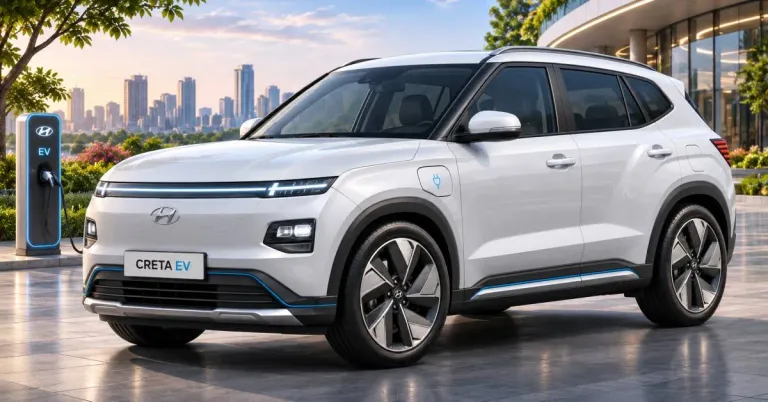
In addition to the Creta hybrid, Hyundai is also getting ready for the next-generation Creta Electric. It was recently spotted undergoing road testing in India with full-body camouflage. The updated electric SUV is also expected to launch in 2027 with substantial design and interior changes. However, it will be launched after the ICE model.
The new Creta Electric will reportedly feature a rectangular front grille design, split LED headlights, new alloy wheels and redesigned LED taillights. However, the biggest changes are expected inside the cabin. The SUV could also get the same massive touchscreen, running Hyundai’s Pleos Connect system
Other expected features include a new two-spoke steering wheel, a digital instrument cluster, ventilated and powered front seats, Level 2 ADAS and a 360-degree camera. In terms of battery options, Hyundai is expected to retain the existing 42 kWh and 51.4 kWh battery packs with improvements to efficiency and range.
There are also reports suggesting that a larger battery could be introduced. And this new battery could offer a real-world driving range of over 500 km. The next-generation Creta Electric will compete with the Mahindra BE 6, Maruti Suzuki e Vitara and Tata Sierra.ev.