Software teams are under constant pressure to release features faster while maintaining reliability. As applications become more complex, the number of tests required to validate functionality can grow quickly.
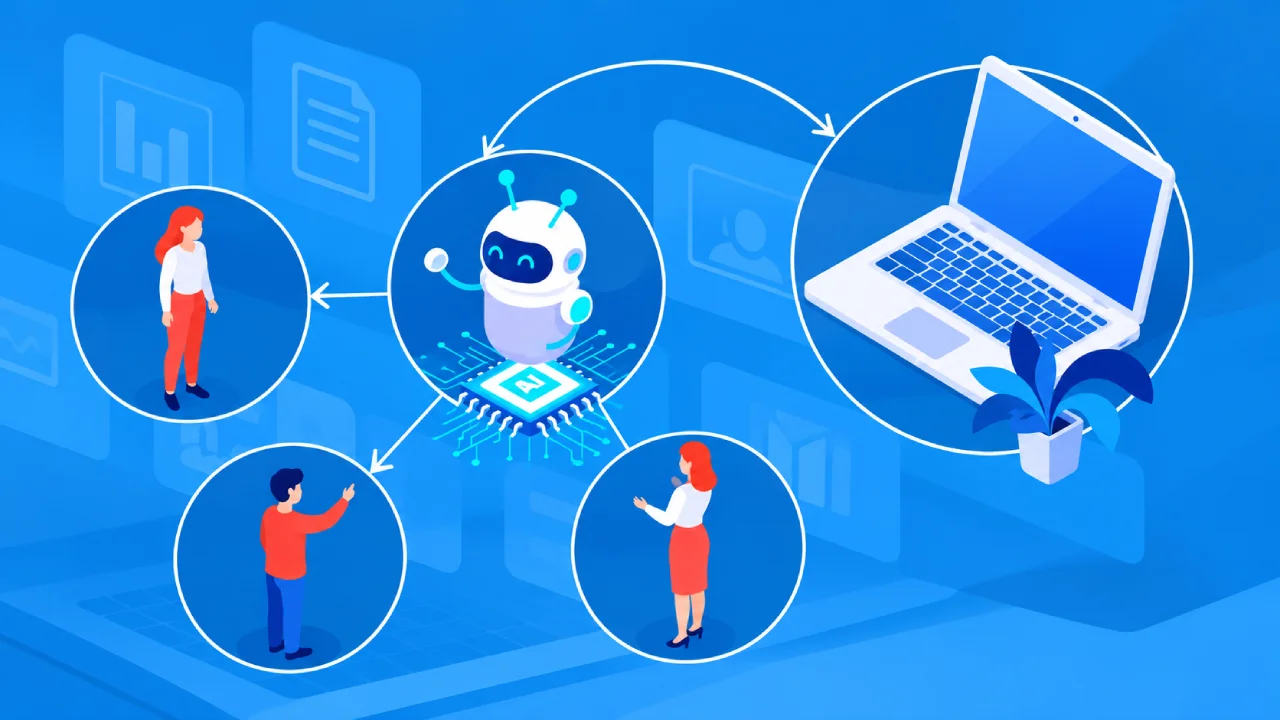
Artificial intelligence is increasingly being used to support this process. AI-assisted testing can help developers and quality engineers generate test cases, analyze failures, maintain existing tests, and identify areas that may need additional coverage.
These capabilities can reduce some of the repetitive work associated with testing. However, AI-generated tests are not automatically accurate, comprehensive or meaningful. Poorly designed AI assistance can create a different problem: a large test suite that appears thorough but fails to detect important defects.
Understanding both the benefits and limitations of AI-assisted testing is therefore essential for teams that want to use the technology without developing false confidence in software quality.
What Is AI-Assisted Testing?
AI-assisted testing refers to using artificial intelligence to support different parts of the software testing lifecycle. Traditional test automation relies on predefined rules and scripts. AI-based tools can analyze application code, requirements, previous test results, or user behavior to generate or modify testing assets.
Potential applications include:
- Test case generation
- Unit test creation
- API test generation
- UI test creation
- Test data generation
- Test maintenance
- Failure analysis
- Defect detection
- Test prioritization
- Regression testing
The goal is not necessarily to replace software testers. Instead, AI can handle certain repetitive activities while engineers and quality specialists focus on test strategy, risk analysis, and complex scenarios.
AI-Generated Tests
One of the most visible applications of AI in software testing is automated test generation. An AI tool may analyze a function and generate test cases covering common inputs, expected outputs, and potential edge cases.
For example, a function that processes customer orders might receive tests for:
- Valid orders
- Empty orders
- Invalid quantities
- Missing customer information
- Unexpected input formats
- Boundary values
AI can produce these tests quickly, especially when the code follows clear patterns. However, generated tests should be treated as starting points rather than unquestionable validation.
AI for Unit Testing
Unit tests validate individual functions or components. AI coding tools can analyze source code and suggest unit tests based on the implementation. This can help developers quickly establish basic coverage for new functionality.
For example, an AI system may identify conditional branches within a function and generate tests for different input conditions.
The challenge is that a test generated directly from implementation code may reflect the developer’s existing assumptions. If the implementation contains a conceptual error, the generated test may simply confirm that incorrect behavior.
This is why expected behavior should ideally be derived from requirements or independently defined specifications rather than only from the code being tested.
AI for API and Integration Testing
Modern applications depend heavily on APIs and distributed services. AI can help generate API test scenarios by analyzing endpoint definitions, schemas and expected responses.
Tests may cover:
- Valid requests
- Invalid parameters
- Missing fields
- Authentication failures
- Authorization rules
- Boundary values
- Unexpected responses
- Error handling
For integration testing, AI can help identify interactions between services that may require validation. This can be useful for applications with large numbers of interconnected components.
AI-Assisted UI Testing
User interfaces can be particularly challenging to maintain because layouts, selectors and workflows change frequently. AI-assisted testing tools can analyze interfaces and help identify elements or generate interaction flows.
Some systems can also help update tests when interface structures change. For example, if a button’s implementation changes but its function remains the same, AI-based tooling may help identify the corresponding test and suggest an update.
However, visual testing still requires careful validation because an application can be technically functional while providing a poor user experience.
Test Maintenance
Test maintenance can consume significant engineering time. When an application changes, existing tests may fail even though the underlying functionality remains correct.
AI can assist by analyzing test failures and determining whether they may be caused by:
- Changed selectors
- Updated APIs
- Modified response formats
- Renamed functions
- Changed workflows
- New application states
The tool can then suggest modifications to affected tests. This can reduce some maintenance work, but automatically changing tests carries risk. A test should not be modified simply because it fails. The failure may indicate a genuine regression.
AI and Regression Testing
Regression testing verifies that new changes have not broken existing functionality. Large applications may contain thousands of automated tests, making it difficult to run everything efficiently during every development cycle.
AI can help prioritize tests based on factors such as:
- Recent code changes
- Historical failures
- Affected application components
- Test execution history
- User-impact information
This can potentially reduce unnecessary testing while maintaining attention on areas most likely to be affected. Teams should still maintain appropriate broader regression coverage for important releases.
The Risk of False Confidence
One of the biggest risks of AI-assisted testing is false confidence. A development team might see hundreds of AI-generated tests passing and assume the application is thoroughly validated.
But the number of tests is not the same as the quality of testing.

A poorly designed test can pass every time while providing little protection against real-world failures.
For example, a test might verify that a function returns the expected result for normal input but never test invalid input, concurrency, permissions, data corruption or unexpected system behavior.
A large collection of shallow tests can therefore create the appearance of reliability without providing equivalent protection.
AI Can Miss Important Scenarios
AI models generate outputs based on available information and learned patterns. They may not understand every business rule or operational risk associated with an application.
Important scenarios can include:
- Rare user behavior
- Complex authorization rules
- Financial edge cases
- Regulatory requirements
- Race conditions
- Distributed-system failures
- Third-party service outages
- Data migration problems
Human testers and domain experts can provide context that may not be present in the source code. AI should therefore complement, rather than replace, risk-based testing.
AI-Generated Tests Can Contain Errors
AI-generated code can contain incorrect assumptions or implementation mistakes.
A generated test might:
- Assert the wrong expected result.
- Test an implementation detail instead of business behavior.
- Miss important edge cases.
- Duplicate existing tests.
- Use unrealistic test data.
- Pass without meaningfully validating the feature.
Developers should review generated tests just as they would review other AI-generated code.
AI-Assisted Testing and Security
Security testing requires particular caution. AI can help identify potential security-related test cases, but security validation should not depend entirely on generated tests.
Applications may require specialized testing for:
- Authentication
- Authorization
- Input validation
- Data exposure
- Injection vulnerabilities
- Session management
- API security
- Sensitive information handling
Security professionals and established security testing practices remain important for high-risk systems.
Best Practices for AI-Assisted Testing
Teams can gain more value from AI-assisted testing by establishing clear controls.
- Treat AI-generated tests as drafts that require review.
- Define expected behavior independently of implementation where possible.
- Focus on meaningful coverage rather than test quantity.
- Include edge cases and failure scenarios.
- Combine unit, integration, API, UI and other appropriate testing methods.
- Monitor tests that are frequently changed by AI.
- Investigate test failures before modifying the test.
- Use real-world production scenarios to identify important cases.
- Keep humans involved in high-risk testing decisions.
- Measure whether AI-assisted testing actually improves defect detection.
The objective should be better software quality, not simply more automated tests.
Measuring the Effectiveness of AI Testing
Organizations should evaluate AI-assisted testing using meaningful engineering metrics.
Useful measurements can include:
| Metric | What It Can Show |
| Defect detection rate | Whether tests identify meaningful problems |
| Escaped defects | Problems reaching production |
| Test execution time | Testing efficiency |
| Test maintenance effort | Cost of keeping tests reliable |
| Coverage | Areas of code or behavior being tested |
| Flaky test rate | Test reliability |
| Review effort | Human work required for generated tests |
Coverage alone should not be treated as proof of software quality. A high coverage percentage can coexist with weak assertions or missing business scenarios.
Conclusion
AI-assisted testing can help software teams generate tests, maintain automation, analyze failures, and expand testing coverage more efficiently.
Its greatest value comes from reducing repetitive work and helping engineers explore scenarios that might otherwise require significant manual effort.
However, AI-generated tests are not a guarantee of software reliability. False confidence, incorrect assertions, missing edge cases, and poorly maintained automation can undermine the value of an AI-powered testing strategy.
The most effective approach is to combine AI assistance with human judgment, clear requirements, risk-based testing and established quality practices.
When used thoughtfully, AI can become a valuable testing assistant, helping teams move faster while keeping the focus on what ultimately matters: finding meaningful defects before they affect users.
(Source)