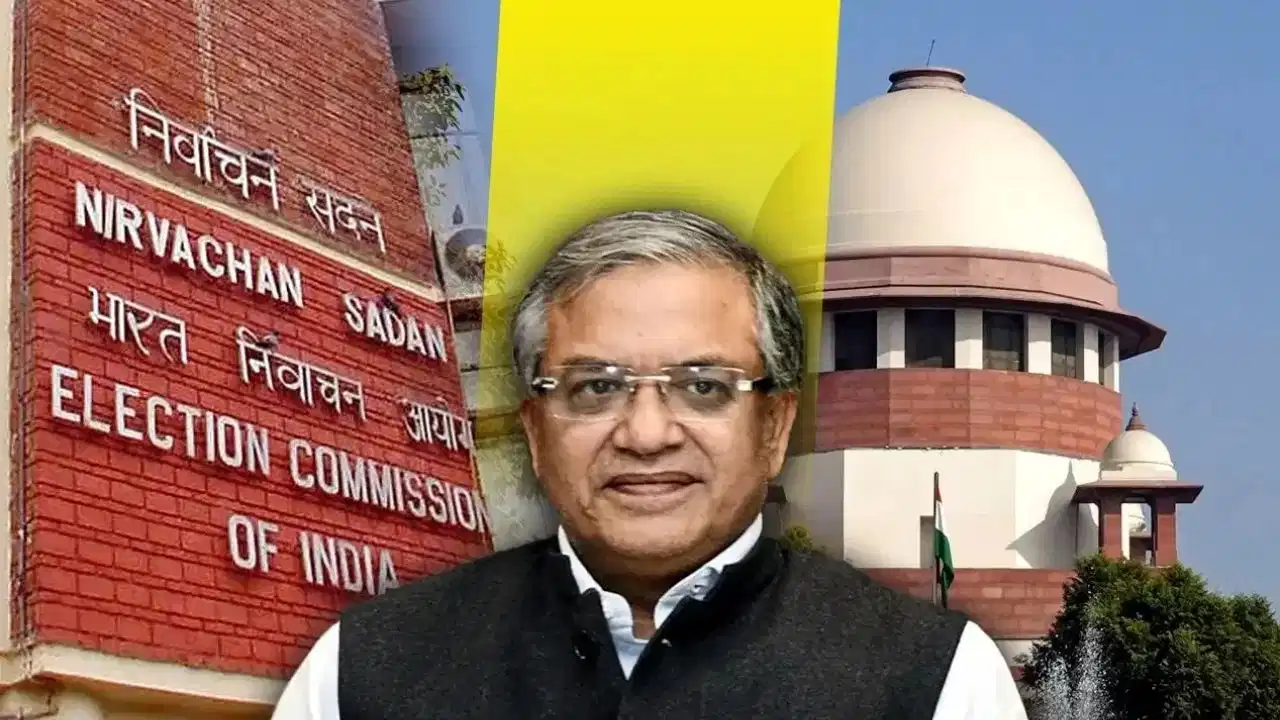
Tezzbuzz Desk- The ongoing legal battle between the Election Commission and the opposition regarding the Special Intensive Revision of Voter List or SIR has now reached the Supreme Court. Leaders of the INDIA block have sought permission from the court to ask 48 questions regarding decisions related to the Chief Election Commissioner and Election Commissioners. The petitioners have wanted to know whether many important decisions taken at the Commission level were taken unanimously or on behalf of a single member.
In the application filed in the Supreme Court by the leaders of INDIA Block, permission has been sought to ask 48 questions to the Chief Election Commissioner and Election Commissioners. Rahul Gandhi and other petitioners have raised many questions regarding the decisions related to SIR and their process. The main question of the petitioners is that on which decisions of the Chief Election Commissioner the other two Election Commissioners had disagreed. Along with this, it has also been asked at what level the decision to conduct SIR in the entire country was taken. In the application, questions have also been raised regarding the decision to make changes in Form 6.
Questions regarding ERO Net and ECI Net also
The petitioners have also raised questions on the decisions related to centralizing ERO Net and ECI Net and controlling access to the voter list. The application states that the information and records related to these decisions are available with the Election Commission, while the petitioners do not have direct access to these facts. The petitioners say that for this reason it is necessary to clarify the process and basis of these decisions by asking direct questions to the key officials of the Election Commission.
In the SIR case, petitioner Rakesh Kumar Singh has also filed a counter affidavit after the Election Commission's reply. It said that the main question of the case is whether the actions taken in the name of the Election Commission were actually decisions taken by consensus or majority of the three-member commission or were done by the officers or on behalf of any one member. It has been said in the affidavit that a clear answer to this question has not emerged. The petitioners are raising questions on the process of decisions of the Commission on this very point.
According to the petitioners, some important points have been admitted in the Election Commission's reply and supplementary affidavit, which strengthen their case. He claims that many of the specific allegations made in the petition have not been directly refuted. The petitioners have also said that some corrective steps were taken after the filing of the petition. These include steps like delinking Form 6, IT monitoring and giving opportunities to ASDD voters. However, he says that these steps do not resolve the core dispute.
Controversy regarding Form 6 and IT system
The counter affidavit claims that there are internal contradictions in the affidavits of the defendants. The petitioners have raised questions regarding various claims in matters related to Form 6, appeals and IT systems. The petitioners argue that legally the power vests in the entire Election Commission and not in the Chairman alone. According to him, under Section 18 it is necessary to take decisions by consensus or majority.
On this basis, questions have been raised regarding changes in online Form 6, filing of appeals in West Bengal and works related to IT system. The petitioners say that these actions are said to have been taken without proper decision of the Election Commission.