Over the past few years, India’s economic landscape has witnessed a monumental structural shift, anchored by the explosive growth of domestic manufacturing and high-tech exports. While the initial narrative of India’s electronics manufacturing boom was predominantly defined by the assembly and export of advanced smartphones, official trade data reveals that the country’s export basket is undergoing a dramatic evolution.
India is no longer just shipping finished mobile handsets to the world. A deep dive into trade statistics reveals that the nation has successfully broken into high-value component manufacturing, rapidly expanding its export footprint to include printed circuit boards (PCBs), memory integrated circuits, solid-state storage devices, and complex network transmission equipment. This diversification marks a critical turning point in India’s journey toward technological self-reliance and global supply chain integration.
Five-Year Trajectory: Mobile Phones Pave the Way for Component Growth
To understand the magnitude of India’s current manufacturing milestone, one must examine the staggering trajectory of the past half-decade. In the 2021 financial year, India’s total mobile phone exports stood at a modest ₹22,800 crore. Through progressive policy frameworks, targeted Production-Linked Incentive (PLI) schemes, and a booming domestic ecosystem, mobile phone exports crossed the historic ₹2 lakh crore mark by FY2025.
However, government policy planners and industry experts long recognized a structural challenge: while finished smartphone exports soared, the domestic ecosystem remained heavily reliant on imported components, resulting in a high import bill for raw materials, semiconductors, and sub-assemblies.
Recent trade data from the Commerce Ministry indicates that this vulnerability is actively correcting itself. Between April and October of the current fiscal year (2026-27), India exported $39 billion worth of electronics goodswhile importing $95 billion during the same period—primarily driven by raw laptops and electronic components. Crucially, the exponential growth rates of high-value component exports signal that domestic value addition is finally catching up with assembly operations.
Exploding Growth in Printed Circuit Board (PCB) Exports
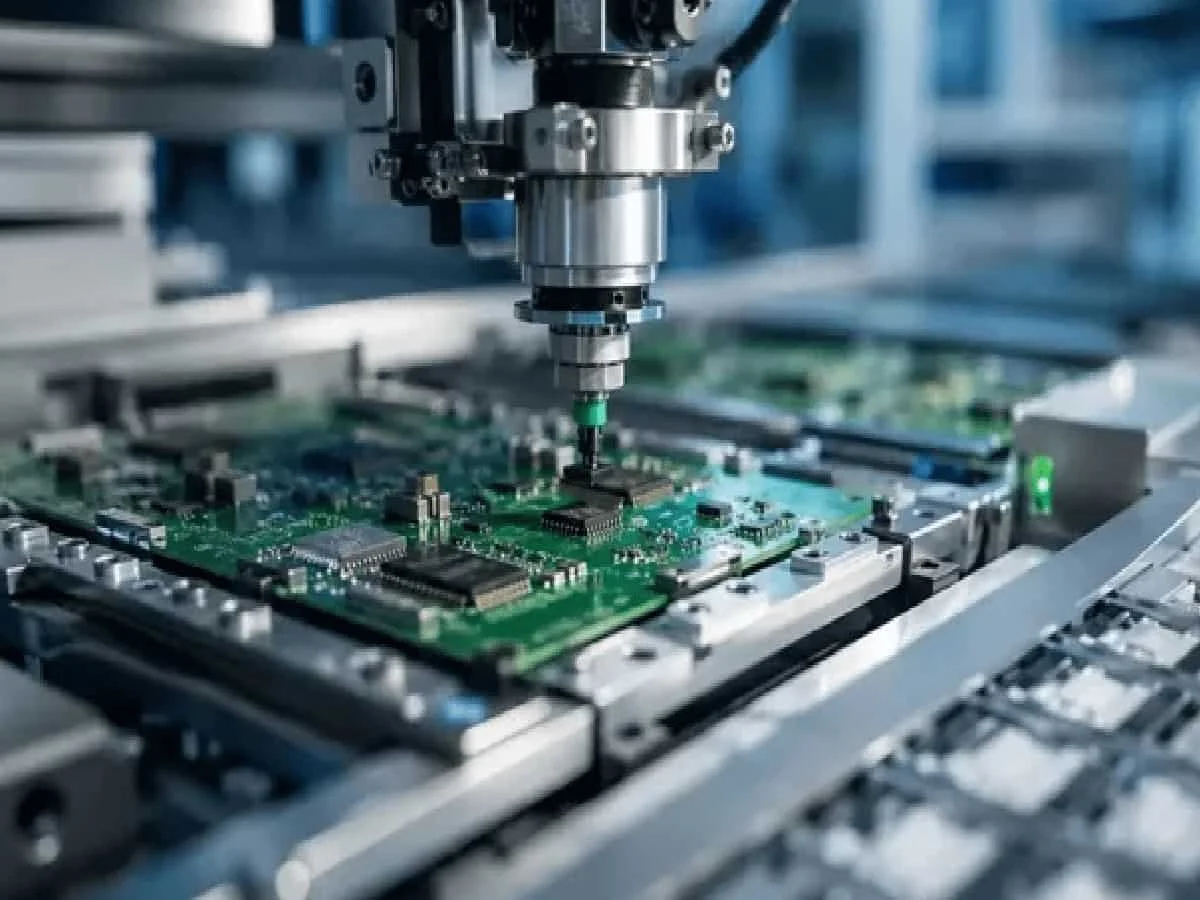
The most compelling evidence of India’s component manufacturing maturation lies in the export figures for printed circuit boards—the foundational nervous system of modern electronic devices.
According to official data released by the Commerce Ministry, India’s export performance across specialized circuit boards during the April-September period of the current fiscal year recorded unprecedented jumps:
Mounted Printed Circuit Board Exports: Witnessed a staggering 3,219 percent surgejumping from $63 million in the previous financial year to $210 million in the current period.
Stuffed Printed Circuit Board Exports: Scaled by an incredible 304 percentrising from $214 million to $864 million.
These high-tech components are not merely finding local buyers; they are being exported to manufacturing hubs and global trade centers worldwide, including China, Hong Kong, the Netherlands, and Singapore. This proves that Indian-manufactured components meet the rigorous quality, durability, and cost standards demanded by international tech supply chains.
Memory Circuits and Solid-State Storage Surge
Beyond circuit boards, India’s footprint in advanced semiconductor-adjacent products is widening rapidly. Modern electronics rely heavily on memory architecture, and Indian manufacturing is stepping up to meet this global demand.
Commerce Ministry data highlights jaw-dropping growth vectors across advanced tech hardware:
Memory Integrated Circuits and Circuit Boards: Recorded an astronomical 2,332 percent export increase during the April-September window.
Solid-State Storage Devices (SSDs): Surged by an incredible 1,681 percentreflecting strong capabilities in data storage assembly and production.
Network Transmission Equipment: Grew by a robust 98 percentwith the United States standing out as the single largest export destination for Indian-made routing and networking hardware.
Strengthening the ‘Make in India’ Vision and Reducing Import Dependence
Economic analysts and trade experts emphasize that the transition toward exporting non-smartphone electronics yields a dual benefit for the Indian economy. First, it diversifies export revenue streams, insulating the sector from single-product market fluctuations. Second, and more importantly, it systematically reduces the nation’s reliance on foreign components.
By scaling up domestic production of PCBs, memory circuits, and network infrastructure, India is successfully capturing higher tiers of the global value chain. This localized ecosystem not only attracts massive foreign direct investment (FDI) from global tech giants but also generates high-skill engineering and manufacturing employment domestically.
As Indian electronics manufacturing continues to mature, the nation is steadily shedding its historical identity as a pure assembly destination. By embedding itself deeply into the intricate architecture of global hardware supply chains, India is proving that its technological prowess extends far beyond finished