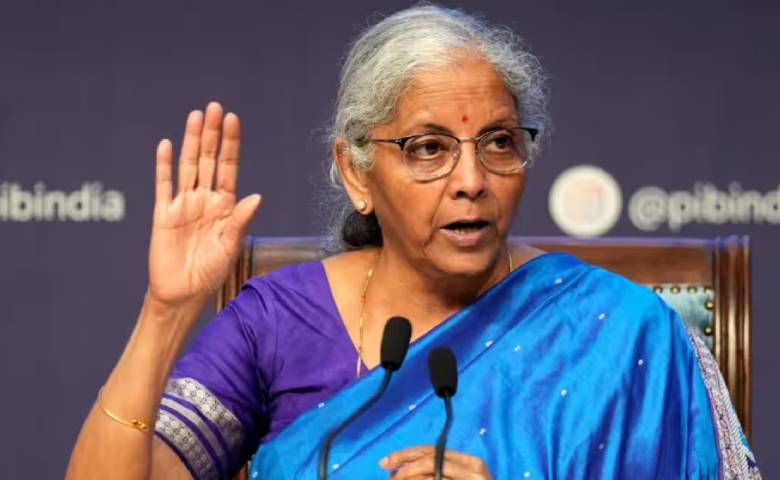
Business News : The youth of the country i.e., Gen Z will play a major role in shaping the next general budget. Finance Minister Nirmala Sitharaman on Monday began a series of meetings for the 2027-28 budget. Every year, before making the budget, the government consults leading economists and businessmen, but this time an important step has been taken. Youth representatives are also invited to these traditional pre-budget meetings. A special session will be held for Gen Z, where they can share their views on the budget with senior executives and experts.
Leading economists attended the first meeting
The first meeting of this series held on Monday was attended by leading economists. The main issue in the meeting was the government debt. The experts clearly advised the government that while government expenditure is expected to increase in the future, the government should not back down on the path of reducing the national debt. A person present at the meeting, who did not want to be named, said the entire discussion centered on how the government would control its deficit. Experts believe that the government has limited room for lavish spending, so it is prudent to stick to its debt reduction plan.
Stock market investors can get relief
Nowadays, a large number of youngsters and common people invest in the stock market. A major issue related to these investors was also raised in Monday's meeting. Another member of the meeting, who did not want to be named, said there was also a discussion on reducing the LTCG (Long Term Capital Gains) tax on stock market earnings.
Government reduces LTCG tax in budget
According to the existing rules, if a person buys shares and sells them after more than one year, 12.5% LTCG tax is levied on the profit. However, if the profit is earned by selling the shares before the completion of one year, the profit is taxed at 20%. Additionally, STT is deducted every time shares are bought or sold, and dividends received from companies are also deducted. If the government reduces the LTCG tax in the budget, it will be a big relief for investors.
Costly oil and the challenge of the Eighth Pay Commission
The government will face a significant expenditure challenge in the next budget. The government will also have to account for the recommendations of the 8th Pay Commission. When these recommendations are implemented, the cost pressure on the government exchequer may increase significantly. The meeting also discussed the threat of rising crude oil prices due to ongoing tensions in West Asia. However, economists advised the government to treat this rise in oil prices as a temporary problem. On debt, the government aims to reduce the country's debt to 50 percent of GDP (plus or minus 1 percent) by 2030-31.
From November 16 to 26, people from various fields will be consulted
In Monday's meeting, Secretary, Department of Economic Affairs, Anuradha Thakur, Chief Economic Adviser V. Ananth Nageswaran and many senior officers of the department were present. Besides, Dheeraj Neem, senior economist at ANZ Research, Prachi Mishra, professor at Ashoka University, Deepti Deshpande, chief economist at CRISIL and Ananth Narayan, former full-time member of SEBI, also expressed their views. A separate meeting with representatives of the agriculture sector was also held on Monday.
The budget consultation process will start from November 16
The pre-budget consultation process will begin from November 16 and continue till November 26. In the coming days, the government will hold separate discussions with representatives of banks, insurance companies, stock markets, manufacturing and financial markets. Representatives from youth startups, education, health, employment, infrastructure, energy and small and medium enterprises (MSME) have also been invited to present their views.