By Obnews Editorial Staff
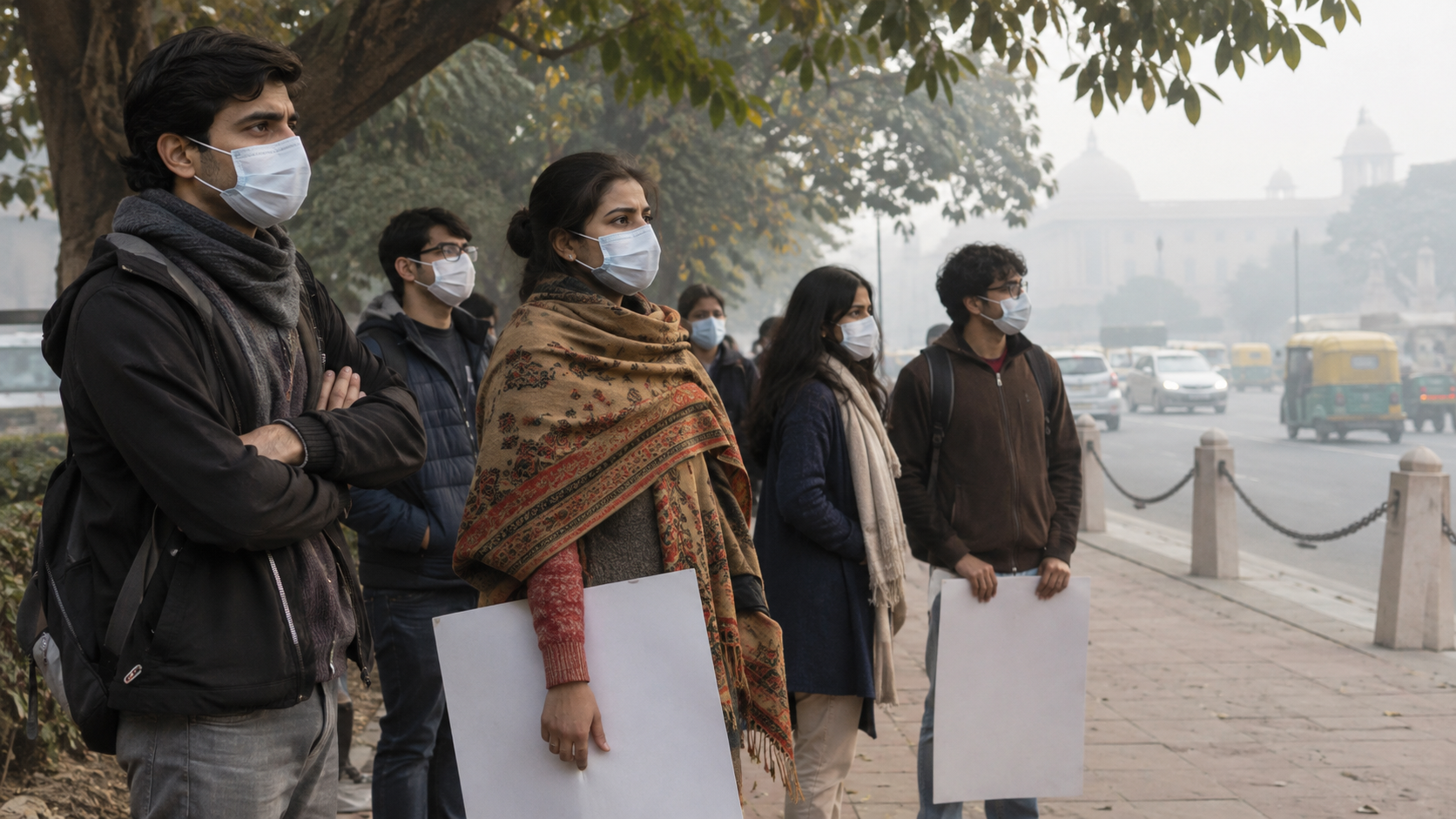
Residents, cancer patients and student activists demanding stronger action on air pollution met senior government officials in Delhi on November 16 after police stopped their demonstration near the Union environment ministry. The delegation pressed for a meeting with Environment Minister Bhupender Yadav, bringing concerns about the capital’s air to the agencies overseeing pollution control across the National Capital Region.
The group had gathered near the ministry’s Jor Bagh offices following correspondence seeking an urgent discussion of pollution and its health effects. Police and paramilitary personnel stopped demonstrators at the intersection of Second Avenue and Jor Bagh Road. All India Students’ Association president Neha, environmentalist Bhavreen Kandhari and former Navy officer Ashish Jacob took part in discussions about allowing a delegation through.


The delegation was directed to the Commission for Air Quality Management and later met its member secretary, Tarun Kumar Pithode, and environment ministry joint secretary Uday Chaudhari. The meeting lasted more than an hour. The ministry had told the group that Yadav was travelling to Antalya, Türkiye, for the UN climate conference, while continuing to monitor pollution-control measures.
The demonstration came two days after Yadav ordered stronger enforcement across Delhi, Haryana, Uttar Pradesh and Rajasthan. At the November 14 review, state governments were told to assign senior officials responsibility for implementing controls in seven Haryana cities, four Uttar Pradesh cities and four Rajasthan cities. Those officials are expected to make field visits and submit weekly reports to the air-quality commission.
The review also directed the Central Pollution Control Board to seal 191 identified non-compliant industries that had not ordered required pollution-control equipment. Road-owning agencies were instructed to accelerate repairs to potholes, damaged footpaths and other surfaces contributing to dust. The ministry called for mechanical road sweepers to operate in double shifts, supported by digital monitoring of their use.
Traffic management was another immediate priority, with action ordered at 233 identified congestion points across the region. The ministry directed agencies to intensify removal of silt, construction waste and municipal waste and to coordinate measures across state boundaries. The commission was also asked to issue notices to officials failing to carry out their responsibilities, adding an accountability requirement to the enforcement programme.