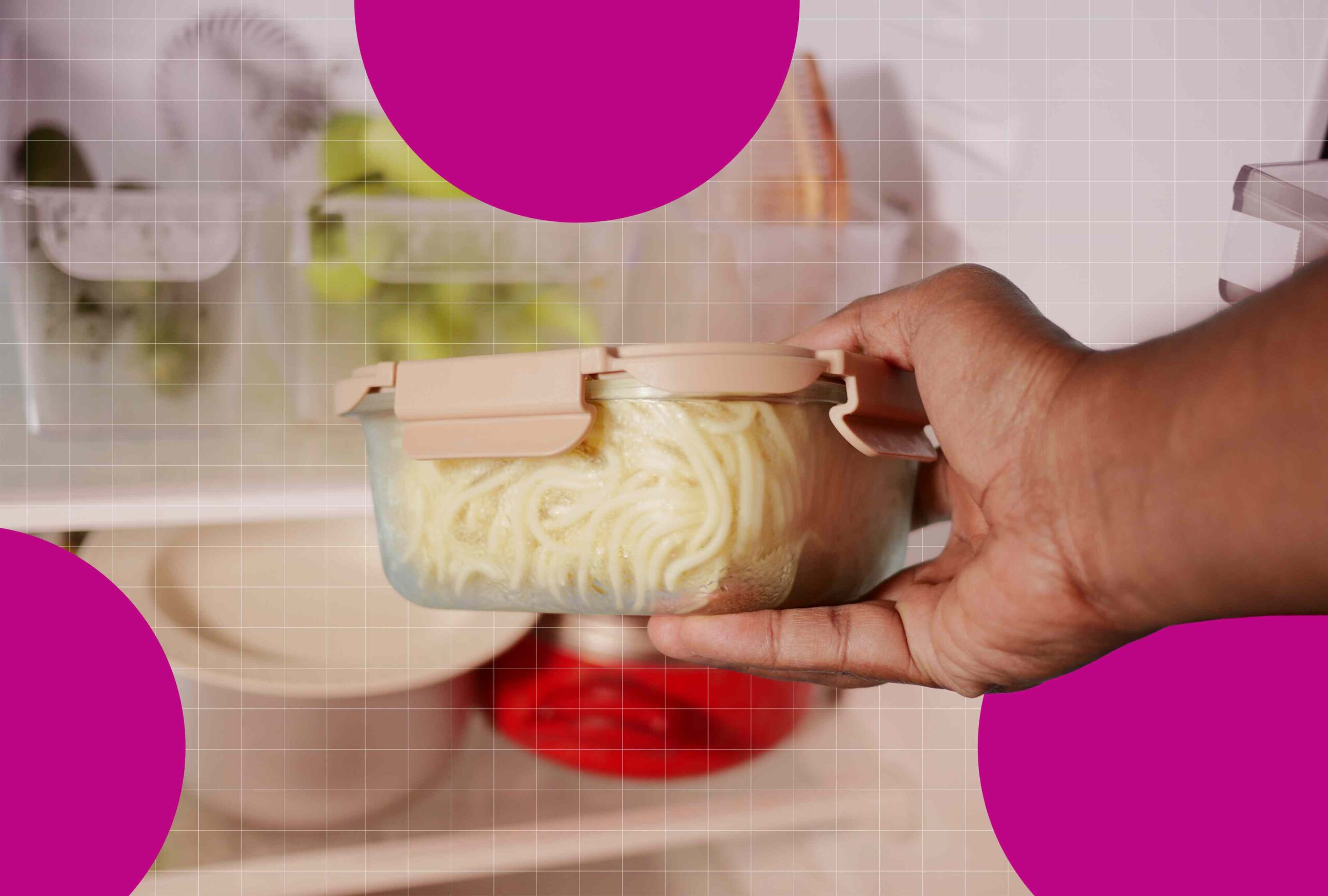
Leftover pasta contains resistant starch, but that doesn’t mean it’s better for your gut.
Reviewed by Dietitian Madeline Peck, RDN, CDN
Key Points
- Cooling pasta after cooking increases resistant starch, which may support gut health.
- Higher-fiber pastas, like whole-wheat options or those made from legumes, can support gut health.
- Store and reheat leftover pasta safely to avoid foodborne illness; consume within 3-4 days.
Leftover pasta may offer more than a convenient meal the next day. Cooking and then cooling pasta increases its resistant starch, a type of carbohydrate that escapes digestion in the small intestine and can feed beneficial bacteria in the colon. But does that make leftover pasta better than a freshly cooked bowl?
While cooled pasta may offer some benefits for your gut and overall health, its total fiber content and what you pair with it are also important. We asked dietitians to explain what makes leftover pasta different from freshly cooked pasta, how these changes may support gut health and how to get more resistant starch in your diet.
Why Is Leftover Pasta Different from Freshly Cooked Pasta?
“When you cook pasta and then allow it to cool and place it in the fridge, something called starch retrogradation happens,” explains Jasmin ThiefRDN, LDN. During cooking, starch molecules absorb water and swell, softening the pasta and making its starch easier for digestive enzymes to break down. As pasta cools, some of those starch chains reorganize into tightly packed structures that resist digestion. This process, called retrogradation, increases the pasta’s resistant starch content.
“Retrogradation doesn’t have an impact on the nutritional properties, like vitamins and minerals, but it can change how your body responds to the cooled pasta,” says Amanda SaucedaM.S., RD. For example, research suggests that resistant starch may influence how your body responds to carbohydrates, potentially improving glycemic control and insulin sensitivity in healthy adults and people with prediabetes.
“Resistant starch is a type of carbohydrate that doesn’t get digested in your small intestine,” says Dieb. Instead, it travels to the colon, where it acts more like a prebiotic fiber and feeds beneficial gut bacteria. These bacteria ferment resistant starch, producing compounds called short-chain fatty acids that support gut health.
Which Is Better for Gut Health: Leftover or Freshly Cooked Pasta?
Leftover pasta may be slightly better for gut health, but resistant starch is only one part of the picture. “Not all of the starch in cooked-then-cooled pasta is turned into resistant starch, so don’t count on it as a major contributor for fueling gut bacteria or filling your fiber gap,” says Sauceda. Instead, she recommends focusing on the pasta’s total fiber content. “Pastas made with beans or lentils can be a better pasta option to start with because they are higher in fiber,” explains Sauceda. Whole-wheat pastas also tend to be a rich source of fiber, with a 2-ounce serving providing 6 grams of fiber.
Since most people don’t consume enough fiber, mixing a fiber-rich pasta into your routine—rather than trying to optimize regular pasta with resistant starch—may be a more practical strategy. Fiber supports a healthy, diverse microbiome when fermented by gut bacteria, which then produce short-chain fatty acids that may confer additional health benefits. Fiber also supports a healthy digestive system and encourages bowel regularity.
Potential Risks
- Don’t eat pasta left out too long. Leaving pasta at room temperature for more than two hours can increase the risk of contamination and foodborne illness. Food left in the “danger zone” of 40°F to 140°F for more than two hours becomes susceptible to bacterial growth.
- Practice food safety with leftovers. “Make sure to add cooked pasta to an airtight container and refrigerate it ASAP so it cools quickly and safely to prevent bacterial overgrowth,” explains Dieb. When reheating leftovers, heat them to 165°F and check for any cool spots. This helps kill any potential bacteria.
- Know when to toss leftovers. Leftover pasta is generally fine to consume for three to four days after preparation, provided it’s been stored properly in the refrigerator. “When it gets slimy or stinky, then that’s a good sign it’s past its prime, and you should toss it,” recommends Sauceda.
Tips for Eating More Resistant Starch
- Choose greener bananas. Greener or less-ripe bananas naturally contain higher amounts of resistant starch. As bananas ripen, starches break down, increasing sugar content and reducing resistant starch.
- Let your starches cool (not just your pasta). Cooling allows starches to realign and then recrystallize, making them more resistant to enzymatic breakdown in your body. Letting starchy foods, like rice, oats and potatoes, cool before eating is an easy way to increase your resistant starch intake.
- Eat more legumes. Lentils, chickpeas and beans are excellent sources of resistant starch, providing an average of 4 to 10 grams per ½-cup serving. Legumes also provide essential minerals such as iron and potassium, which are crucial for overall health.
Our Expert Take
Leftover pasta may give your gut a bit more support thanks to the resistant starch that forms as it cools. But choosing a higher-fiber pasta, such as one made from beans or lentils, may be a more practical way to support digestive health, whether you eat it fresh or reheated. Remember to practice food safety when eating leftover pasta, and enjoy a variety of sources of fiber and resistant starch in your diet to support gut and overall health.