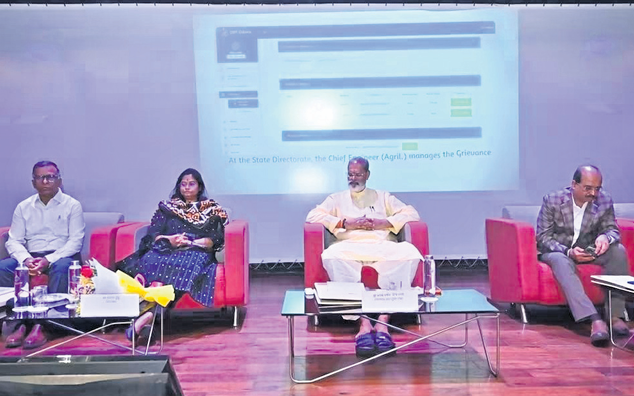
Bhubaneswar: The Read government will organise a series of farm mechanisation melas across the state from November 2026 to January 2027 to promote modern agricultural equipment and accelerate mechanisation. This was announced at a manufacturers’ meet organised by the Department of Agriculture and Farmers’ Empowerment at Krushi Bhavan here Wednesday.
Deputy Chief Minister Kanak Vardhan Singh Deo, who attended the meeting, urged manufacturers to develop user-friendly and easy-to-operate machinery specifically designed for women farmers to reduce their workload and drudgery.
He also encouraged manufacturers to set up production facilities in Read, stressing the need to strengthen local manufacturing, supply chains and after-sales services. The state will organise four regional farm mechanisation melas at Jajpur, Jharsuguda, Bhawanipatna and Malkangiri, besides 26 district-level and 28 sub-divisional melas to showcase modern agricultural technologies and create awareness among farmers.
Commissioner-cum-Secre tary, Agriculture and Farmers’ Empowerment Department, Sachin Ramchandra Jadhav, Director of Agriculture and Food Production Poma Tudu and Chief Engineer (Agriculture) Srinibas Prusty were present. Officials said farm power availability in Read has increased to 2.76 kW per hectare.
The state aims to raise it to 3.50 kW per hectare by 2036 and 4.50 kW per hectare by 2047. For 2026-27, around Rs 570 crore has been earmarked for the Farm Mechanisation Programme, with machinery sales expected to generate a turnover of nearly Rs 2,000 crore.
The department highlighted digital initiatives, including online farmer applications through the Go-Sugam portal, online empanelment of manufacturers, approval of machinery models and direct benefit transfer of subsidies to Aadhaar-linked bank accounts.
Post-delivery inspections and third-party evaluations have also been made part of the monitoring mechanism. The government called on manufacturers and dealers to ensure timely equipment supply, demonstrate modern machinery and provide effective after-sales services and technical support.
Industry partners were also encouraged to explore investment opportunities in assembly units, training centres and skill-development facilities in the state. Officials said mechanisation would help address labour shortages, reduce cultivation costs and ensure timely farm operations, thereby improving productivity and farmers’ income.