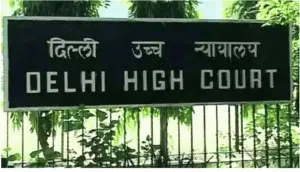
New Delhi: Aadhaar card cannot independently serve as conclusive proof of an individual’s date of birth, the Delhi High Court has ruled in the case of M/s J. J. Electronics vs. Smt. Rosamma Joy. Justice Manoj Kumar Ohri made this clear observation while adjudicating a petition filed by JJ Electronics, which had challenged a prior labour court order dismissing the Aadhaar card as definitive age verification.
The legal dispute originated when Rosamma Joy, employed as a “Finishing Man,” was terminated a year ahead of her scheduled retirement after JJ Electronics flagged a discrepancy in her birth year. According to the company, Joy’s Aadhaar card listed her birth year as 1959, whereas records submitted to the Employees’ State Insurance Corporation (ESIC) stated 1960. Relying on the Aadhaar entry, the management concluded she had reached the age of superannuation and ended her employment, prompting Joy to approach the labour court for reinstatement and full back wages.
During the initial proceedings, the labour court refused to accept the Aadhaar card as valid proof of age because no representative from the Unique Identification Authority of India (UIDAI) was examined to verify the basis of that date. Instead, accepting 1960 as her birth year based on the EPIC records, the tribunal granted Joy back wages and consequential benefits, a decision the company subsequently appealed before the High Court.
Upholding the lower tribunal’s reliance on ESIC records, Justice Ohri noted that the age determination was an evidence-based finding of fact representing a plausible view that was not perverse enough to warrant interference under writ jurisdiction. The High Court further ruled that having originally recorded Joy’s birth year as 1960, management could not later invoke a conflicting Aadhaar date to prematurely end her tenure.
As Joy had not reached superannuation and the employer failed to demonstrate she had resigned or taken voluntary retirement, terminating her without fulfilling the mandatory conditions of Section 25F of the Industrial Disputes Act, 1947, constituted illegal retrenchment. Consequently, the High Court affirmed the labour court’s ruling and ordered JJ Electronics to disburse Joy’s back wages within four weeks of the judgment.
In the proceedings, JJ Electronics was represented by advocates Renu, Kamlesh Kumar Mishra, Piyush, and Mansi, while advocates Aarlin Moncy and Sruti Mehrotra appeared on behalf of Joy.