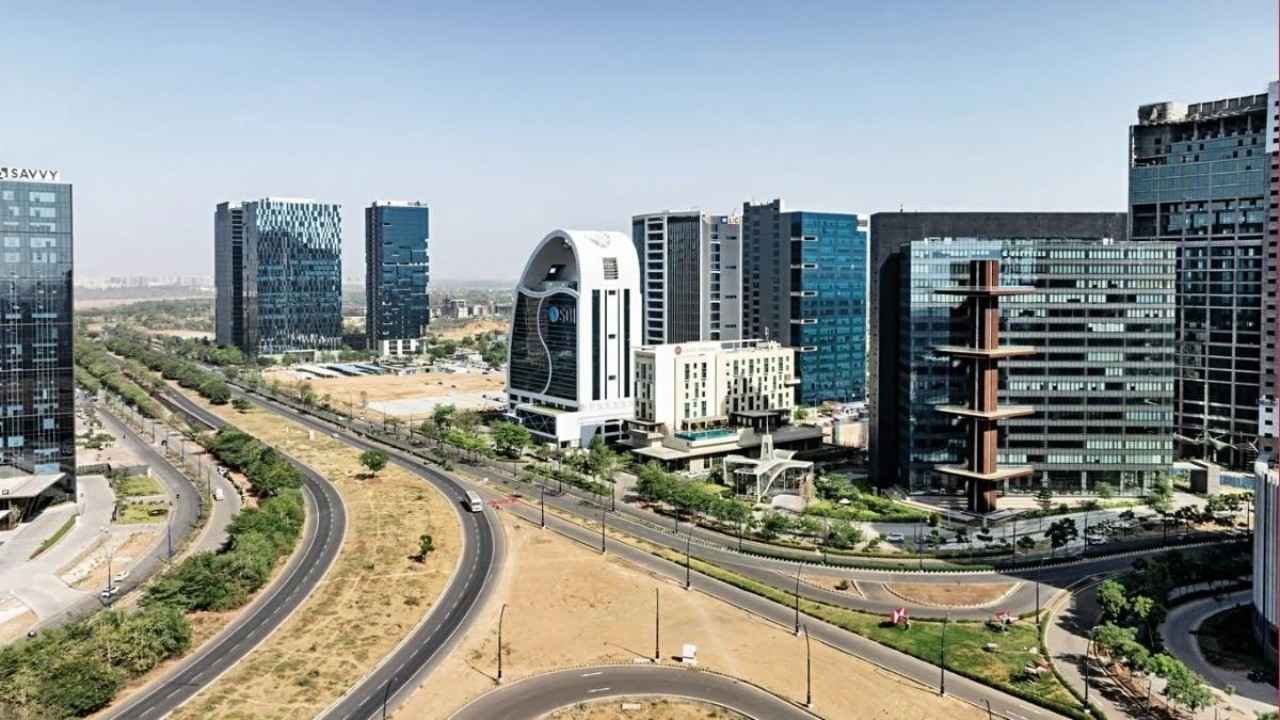
Two completely different pictures are being seen in the Indian capital market at present. On one hand, NSE International Exchange i.e. NSE IX present in GIFT City of Gujarat is doing trading almost round the clock. According to the information released by the exchange on November 3, 2026, the total operation time of its market has been increased to 23 hours 30 minutes from November 2. Now the work here is from 3:15 am Indian time till 2:45 am the next day.
The other side of this coin is related to the domestic stock markets of Mumbai. Where crores of common investors of the country buy and sell shares every day. Market regulator SEBI is taking utmost care regarding increasing the trading hours in those domestic exchanges i.e. NSE and BSE. To understand why the rules and regulations for two exchanges in the same country are so different, it is important to look at the structure of the two markets and the differences in their regulatory frameworks.
Also read: After two days of rise, the stock market fell again, know the price of gold and silver.
Same name, but completely different
Often, common investors consider NSE IX and Mumbai-based domestic NSE to be the same due to NSE being attached to the name, but the scope and way of working of both are completely different. Also, it is important to understand a technical detail regarding the NSE IX timing of 23.5 hours. The exchange has called it time to do a thorough market research. Its technology system takes just 3 minutes for maintenance between sessions and less than 15 minutes at the end of the day. However, this does not mean that there is continuous trading for 23 and a half hours. This means trading hours may vary for different products. Its main objective is to keep pace with the timing of the markets of Asia, Europe and America.
Having an exchange in GIFT City does not mean that any common investor from India can go there and start trading directly. Investment eligibility is divided into three categories. First, foreign investors and foreign institutions can easily do business here through IFSCA registered broker-dealers. For them, it is a means to reach many global markets from one place.
Other NRIs can invest in the exchanges here within the prescribed rules and eligibility. Third, under the Liberalized Remittance Scheme (LRS) of the Reserve Bank of India, a maximum of US$ 2.5 lakh can be sent abroad in a financial year. NSE IX has facilitated Indian investors to invest in global stocks but the exemption to buy foreign shares under LRS does not mean that domestic investors can also trade in GIFT.
Why was there a brake on extending the timing of the domestic market?
The discussion of extending the timing of domestic stock market is not new but there are more practical obstacles in its path. On May 4, 2018, SEBI had issued a circular granting in-principle permission to exchanges to conduct trading in the equity derivatives segment from 9 am to 11:55 pm. However, for this, strict conditions were imposed like strong risk management, monitoring of positions, adequate staff and prior approval of SEBI.
In this series, during 2023, NSE proposed to start an additional evening session in Index Future and Option i.e. Index F&O. The plan was to reopen the markets from 6:00 pm to 9:00 pm after the regular trading hours of 9:15 am to 3:30 pm, so that investors could react quickly to news from the US and European markets. But in May 2024, NSE MD and CEO Ashish Chauhan clarified that SEBI has withdrawn this proposal. The biggest reason for this was the lack of consensus among the broker community. Brokers were worried that running offices, staff, back-office and monitoring systems late into the night would greatly increase their expenses, while it was not certain whether the trading volume would be met in proportion to that or not.
How did NSE IX get approval for 23 and a half hours?
The biggest difference here is regulation. Mumbai's domestic exchanges come under the purview of SEBI, while GIFT City's international financial services hub is supervised by IFSCA. It was established under a separate law on 27 April 2020. IFSCA amended its Market Infrastructure Institutions rules, which came into effect from November 2024.
Under these rules, GIFT City's exchanges can decide the trading time up to a maximum of 23.5 hours daily after assessing the costs and profits. Along with this, it is mandatory that the risk management remains strong, adequate collateral is kept at regular intervals to compensate for the loss on the futures contract. Apart from this, there must be settlement at least once a day. It is because of this different legal framework that NSE IX was able to implement this change.
Will Mumbai market also remain open overnight?
Theoretically this is possible but just increasing the time will not be enough. Despite the benefits of being able to respond quickly to international news and better manage risk, keeping markets open for long periods of time has its risks. If there are less buyers and sellers over a longer period of time, the difference between the buying and selling prices may increase. Due to this, common investors may have to bear the loss of buying shares at expensive prices and selling them at cheap prices. Apart from this, the market being open day and night will also increase the continuous trading pressure and expenses on retail investors.
Also read: No return of Jenson Huang to Nvidia, Chairman accepted his resignation.
Actually, keeping the market open for long hours and running it safely are two completely different things. This model of GIFT City is definitely a great experiment to attract global capital but it cannot be directly implemented on Mumbai markets without involving crores of domestic investors, thousands of brokers and clearing system.