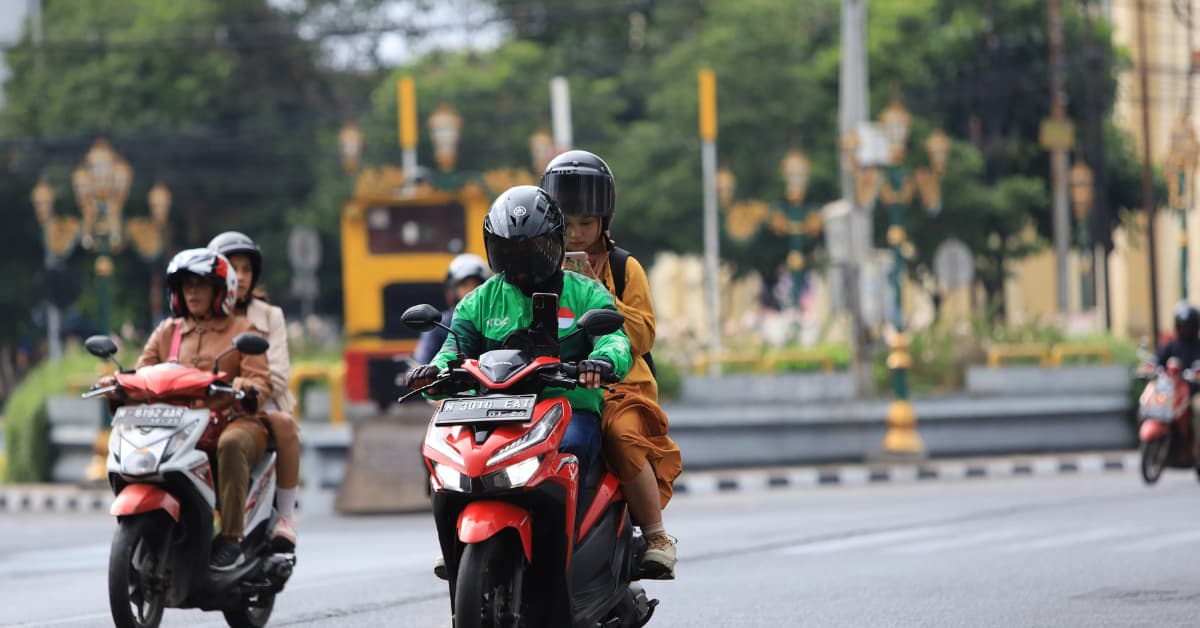
The Supreme Court has dismissed the Karnataka government’s appeal against the Karnataka High Court order allowing bike taxi operations in the state, upholding the January 23 ruling
The decision provides regulatory relief to bike taxi operators such as Rapido, Uber and Ola in a key market, while reinforcing the role of bike taxis as an affordable mobility option and a source of livelihood
The Karnataka HC held that motorcycles could be registered as transport vehicles and operated as contract carriages. While the state can frame regulations for bike taxis, it cannot deny permits solely because they are two-wheelers
In a major relief for ride-hailing platforms such as Rapido and Uber, the Supreme Court (SC) has dismissed the Karnataka government’s appeal against a Karnataka High Court (HC) ruling permitting bike taxi operations in the state.
A bench comprising Justices Satish Chandra Sharma and N Kotiswar Singh upheld the HC’s January 23 judgment, which lifted the suspension on bike taxi services in Karnataka.
During the hearing, Justice Sharma highlighted the affordability of bike taxis, citing the experience of young women working at the Supreme Court who use two-wheelers to commute because of the lower fares.
The ruling is expected to provide regulatory clarity for bike taxi operators in Karnataka, where services have faced legal uncertainty over the classification and registration of motorcycles used for commercial passenger transport.
It must be noted that the bike taxi framework may vary from state across India. Bike taxi regulations vary across states because transport policy and permit conditions are implemented by individual state governments under the broader framework of the Motor Vehicles Act. While the central law has a broader framework, the onus of framing state-specific rules and regulations lies on local authorities.
This has led to different approaches, with some states allowing the services subject to local regulations, while others have restricted or prohibited them. For instance, states like Maharashtra, Kerala, Delhi, have put in place bike taxi adverse regulations over the past few years.
In a bid to bring in some uniformity on a nation-wide scale, union minister for road transport and highways Nitin Gadkari urged states to permit bike taxis by adopting the Motor Vehicle Aggregator Guidelines, 2025. The minister cited the potential to expand livelihood opportunities amid crackdowns on bike taxi operations across several states.

“If the whole country accepts this, then 10 Cr jobs will be created. And the food and other delivery apps working in this are different. So, if 10 Cr and 8-10 Cr are there, then 18 Cr jobs will be created here,” the minister said yesterday.
Reacting to the SC’s decision, Uber said the decision brings “much-needed regulatory clarity” and recognises bike taxis as an affordable and convenient mobility option in congested cities.
For Uber, the ruling comes at a time when it is doubling down on bike taxis across the country. Facing tight competition from category leader, Rapido, Uber recently made a public announcement confirming its bike taxi service, Uber Bike, to 100 cities in India. Uber claimed in August that it is now present in more than 220 Indian cities.
Meanwhile, Rapido’s cofounder Pavan Guntupalli pointed to the larger economic benefits of the SC ruling today. He believes that it creates value for commuters, drivers and cities, adding that the startup would look forward to working with the Karnataka government to develop the category within a framework focused on safety and regulation.
“For Rapido, this is more than a legal outcome. It is an affirmation of something we have consistently believed in: that India needs mobility solutions designed around the way people actually travel,” Guntupalli said.
Bike taxis have been the bread and butter for the Prosus-backed unicorn. Rapido built its business around bike taxis, using the spare capacity of privately owned motorcycles to offer affordable rides without investing in its own fleet. The model helped it scale to over 400 cities and facilitate more than 5 Mn rides daily, while supporting over 9 Mn livelihoods.
Karnataka’s Bike Taxi Dispute
At the heart of the matter is an erstwhile order passed by a single judge bench of the Karnataka HC, directing bike taxi operators to suspend services until the state government introduced a regulatory policy permitting their operations.
The order was challenged by ride-hailing platforms Ola, Uber and Rapido, motorcycle owners, and the Bike Taxi Welfare Association.
On January 23, a Division Bench of the Karnataka HCcomprising Chief Justice Vibhu Bakhru and Justice C M Joshi, set aside the earlier order and allowed bike taxi operations to resume.
The bench held that motorcycles could be registered as transport vehicles and operated as contract carriages. It also observed that while the state government could frame regulations governing bike taxis, it could not refuse permits solely on the ground that the vehicles were two-wheelers.
The Karnataka government subsequently challenged the HC’s decision before the Supreme Court, seeking to overturn the order permitting bike taxi operations.
With the apex court dismissing the appeal, the HC’s decision remains in force, allowing bike taxi services to operate in Karnataka, subject to applicable regulatory requirements.
For platforms such as Rapido, Uber and Ola, Karnataka is an important market for app-based mobility services. The ruling also comes amid wider efforts by ride-hailing companies to expand two-wheeler-based transport offerings, which typically cater to commuters seeking lower-cost alternatives to autos and cabs.
However, the SC’s decision upholding the HC order does not rule out the Karnataka government’s ability to frame and enforce regulations for the category.