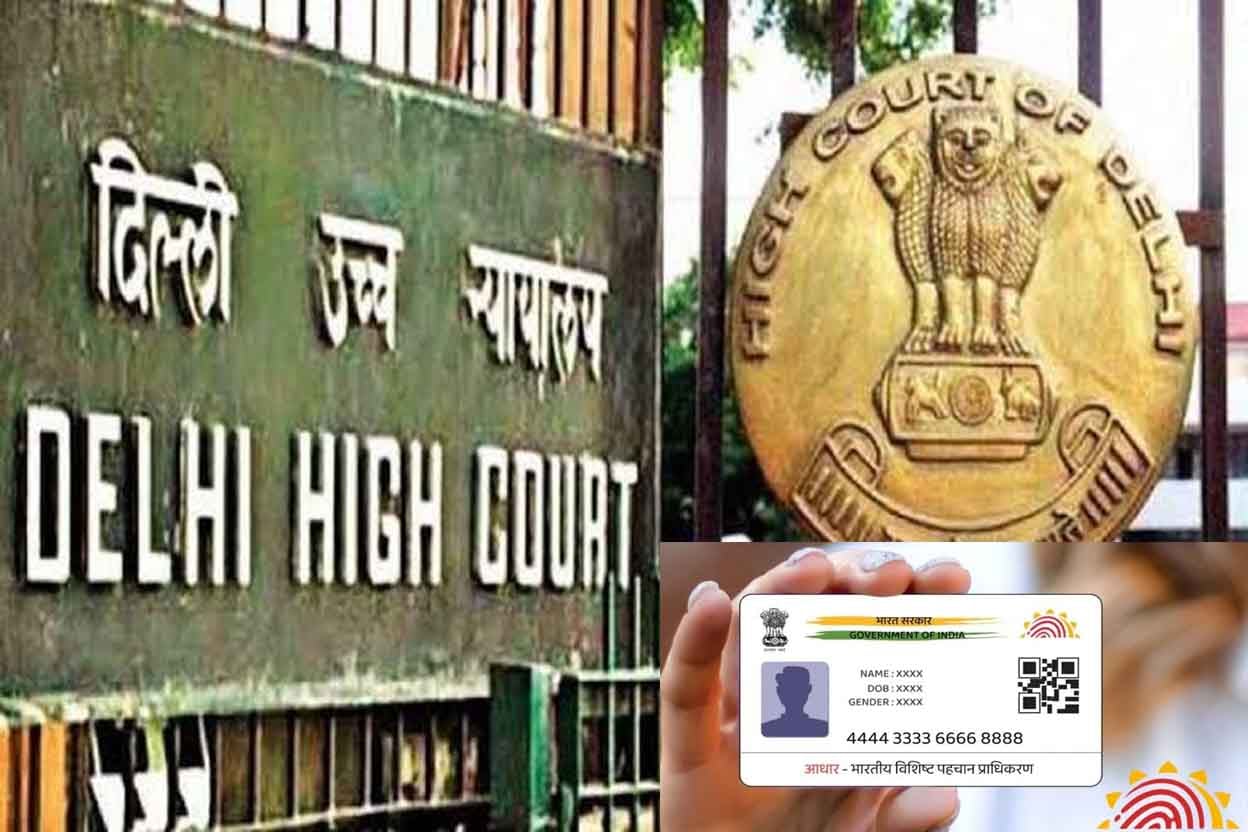
Delhi High Court has given an important decision regarding Aadhar Card. The court has clarified that Aadhaar card in itself is not a conclusive proof of a person's date of birth. It is mainly used to establish the identity of a person. The court made this comment during the hearing of a dispute related to the job of a female employee. The bench of Justice Manoj Kumar Ohri rejected the company's petition and upheld the Labor Court's decision. The Labor Court had ordered to pay the outstanding salary to the female employee after her services were terminated illegally.
What was the whole matter?
This case J.J. Rosamma, who works in an electronics company, is engaged to Joy. The woman claimed that she was working in the company since December 1981. At that time, her monthly salary was Rs 10,500. According to the woman, after the Delhi government increased the minimum wage of skilled workers in March 2017, the company refused to give her the revised salary. After this, on May 20, 2017, his services were terminated after he demanded the outstanding salary for the month of April.
Date of birth in Aadhaar card is 1959, in ESIC records 1960
The company had cited retirement as the reason behind removing the employee from the job. The management said that the date of birth of the woman was recorded in the Aadhaar card as 20 May 1959. Accordingly, she had turned 58 on May 20, 2017, which was the prescribed age of retirement in the company. At the same time, in the ESIC records of the employee, his date of birth was recorded as 20 May 1960. This record was provided by the company itself while registering the employee in the year 2010. While comparing both the records, the Labor Court considered the date of birth recorded in ESIC as more reliable. The court also found that no independent document was produced in support of the date of birth recorded in the Aadhaar card.
Aadhaar is only proof of identity, not date of birth
In this case, Justice Manoj Kumar Ohri, in his decision given on November 13, clarified that under the law related to Aadhaar, the Aadhaar number is recognized only as a proof of identity. This in itself cannot be considered as proof of date of birth. The court also referred to the office memorandum issued by the Unique Identification Authority of India (UIDAI) on December 20, 2018. According to this, the date of birth in the Aadhaar card is recorded on the basis of documents provided by the cardholder or on his own declaration.
There was a dispute between the company and the employee regarding the date of birth.
The argument of the employer company in the case was that the employee had completed the retirement age of 58 years. For this, the company had made the date of birth recorded in the Aadhar card as 20th May 1959. At the same time, the employee said that his date of birth should be determined on the basis of the records of Employees' State Insurance Corporation (ESIC), in which the year of birth was recorded as 1960. As per this record, the employee was 57 years old in May 2017 and had not reached the prescribed age of retirement.
Independent document not found in support of Aadhar Card
The High Court agreed with the employee's argument and said that there is no independent document on record which confirms the date of birth recorded in the Aadhaar card. The court also noted that the management had received the concerned Aadhaar card only two months before the termination of the employee's service. The court remarked that the entire stand of the management in this case is shown in the document 'Ex. WW 1/7' i.e. dependent on Aadhaar card. However, Aadhaar card in itself is not proof of date of birth.
What did the court say?
In its decision, Delhi High Court cited the office memorandum issued by UIDAI on 20 December 2018. This document was presented on record in the court by the female employee. It has been clarified that UIDAI records the date of birth in the Aadhaar card on the basis of documents provided by the cardholder or self-declaration. The court said that the Aadhaar Act, 2016 recognizes the Aadhaar number as proof of identity, but nowhere does it have a provision for accepting Aadhaar as proof of date of birth. The High Court concluded that when the date of birth recorded in the ESIC records of the employee was May 20, 1960, the company could not have terminated his services a year earlier on the basis of the second date of birth recorded later in the Aadhaar card.
Follow the LALLURAM.COM MP channel on WhatsApp