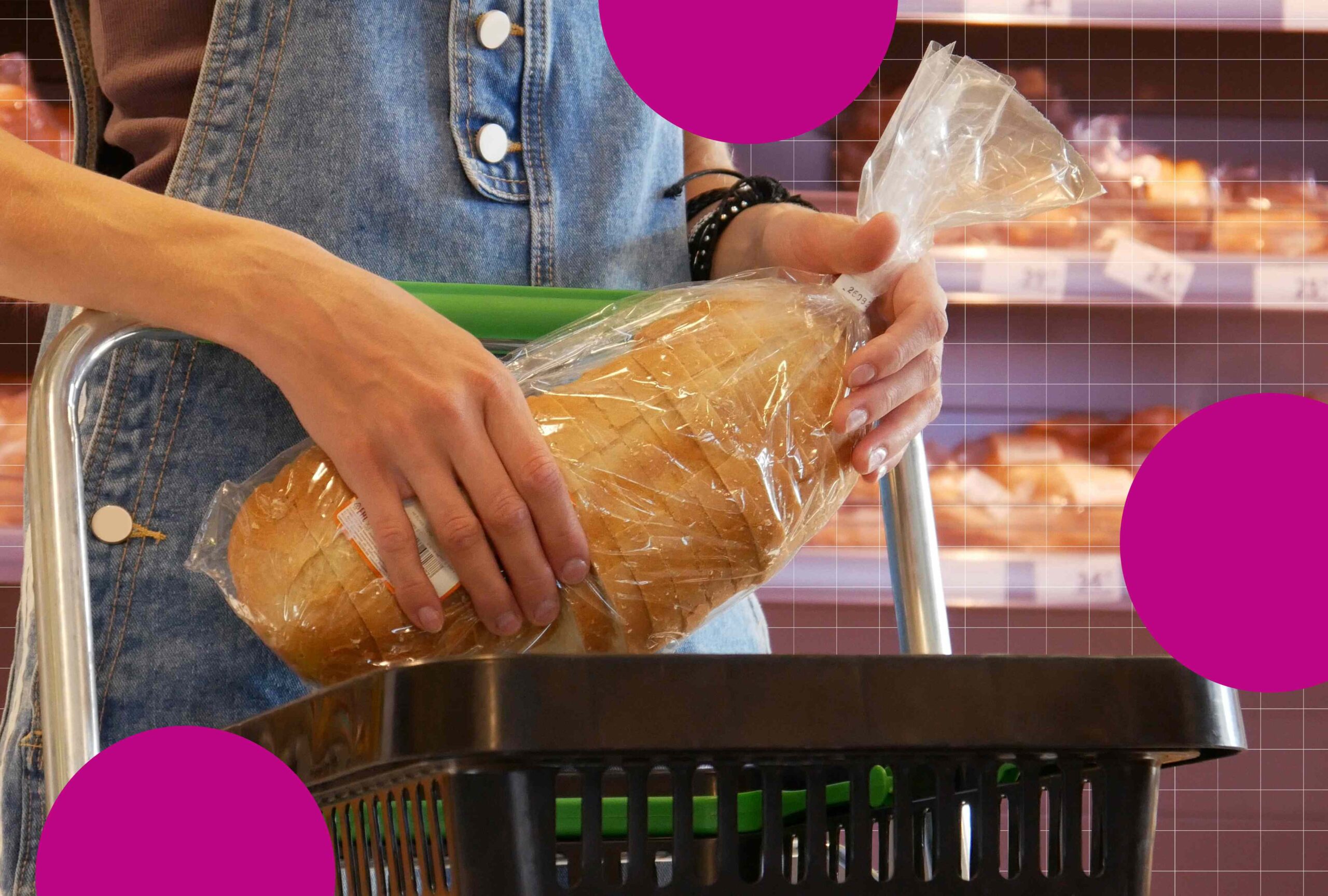
From visible mold to excess moisture, here’s how to smell, look and feel your way to a better loaf of bread.
Reviewed by Dietitian Jane Leverich, M.S., RDN
Key Points
- Skip bread with visible mold, unusual odors, excess moisture or damaged packaging.
- Look for a fresh aroma, a golden crust and a texture that matches the type of bread.
- Store bread in a cool, dry place and freeze extra slices to maintain freshness.
Before you put a loaf of bread in your shopping cart, take a closer look. Visible mold is the biggest red flag when buying bread—even a small patch means you should skip the whole loaf. Bread is porous, so mold can spread beyond the spots you can see.
But mold isn’t the only thing to watch out for. We asked four experts what to look for when buying bread, from excess moisture to damaged packaging, plus how to store your loaf to keep it fresh. Here’s their advice for your next trip down the bread aisle.
Why Mold Is the Biggest Red Flag When Buying Bread
The biggest tip-off that bread might not be top-notch is a fairly conspicuous one: “Visible mold is an immediate no,” verifies Jessica Brantley-Lopez, M.B.A., RDN.
This unwelcome fungus might show up as green, white, black or bluish spots. Regardless of its color or size, even a small patch is “a clear sign the bread is no longer safe to eat,” adds Lauren Manaker, M.S., RDN, LD.
Unlike with hard cheeses, where it’s usually safe to trim away the mold and eat the rest, bread is a different story. “If you see even the smallest bit of mold, the whole loaf must go. Bread is porous, and those tiny spores can invade neighboring slices without being visible to the naked eye,” says Lauren Harris-Pincus, M.S., RDN.
If the loaf is sold in clear packaging, Manaker recommends inspecting all sides, especially near the bottom and around the end slices, to make sure the loaf looks mold-free throughout.
Other Red Flags When Buying Bread
Besides mold, dietitians tell us it’s best to pass on a loaf if you notice any of these other signs:
- It smells off. Bread with a sour, musty or otherwise unusual smell could be spoiled or on the verge of it, Brantley Lopez and Manaker agree.
- It looks wet. Condensation can build up if bread is packaged while still warm. While a little moisture isn’t necessarily a problem right away, excess moisture can encourage mold growth, Manaker warns. “Avoid packages that have excessive moisture or are damp, sticky or slimy,” says Brantley-Lopez.
- The packaging is open. If the bag is torn or unsealed, the bread may have been exposed to air and contaminants, which can shorten its shelf life and affect its quality, according to Manaker.
What to Look For When Buying Bread
Now that you’re well-versed in what to avoid, let’s dive into the green flags. You deserve nothing but the best, so we asked the pros to dish about the qualities of a great loaf.
- Check the ingredient list. “Most bread recipes call for flour, water, salt and maybe a few other ingredients. Unless it is a bread with inclusions like raisins, cranberries or some combination of herbs, it should have a tight ingredient deck,” says Jerritt Branagan. Some additional ingredients serve as dough conditioners or preservatives, which can help maintain texture and freshness. When possible, Harris-Pincus suggests seeking out dark, seedy whole-grain bread instead of regular white bread. “You’ll benefit from the fiber, vitamins, minerals and unsaturated fats along with a hearty, more flavorful bite,” she explains.
- Smell for a fresh aroma. Go ahead and give the loaf a quick sniff. Manaker and Brantley-Lopez note that a loaf should have a pleasant, fresh, slightly wheaty aroma rather than a flat or unpleasant one. It may also smell a bit tangy or yeasty, depending on the leavening agent (sourdough or yeast, respectively).
- Look for a golden crust. A golden-brown crust can be a sign of well-developed flavor. “The paler the crust color is, in most cases the less flavor it will have,” Branagan says. The color develops through chemical reactions during baking that contribute to flavor. “The caramelization of the residual sugars in bread helps highlight the flavor the bread was intended to present,” Branagan continues.
- Make sure the texture matches the type. Gently squeeze the loaf. “Sandwich bread should feel soft and springy, while an artisan loaf or sourdough may have a firm, crisp crust,” Brantley-Lopez tells us. Harris-Pincus adds that fresh bread should squish a bit and rebound, indicating the appropriate moisture and texture.
- Check the “best by” date. Often, a bread bag can give you a clue about the freshness of the loaf inside. Peek at the expiration date for a quick hint about “how fresh the bread is and how much time you may have to enjoy it at home,” Brantley-Lopez says. “Just remember that a ‘best by’ date is about quality, not necessarily food safety.”
Shopping & Storage Tips
As you decide which bread to buy and how much you’ll need, Manaker recommends purchasing only what you realistically expect to eat within a few days. This can help reduce food waste while allowing you to enjoy your bread at its freshest.
“A larger loaf or that warehouse store two-pack isn’t necessarily a bargain if half of it ends up in the trash,” Brantley-Lopez reminds us.
You’ve done all the detective work to find a great loaf. Here’s how to store it so you can enjoy every slice.
- Keep the loaf away from heat and light. Store bread in a cool, dry place away from direct sunlight and heat sources, such as the oven. The experts give a thumbs-up to a bread box, cabinet, large kitchen drawer or pantry. “Store-bought bread is A-OK in its original bag or in a clean bread bag. This helps prevent it from drying out. If it’s a crusty bakery loaf, a paper bag can help preserve the crust for the first day, though it may dry out a bit faster,” Manaker cautions.
- Freeze slices to extend their lifespan. For bread you don’t plan to eat within a few days, “I’m a big fan of the freezer,” Branagan says. Manaker loves this approach so much that she often pops a portion of the loaf into the freezer immediately after bringing it home “instead of waiting until it starts to age.” Store the loaf sliced in a freezer bag, with as much air as possible pressed out. Each piece can go directly from the freezer into the toaster. Keep in mind that “in most cases, the refrigerator can actually make bread go stale or dry faster due to changes in the starches. Freezing is usually the better option for maintaining quality over time,” Brantley-Lopez explains.
- Make the most of stale slices. Traditional store-bought bread should be soft and spongy, Harris-Pincus confirms. If it’s crumbly, dry or hard, it’s likely stale. However, that doesn’t mean it’s spoiled, Brantley Lopez chimes in: “Bread that’s a little dry or firm isn’t necessarily unsafe. It may just be past its peak freshness.” If it’s mold-free and doesn’t check any of the “bread to skip” boxes above, make the most of it by using the slices in stuffing, croutons, bread pudding or French toast rather than tossing them, the experts suggest.
Our Expert Take
The best bread to buy is mold-free and has a fresh aroma and a texture that matches its variety. Look for sealed packaging and check the best-by date for a clue about how long the loaf may maintain its quality. Once you’re home, store bread in a cool, dry place and freeze any extra slices you don’t plan to eat within a few days. Now, who’s ready for a sandwich?