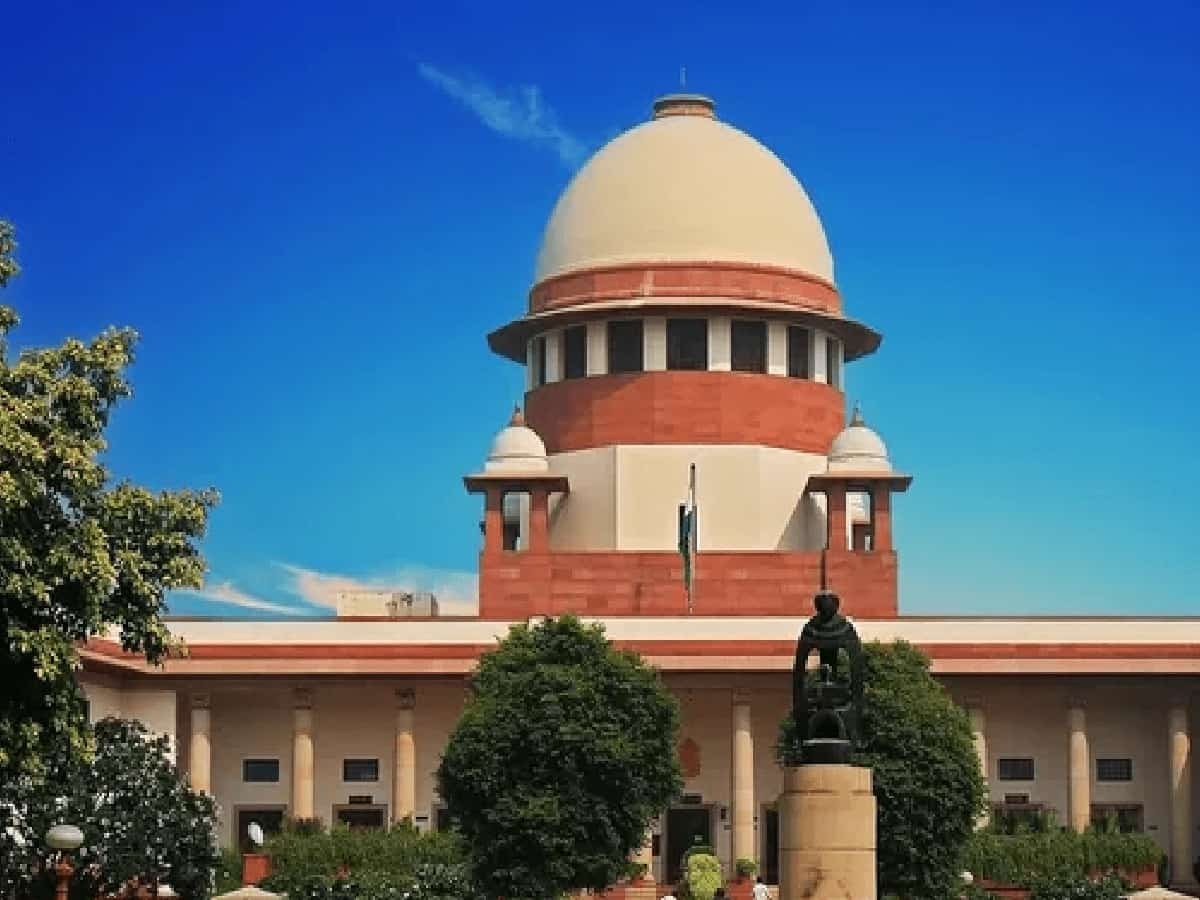
An important and sensitive decision has come from the Supreme Court i.e. Supreme Court of India in matters related to the rights and pension of armed forces personnel. The Supreme Court has ruled that to receive pension under the War Injury Element, it is not necessary that the army soldier was injured only by enemy bullets. The court clarified that even if a soldier is injured by the firing of his own gun or his own troop during an operation, he will still be considered entitled to this pension. Justice Satish Chandra Sharma and Justice N. Of. Singh (Justice NK Singh) bench said that it is clearly recorded in the relevant order that in such circumstances the soldiers will be considered as war injured and in case of serious injury, the soldiers will be eligible to get pension. There is a lot of discussion among ex-servicemen, defense personnel, their families, legal experts and common citizens across the country from New Delhi to Jammu and Kashmir and Unnao, Kanpur and Lucknow of Uttar Pradesh regarding this decision, accidents caused by service weapons and eligibility for war injury pension. Let us know in detail which two situations were considered by the Supreme Court, what comments the bench made regarding the unintentional firing and what is the whole matter related to Subedar Major Devi Singh.
The Supreme Court in its decision said that two situations have been considered under the army order. Among these, the first situation is related to getting injured by accidental bullet or some piece i.e. splinter, while the second situation is related to getting such injury due to the firing of one’s own army. The Supreme Court held that in both the cases the injury must be caused during an operation conducted against the enemy or militants, and the present case is based on the first aspect i.e. accidental injury. The bench clarified that a shot from a service weapon can be fired unintentionally even if the person concerned does not intend to cause physical injury to himself. For example, this can happen due to an impact or fall while holding the weapon, the trigger getting stuck, unintentional pressure on the trigger, or some mechanical failure. According to the Court, such incidents are clearly distinct from the concept of self-inflicted injury which involves the element of intentionality or knowledge and which renders the person ineligible to receive the enhanced pension amount.
If we look at the background of this case, the Supreme Court accepted the petition of Subedar Major and Honorary Lieutenant Devi Singh, who was injured during Operation Rakshak and Operation Parakram in Jammu and Kashmir in August 2002. According to his case, a bullet from his gun was accidentally fired, which passed through his thigh and damaged the femoral vein. Due to this incident, he became 40 percent disabled and was granted the general disability element of the pension. He then sought enhanced pension under the war injury component, which was earlier rejected. The Supreme Court quashed the order of the Armed Forces Tribunal which had rejected his claim, thereby granting him judicial relief.