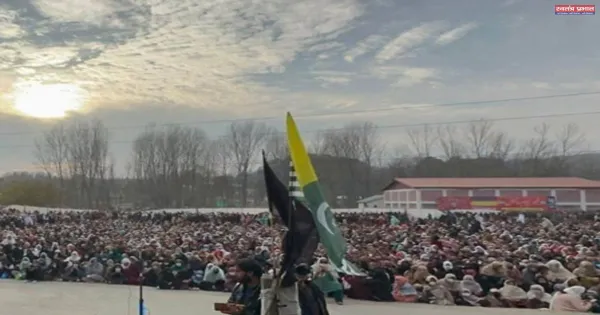
Kathmandu. Allegations of suppressing political dissent and mass movements in Pakistan-occupied Kashmir (PoK) have now created serious concern at the international level. UN experts have questioned the Pakistan government over the alleged crackdown, arrests and human rights violations against protesters in the region. The objections raised by the six UN Special Human Rights Rapporteurs have once again brought the situation of civil rights and political freedoms in PoK into the center of international discussion.
Question on declaring JAAC a terrorist organization
Six Special Rapporteurs of the United Nations have expressed concern over the designation of Joint Awami Action Committee (JAAC) as a terrorist organization in a letter sent to the Government of Pakistan. Experts have also raised questions about the alleged use of anti-terrorism laws against people associated with the organization and the action taken against protesters.
Experts say portraying a movement demanding economic relief, political accountability and civil rights as a security threat is a matter of grave concern. He also noted alleged state violence, deaths, arrests and long-standing human rights violations against protesters.
The movement started with the demand for basic facilities and accountability
JAAC had emerged as a mass movement in PoK. Its major demands included reduction in electricity rates, affordable availability of essential commodities and ensuring accountability of government officials. This movement also got the support of common people due to problems related to inflation, governance system and feeling of political neglect.
However, instead of holding meaningful talks on the demands of the movement, the government has been accused of adopting strict action against the protesters. United Nations experts have raised questions on this situation and asked whether the economic and political demands of the people are being considered a threat to security only because they challenge the existing power system?
Resentment increased due to police deployment and restrictions
The report claims that there was heavy deployment of police and paramilitary forces during the protests in PoK. Prolonged restrictions were imposed on public activities and some public services were affected, with communications disruptions. Despite this, instead of decreasing, people's resentment increased.
These circumstances have deepened concerns about civil liberties, peaceful assembly and freedom of expression. UN experts also included issues such as arbitrary detention, counter-terrorism operations and the protection of human rights defenders in their letter.
The question of political representation goes beyond economic demands.
The ongoing dissatisfaction in PoK is no longer limited to electricity prices and inflation alone. It is linked to larger questions like political representation, administrative accountability and participation of the people of the area in the decision process.
Questions are also being raised among the people of the region as to how accountable the institutions that take decisions that affect their future and everyday lives actually are. Long-standing complaints about political autonomy and governance have made this dissatisfaction more widespread.
Demand for investigation of deaths and release of arrested people
Justice in cases of deaths of protesters, release of hundreds of people reportedly arrested and impartial investigation into allegations of human rights violations have now become key issues. The initiative of six UN Special Rapporteurs is being seen as a sign of increased international monitoring of the human rights situation in PoK.
Now the biggest question is about the next action of the Pakistan government. Will the government pursue political dialogue and accountability to address the grievances of the people of the region, or continue to take harsh action to control dissenting voices? The concern of UN experts has made this question more important on the international stage.