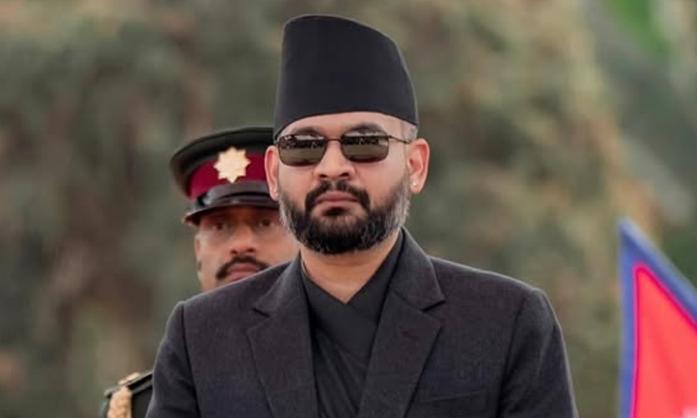
Nepal’s Prime Minister Balen Shah arrives in India on Sunday for a two-day state visit, his first since taking office in March this year. New Delhi is going all out to woo the young leader as it attempts to reset ties with a new generation of Nepalese politicians.
Having learnt from past mistakes, India is keen to ensure that its traditional ‘Big Brother’ image does not impede a more equal relationship with an important neighbour. While New Delhi was long familiar with Nepal’s established political leaders, Shah—a rapper-turned-politician—remains an unfamiliar figure whom Indian officials have yet to fully size up.
Shah emerged from Nepal’s Gen Z revolution, which toppled the old, corrupt establishment last September. He carries no political baggage and begins his term on a relatively clean slate. His diplomatic approach has reflected a desire to treat all countries equally. For some time, the PM declined individual meetings with foreign envoys, opting instead to meet ambassadors in large groups. The message was clear: all countries, large or small, would be accorded equal weight, and Nepal would not be seen as striking special arrangements with any single power. Reflecting popular sentiment, Shah and his cabinet expect Nepal to be treated with dignity and respect by all, including its powerful neighbours, India and China.
Also read: Sheikh Hasina’s return bid stirs Bangladesh turmoil, puts India ties under strain
Flood recovery and aid
Shah has come to power at a critical time, with geopolitical uncertainty compounded by a severe energy crisis following the closure of the Strait of Hormuz. At home, Nepal is still reeling from catastrophic flash floods in August that killed more than 1,500 people and left roughly 5,600 missing. The floods swept away power stations, homes, roads and bridges, adding to the country’s already considerable economic challenges.
India was the first responder to the disaster, earning substantial goodwill through its rescue operations and delivering around 74 tonnes of humanitarian relief, medical aid and rescue equipment. Nepal is now seeking roughly $2 billion in additional grants and concessional loans for reconstruction. A positive response from Prime Minister Narendra Modi would bolster goodwill with a cash-strapped neighbour and add substance to efforts to reset bilateral ties.
Rebuilding political trust
Beyond immediate economic assistance, the visit is expected to focus on rebuilding political trust and addressing long-pending disputes that have bedevilled relations.
“Shah’s trip to India should help to build trust at the highest political level and focus on long-pending contentious issues that have bedevilled relations,” Chandra Dev Bhatta, a Kathmandu-based political scientist, told The Federal. He noted a public perception that, unlike predecessors who would “seek personal or partisan favours”, Shah will prioritise the broader public interest.
One of Nepal’s immediate priorities is securing permission for an additional air entry route. According to The Kathmandu PostNepal is pushing to make the Kathmandu-Mahendranagar route in western Nepal a two-way air corridor, allowing international aircraft to enter and leave through the western border. The route connects Kathmandu to Delhi via Mahendranagar in Nepal and Pantnagar in India. It is 20 miles shorter than the existing one-way departure route. Greater use of Nepali airspace would generate additional revenue for the country while reducing flight distances and operating costs.
But Bhatta believes that political trust remains paramount. “If trust is built at the political level, many things will be automatically resolved,” he said.
Also read: A genocide verdict, 9 years on: what ICJ’s Rohingya ruling means for India
Demands for sovereign equality
The larger message coming from Kathmandu is that Nepal wants a relationship with India based on sovereign equality, mutual respect and greater transparency, rather than one marked by grievances, suspicion and perceptions of Indian interference.
Majid Ansari, part of Nepal’s Gen Z Alliance and the team that negotiated with the state after the 2025 uprising, believes frank political dialogue should be the starting point. Both countries, he argued, must address their grievances openly and without hesitation, while prioritising cross-border connectivity for ordinary citizens, simplified banking transactions and smoother bilateral trade.
Nepal also believes that several existing agreements — including the 1950 Treaty of Peace and Friendship and bilateral water-sharing arrangements — were negotiated on unequal terms and require review. Ansari pointed out that the 1950 treaty was signed by the former Rana regime to safeguard its own interests, arguing that any revised framework must rest on sovereign equality and shared responsibilities.
He also delivered a pointed message regarding New Delhi’s engagement strategy, urging India to interact with Nepal’s government and people strictly through formal diplomatic channels rather than what he termed “shady intelligence mechanisms”.
Ansari argues that the long-standing border disputes involving Kalapani, Lipulekh and Limpiyadhura, as well as Susta in Nawalparasi, should also be discussed openly, based on historical facts and evidence. Finding mutually acceptable solutions, he believes, is essential to prevent further alienation between the two countries.