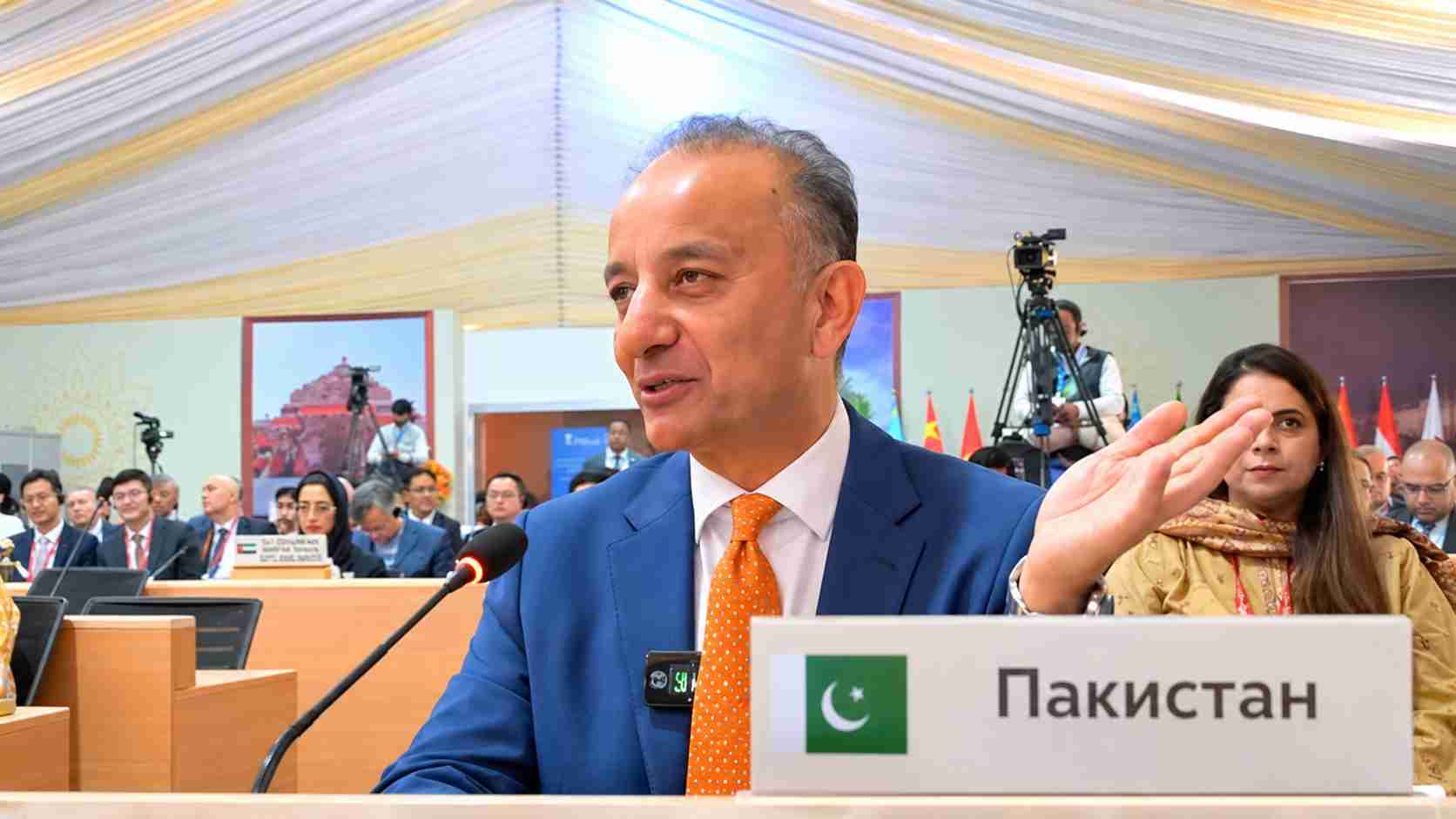
Pakistan Climate Change Minister Musadik Malik referenced Mughal Emperor Humayun and Sher Shah Suri while discussing the history of Delhi’s Purana Qila at the SCO Civilisational Dialogue Forum. He referred to the fort’s association with two rival rulers and described the monument as a story of different historical periods coming together.
Malik draws on the fort’s history
The forum is being hosted by India at the Purana Qila. It was inaugurated by Prime Minister Narendra Modi on Friday (November 20) in the presence of delegates from SCO member countries, including Malik.
“A fort, whose foundation was laid by Humayun,” Malik said. He also referred to Sher Shah Suri, an Afghan ruler who continued construction at the site after displacing Humayun.
Also Read: Pakistan minister cleared to visit Taj Mahal, denied entry to Nizamuddin Dargah
“One wall, two rivals, meaning two rulers and one fort, meaning two layers and one trench,” he added.
Malik’s office later shared a video of his address on X, describing the historic monument as a “story” in an accompanying Urdu post.
Dialogue between distinct cultures
The Pakistani minister delivered his remarks during a session titled ‘Civilisational and Cultural Expressions’, chaired by Union Culture Minister Gajendra Singh Shekhawat.
He described dialogue as an exchange between different identities and cultures. “Dialogue is between distinct identities, and between diversity,” Malik said, explaining why delegates had gathered for the meeting.
Also Read: India invites Pakistan minister to SCO Civilisation Forum in Delhi, first since Op Sindoor
He also referred to the idea of ‘tehzeeb ki guftagu’, which translates into dialogue between civilisations. Explaining the Greek roots of the word dialogue, he said ‘dia’ means through, while ‘logos’ refers to ideas.
Malik said meaningful exchanges require distinct identities rather than uniformity. He also referred to the different historical layers of Purana Qila while making his point.
Shekhawat highlights shared cultural heritage
Addressing the gathering, Shekhawat said cultural heritage connected SCO member countries through shared historical experiences.
“Shared cultural heritage is a strong bridge connecting SCO nations,” he said.
The Union minister described civilisations as living traditions whose knowledge continues to influence present-day societies. He called on participating countries to draw from their common heritage through dialogue and cultural exchanges.
Shekhawat also expressed confidence that the Delhi meeting would become a lasting platform for closer cultural relations among SCO members.
Purana Qila’s links to ancient Delhi
The choice of venue carries historical relevance. Purana Qila stands on the site traditionally associated with Indraprastha, the ancient city mentioned in the Mahabharata.
PM Modi referred to this history during Friday’s inauguration, describing the fort as an “extraordinary heritage”. He also mentioned scholarly accounts linking the site to the Mahabharata period.
Also Read: Pak defence minister calls PoK protesters ‘enemies like India’ as dozens die in firing
According to Delhi Tourism, Humayun began developing the fort as part of his proposed capital, Dinpanah. Sher Shah Suri continued the work after removing him from power.
Delegates also visited a special exhibition titled ‘Astitva: The Essence of Our Existence’, which traces Delhi’s past through archaeological discoveries dating from 1200 BC to 1200 CE.
Malik had said on Friday that his visit was for discussions in a “multilateral context”. Responding to questions about possible improvement in India-Pakistan relations, he reiterated that his participation concerned the SCO’s multilateral proceedings.
(With agency inputs)