A new investigation has connected an established malware delivery platform to a remote access trojan capable of extensive computer surveillance and control. Blackpoint Cyber’s Adversary Pursuit Group identified the previously unnamed RAT as CNCMachineRMS in its November 18, 2026 report.
The finding builds on separate investigations published by Huntress on September 28 and Forescout’s Vedere Labs on October 15. While Huntress examined malicious ChatGPT Custom GPT activity, Forescout identified the ROMULUS delivery platform.
Blackpoint subsequently linked CNCMachineRMS to one of the platform’s investigated infection chains. The campaign uses ClickFix techniques to persuade users to execute malicious instructions themselves rather than relying solely on traditional software vulnerabilities.
Blackpoint Identifies CNCMachineRMS Behind ROMULUS Attacks
Blackpoint Cyber identified the previously unnamed RAT as CNCMachineRMS with high confidence by comparing its code structure, proprietary storage format, scripting engine and family identifiers with earlier research. Researchers also found a matching SHA-256 hash between the recovered payload and the implant documented in previous Huntress research. This attribution identifies the malware behind the investigated infection chain rather than establishing the discovery of a completely new malware family.
Forescout’s Vedere Labs identified the ROMULUS delivery platform on October 15, 2026. It is a reusable, multi-payload platform rather than a single malware family. Blackpoint identified CNCMachineRMS in the investigated Stardock software delivery chain, while LegionLoader appeared in a separate delivery chain.
This distinction matters because ROMULUS provides the delivery infrastructure, while the payload determines what happens after a computer is compromised. ClickFix is the social-engineering technique used to persuade victims to initiate the infection. The findings do not establish that every ROMULUS infection deploys CNCMachineRMS.
How Fake CAPTCHA Pages Spread ClickFix Malware
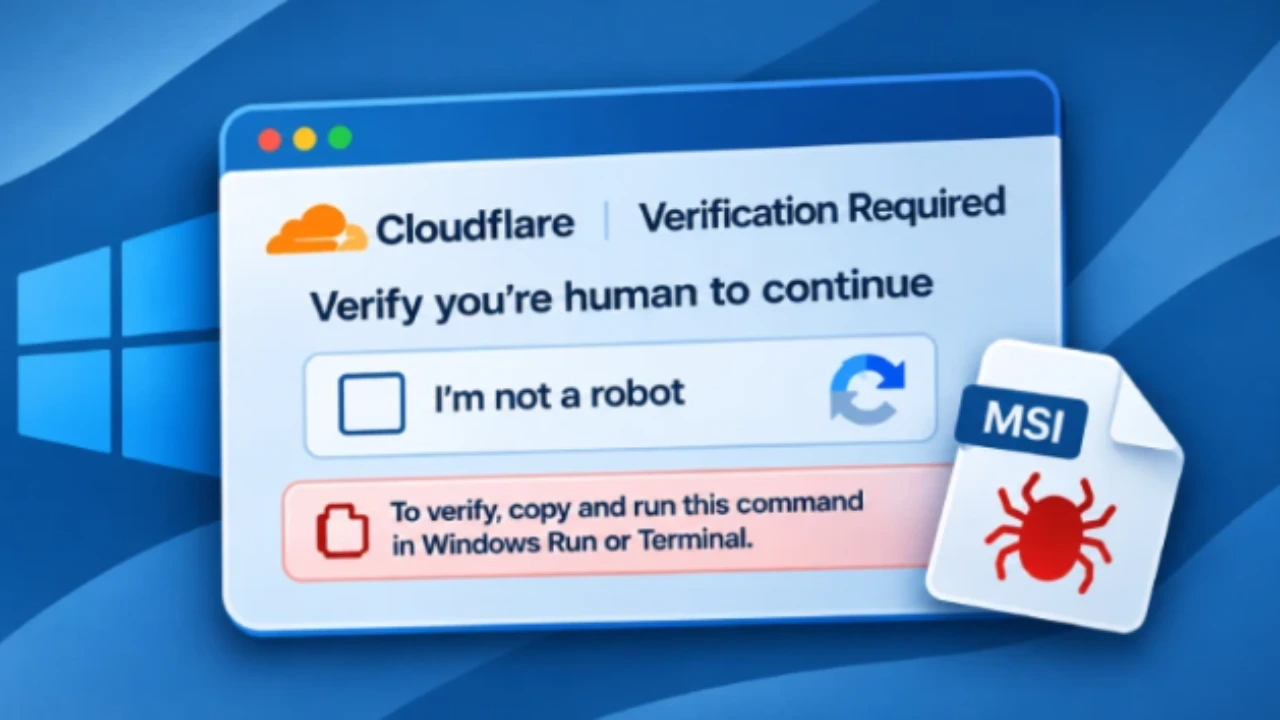
ClickFix attacks exploit people’s familiarity with CAPTCHA checks, browser warnings and routine troubleshooting instructions. A fraudulent page may display a verification box and claim that users must complete an additional step to continue.
Instead of simply asking visitors to identify images or confirm that they are human, the page instructs them to copy and execute a command on their computers. Following those instructions can launch a malware download and begin an infection chain.
Huntress’s September 28, 2026 investigation documented attackers abusing user-created ChatGPT Custom GPTs to redirect victims to malicious verification pages. The report recorded at least 40 related incidents, including two confirmed infections linked to the Custom GPT activity.
Some of the pages impersonated legitimate offerings and directed users to supposed backup websites, where fake Cloudflare verification prompts encouraged them to run malicious commands. ChatGPT itself was not identified as the malware payload. Instead, attackers misused user-created content and the platform to make fraudulent instructions appear credible.
Blackpoint’s investigation also documented the technical steps used to install the RAT. The investigated infection chain involved malicious MSI installers, PowerShell execution and DLL sideloading through legitimate signed applications, including Stardock software.
DLL sideloading allows a malicious library to be loaded by a legitimate application, helping the attackers use trusted software as part of the infection process. These steps explain how a deceptive verification prompt can lead to the installation and execution of a remote access trojan.
CNCMachineRMS Can Control Computers and Capture Audio
The identified CNCMachineRMS implant supports several remote access capabilities. Analysis documented by Huntress and examined further by Blackpoint indicates that the RAT can provide remote desktop control, stream screen activity, manage files and execute additional payloads.
Its surveillance capabilities also include capturing microphone and camera activity. These functions could allow an attacker to monitor activity on an infected computer if the malware is operated to use them.
However, the malware’s capabilities should not be confused with confirmed attacker activity. Blackpoint reported that it had observed no post-exploitation activity during its investigation. This does not mean that no infections occurred or that the malware was harmless.
The research establishes that CNCMachineRMS can support remote control, file access and audio or video capture, but it does not confirm that these surveillance capabilities were used against every victim or that every infected system experienced data theft. Blackpoint also documented the mechanisms used to maintain access to compromised Windows systems.
The investigated malware used Windows Registry Run entries and scheduled tasks to establish persistence, allowing malicious components to execute again after system restarts or at scheduled times. Researchers also identified DNS-over-HTTPS communications used to discover command-and-control infrastructure. These techniques can help malware retain access and communicate with attacker-controlled systems.
How Users Can Recognise and Avoid Fake Verification Prompts
The most important warning sign is a verification page that asks users to open Windows Run, PowerShell or another system utility and execute copied instructions. Genuine CAPTCHA services do not require visitors to run arbitrary system commands to prove they are human.
Users should also be cautious when a website redirects them to an unfamiliar backup domain, claims that a familiar service is unavailable, or asks them to install unexpected software to complete verification.
Individuals and businesses can reduce exposure by following several precautions:
- Never paste commands into Windows Run, PowerShell or Terminal simply because a website requests it.
- Check website addresses carefully before entering information or downloading software.
- Avoid installers and updates offered through unfamiliar verification pages.
- Keep operating systems, browsers and security software updated.
- Use reputable endpoint protection and restrict unnecessary administrator privileges.
Anyone who has already executed suspicious instructions should disconnect the affected computer from the network and contact a trusted IT or security professional. They should avoid using that device for sensitive accounts until it has been assessed. If credentials may have been exposed, they should be changed from a separate, trusted device.
The Bottom Line
The identification of CNCMachineRMS gives security researchers a clearer understanding of the malware distributed through ROMULUS. More importantly, the investigation highlights how fake verification pages can turn an ordinary browsing interaction into a serious security incident.
Users do not need to download an obviously suspicious file to become victims of a ClickFix attack. A fraudulent instruction that persuades someone to run a command can be enough to begin the infection. Treating unexpected verification requests with caution remains an important defence against this evolving threat.
(Via)