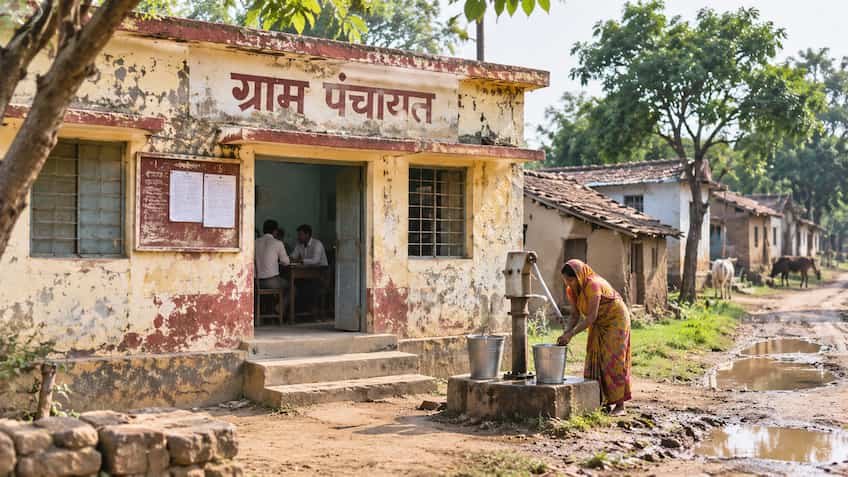
Panchayati Raj Institutions (PRIs), considered the backbone of the country's rural development, are currently facing a serious economic crisis. The latest report titled 'Finances of Panchayati Raj Institutions' released by the Reserve Bank of India (RBI) has completely exposed the poor financial condition of the village governments. According to the data of the report, due to the sudden huge decline in grants received from the Central Government and very limited sources of their own income, the panchayats of the country have reached a revenue deficit of Rs 6,920 crore. While on one hand the expenditure on rural infrastructure, sanitation, drinking water and local development works is continuously increasing, on the other hand due to empty coffers, Panchayats are facing a big crisis to meet their daily administrative expenses and development plans. The entire budget of the Panchayats faltered as the Central grant decreased. The RBI report clearly underlines the fact that the Panchayati Raj institutions of India, instead of being financially self-reliant, are completely dependent on the grants received from the Central and State Governments. About 95 per cent of the total income of panchayats comes from grants received from the central and state governments, with grants from the Central Finance Commission alone accounting for the largest share. During the period under review, there was a significant shortfall in allocations and grants received from the Central Government, while transfers from the State Governments also failed to compensate for this shortfall. As a result, the total receipts of the Panchayats shrank sharply and their revenue expenditure far exceeded the income, leading to a huge fiscal and revenue gap of Rs 6,920 crore. Own income is only around one percent, tax collection is very weak. The most shocking aspect of the report is the Own Source Revenue (OSR) of the Panchayats. According to RBI analysis, gram panchayats across the country are able to raise only 1.1 per cent of their total income from their own tax and non-tax sources. Panchayats have constitutional rights to collect revenue from property tax, water tax, market fee, fair fee, building permission fee and rent of community properties, but their collection at the ground level is negligible. Due to lack of political will at the local level, old methods of tax assessment, lack of digital records and shortage of administrative staff, most of the Panchayats are failing to collect taxes from their own areas. Instead of development work, money is going towards salaries and administrative expenses. The lack of funds in the coffers is directly impacting the basic development of the villages. The RBI report shows that a large part of the limited funds available with the Panchayats is being spent on salaries of employees, office maintenance and other revenue expenditure instead of being spent on capital expenditure i.e. construction of new roads, drains, school buildings and community centres. When tied and untied grants from the Center are delayed or cut, panchayats are left with no additional capital to undertake new development projects. In states with large rural populations such as Uttar Pradesh, Bihar, Rajasthan and Madhya Pradesh, the average expenditure per panchayat remains much lower than the national average. Delay in State Finance Commission and shortcomings in the audit system The Reserve Bank in its report has also expressed concern over the fact that in many states State Finance Commissions (SFC) are not being formed on time and even if formed, there is a delay of years in implementing their recommendations. Apart from this, major deficiencies have also been found in the maintenance and timely audit of accounts of Panchayats. Due to Panchayats of many states not submitting their updated income-expenditure data and Utilization Certificates on time, the next installments of the Central Government get stuck, which deepens the financial crisis. Big suggestions of RBI to make Panchayats financially self-reliant: RBI has given many important policy suggestions to bring the country's Panchayats out of this deficit of Rs 6,920 crore and to truly empower them. The central bank believes that panchayats should use digital platforms and GIS mapping for collection of property tax and local charges to prevent tax evasion and increase their own revenues. Also, the state governments should ensure that the funds received under the recommendations of the State Finance Commission reach directly into the accounts of the Panchayats without any delay. Apart from this, the empty coffers of village governments can be filled again only by appointment of trained accountants for financial management at Panchayat level, transparent accounting on e-Gram Swaraj portal and promotion of income generating projects at local level.