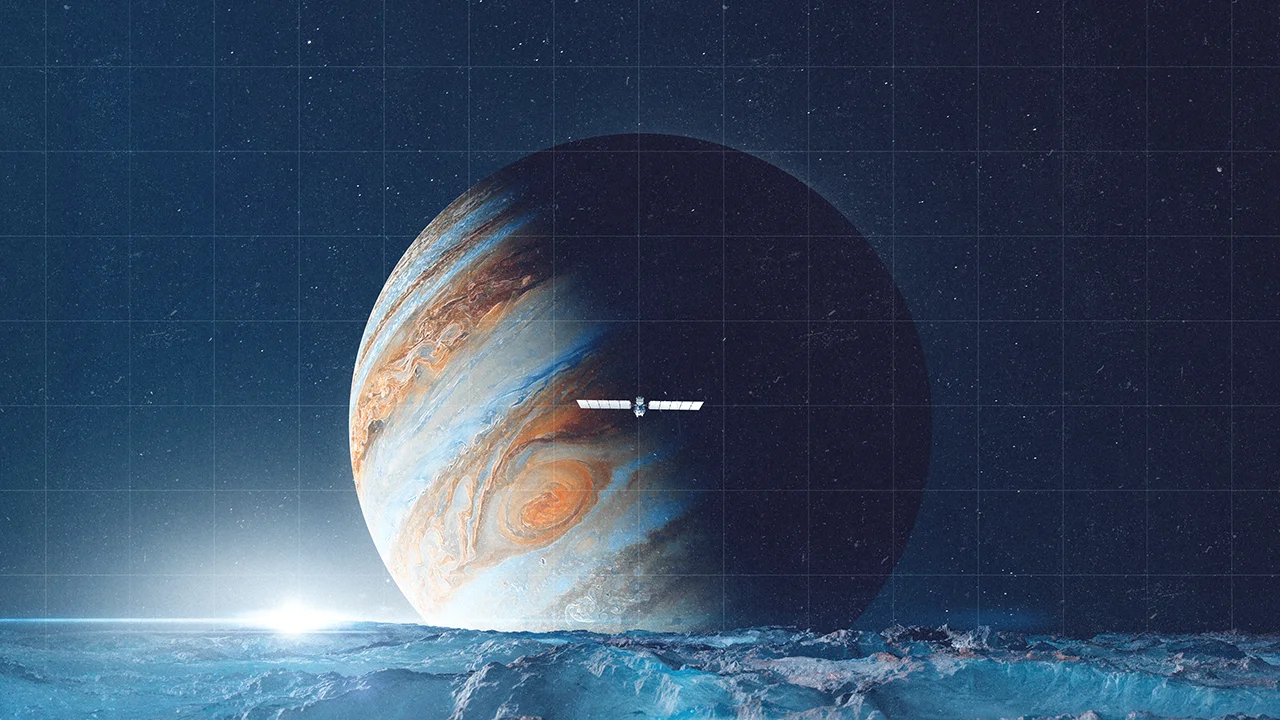
NASA Europa Clipper documentary: NASA has released a new documentary examining three decades of scientific planning, engineering challenges, and teamwork behind one of its most ambitious planetary exploration missions. Titled The Europa Conceptthe film follows the development of the Europa Clipper spacecraft, which is traveling toward Jupiter to investigate its icy moon Europa and determine whether conditions beneath its frozen surface could support life.
Released on November 23, 2026, the documentary runs for 1 hour, 2 minutes, and 46 seconds. It is available in 4K through NASA+, the NASA app, and NASA’s official documentary page. The film also examines the challenges of securing mission approval, solving engineering problems, and preparing the spacecraft for launch.
NASA’s The Europa Concept Documentary Traces 30 Years of Development
The Europa Concept traces approximately 30 years of scientific research, planning, and technical development behind Europa Clipper. It follows the thousands of scientists, engineers, and specialists who helped turn an ambitious exploration concept into a spacecraft capable of traveling through deep space.
Work on the mission formally began at NASA’s Jet Propulsion Laboratory (JPL) in 2013, although proposals and scientific investigations concerning Europa date back much further. The documentary shows how the project developed over more than a decade before the spacecraft reached the launchpad.
NASA’s documentary announcement highlights the difficulties the team encountered, including securing mission approval, addressing complex engineering requirements, and navigating disruptions during the COVID-19 pandemic. Severe weather shortly before launch added pressure to an already demanding schedule.
Europa Clipper launched on October 14, 2024, aboard a SpaceX Falcon Heavy rocket from NASA’s Kennedy Space Center in Florida. SpaceX’s role also reflects the broader use of commercial launch services and reusable rocket technology in modern space exploration.
Why Jupiter’s Radiation Environment Complicated the Engineering
One of the most significant engineering challenges explored in the documentary is Jupiter’s intense radiation environment. The planet’s enormous magnetic field traps charged particles in powerful radiation belts. Exposure to this environment can damage spacecraft electronics, disrupt onboard computers, and affect sensitive scientific instruments.
To protect critical electronics, NASA engineers designed a radiation-shielded vault with aluminum-zinc alloy walls up to 9.2 millimeters thick. This structure helps protect essential components, including onboard computers, from harmful radiation. Such challenges are also relevant to the development of radiation-hardened computing for future spacecraft.
Europa Clipper’s trajectory provides another form of protection. Rather than orbiting Europa directly, the spacecraft will orbit Jupiter and make 49 close flybys of the icy moon. Between encounters, it will travel farther from the most intense radiation regions, allowing time to transmit data, receive commands, and prepare for the next pass.
According to NASA JPL’s spacecraft overview, combining shielding with this orbital strategy helps limit cumulative radiation exposure while preserving opportunities for scientific measurements.
What NASA Europa Clipper Will Investigate Beneath the Ice
Europa is considered one of the most promising places to investigate potentially habitable environments beyond Earth. Evidence from previous observations suggests that a vast saltwater ocean lies beneath its icy surface, possibly containing more than twice as much liquid water as all of Earth’s oceans combined. However, the presence of liquid water does not establish that life exists there.
NASA has identified three primary science objectives for Europa Clipper:
- Determine the thickness of Europa’s icy shell and its interactions with the ocean below. Scientists will investigate the structure of the ice and how it interacts with the subsurface ocean.
- Investigate Europa’s composition. The spacecraft will study materials on and beneath the surface to better understand the moon’s chemical environment.
- Characterize Europa’s geology. Researchers will examine surface features and geological processes that may reveal clues about Europa’s internal activity.
Together, these objectives will help researchers assess whether Europa has conditions suitable for supporting life. Europa Clipper is a habitability mission, not a mission designed to detect or prove the existence of extraterrestrial organisms directly.
Europa is part of a broader scientific interest in the moons of the outer solar system. Other exploratory concepts, including robotic approaches proposed for Saturn’s moon Titan, reflect the challenges of investigating distant environments that may contain liquids.
Nine Science Instruments Will Examine Europa
Europa Clipper carries nine dedicated scientific instruments, along with a separate gravity science investigation that uses its telecommunications system. The instruments will make complementary observations of Europa’s surface, interior, and surrounding environment during close flybys.
The scientific payload includes visible-light and thermal cameras, ice-penetrating radar, a magnetometer, spectrometers, and instruments that measure plasma, gas, and dust. Visible-light cameras will map surface features, while thermal imaging will help identify temperature differences across the icy landscape.
The radar will probe structures within the ice shell. Spectrometers will analyze surface materials and the moon’s tenuous atmosphere, while magnetic and plasma measurements will help scientists investigate properties of the ocean below. Gas and dust measurements will offer additional evidence about material in Europa’s environment.
NASA’s instrument guide explains how these measurements are intended to work together to build a more complete picture of the icy moon.
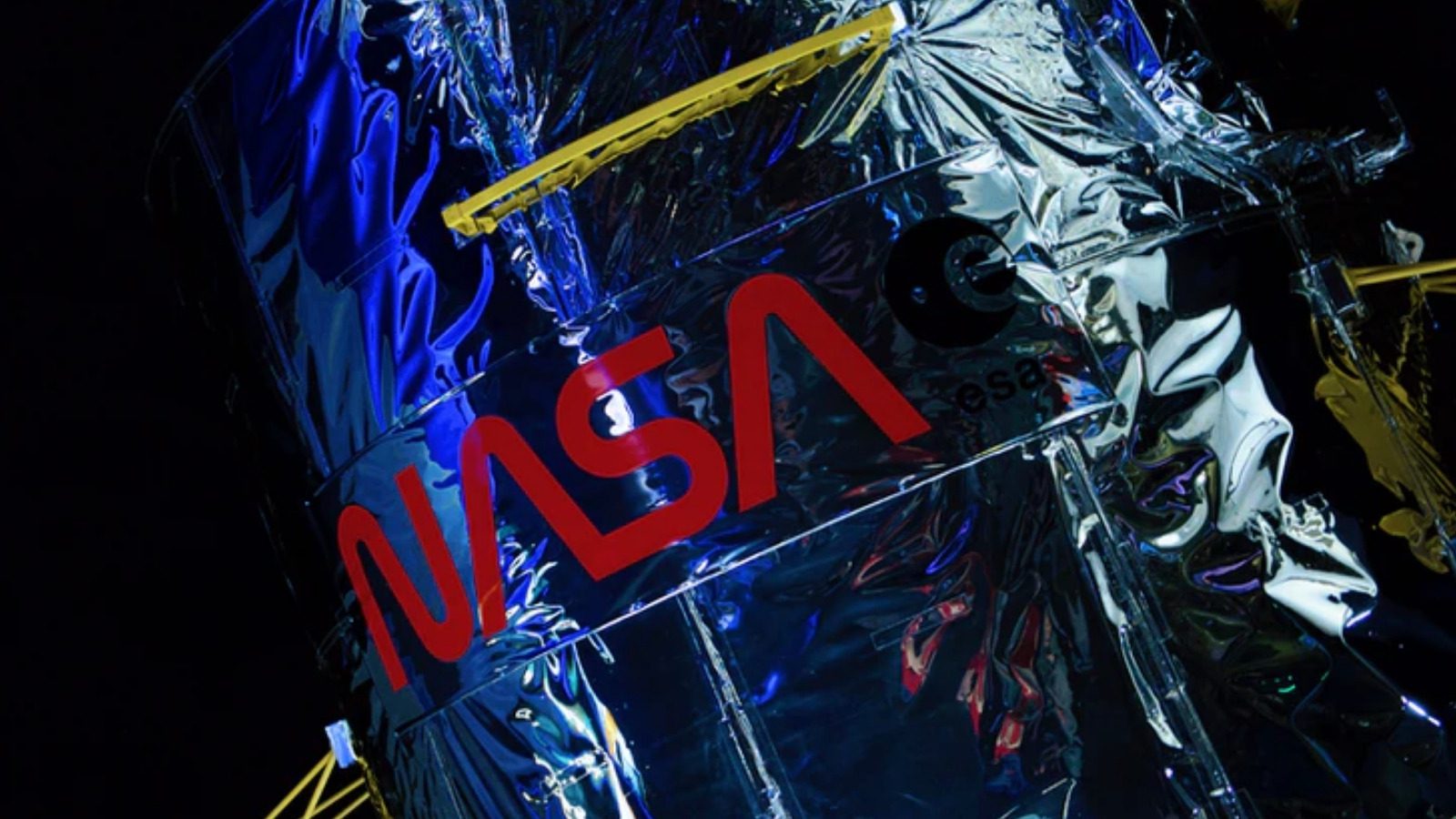
When Europa Clipper Reaches Jupiter and Where to Watch
Europa Clipper will travel approximately 1.8 billion miles (2.9 billion kilometers) to reach the Jupiter system. NASA expects the spacecraft to enter orbit around Jupiter in April 2030 and begin its Europa flyby campaign in 2031. The planned 49 close encounters will allow scientists to observe different regions of the moon over time.
Viewers interested in the mission’s development can watch The Europa Concept in 4K on NASA+, through the NASA app, or on the agency’s website. NASA has also said that the documentary is coming to YouTube, although it has not specified a release date for that platform. The documentary provides a behind-the-scenes look at the scientific ambition, engineering work, and collaboration required to send a spacecraft into one of the solar system’s most challenging environments. As Europa Clipper continues toward Jupiter, its findings could help scientists understand whether icy ocean worlds beyond Earth have the conditions needed to support life.