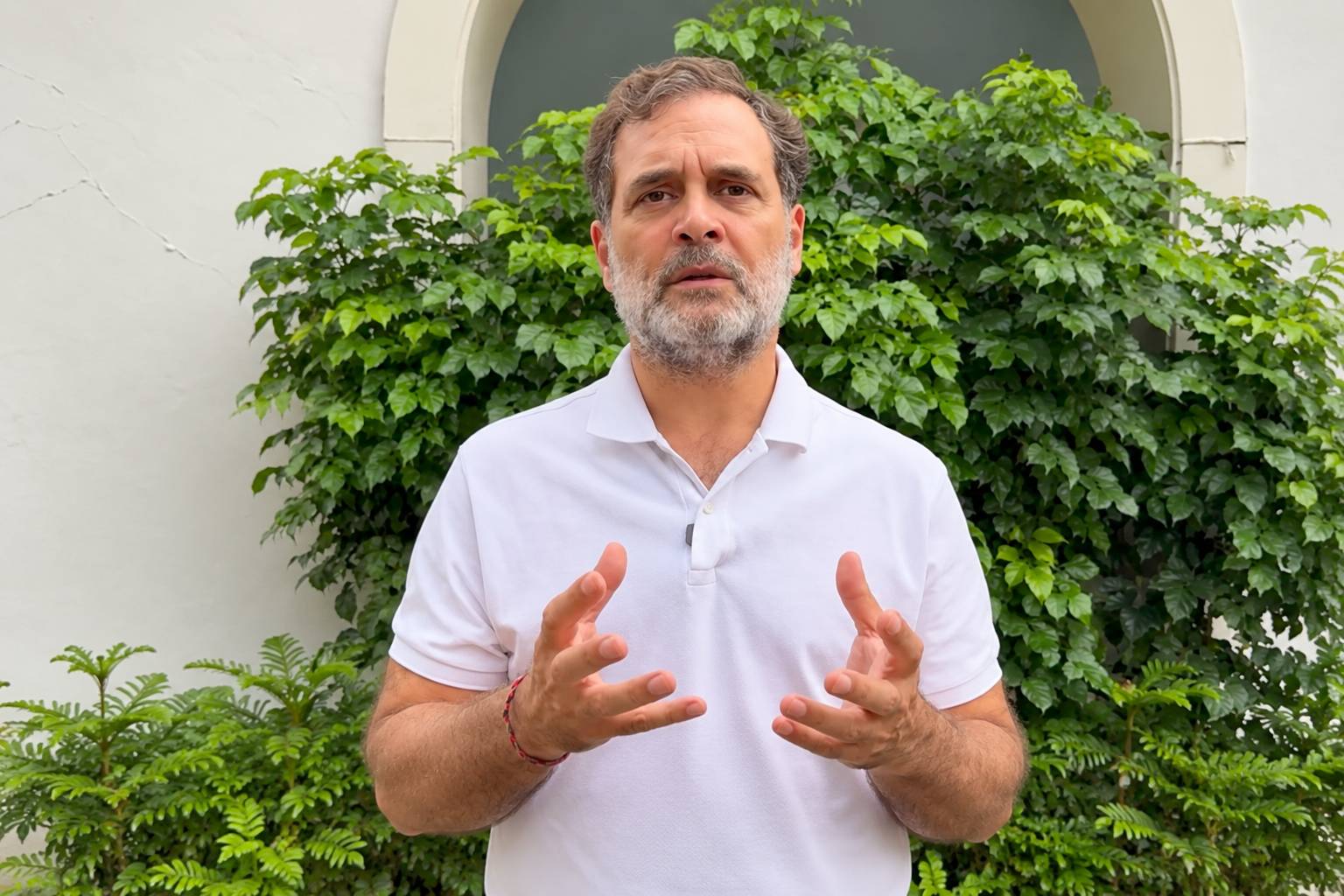
The Supreme Court on Wednesday (November 25) set aside the Allahabad High Court order directing the Central Bureau of Investigation (CBI) and the Enforcement Directorate (ED) to examine allegations of disproportionate assets against Congress leader and Leader of the Opposition Rahul Gandhi.
A Bench headed by Chief Justice of India Surya Kant, and comprising Justices Joymalya Bagchi and V Mohana, remitted the matter to the Allahabad High Court for fresh consideration by a newly constituted Bench. The proceedings will begin afresh in open court.
The apex court also directed the petitioner, BJP worker S Vignesh Shishir, to make Gandhi a respondent in the case. It said Gandhi must be given an opportunity to contest the petition’s maintainability before the High Court.
How the case began
Shishir had approached the Allahabad High Court seeking an investigation into allegations that Gandhi and members of his family possessed assets disproportionate to their known sources of income.
In May, the High Court directed the CBI and ED to examine the allegations and verify the claims made in the complaint. The matter subsequently returned to the High Court, which sought details of the CBI’s inquiry.
Also read: Rajiv Gandhi’s security was deliberately withdrawn, alleges Rahul in new video
However, the High Court was dissatisfied with the agency’s response. In a July 20 order, it observed that the CBI’s affidavit did not adequately explain the progress of its inquiry and asked the agency to file a fresh affidavit. The court also said the ED was free to proceed if its investigation revealed material warranting action.
Why Rahul Gandhi moved the Supreme Court
Gandhi challenged the High Court’s directions before the apex court, questioning Shishir’s a place to stand to file the petition. He also argued that the High Court had passed orders affecting him without giving him an opportunity to be heard. He further questioned how details of confidential procedures had appeared in newspaper reports.
On August 17, the Supreme Court flagged the fact that the High Court had proceeded without hearing Gandhi and directed it to defer further proceedings.
(With inputs from agencies.)