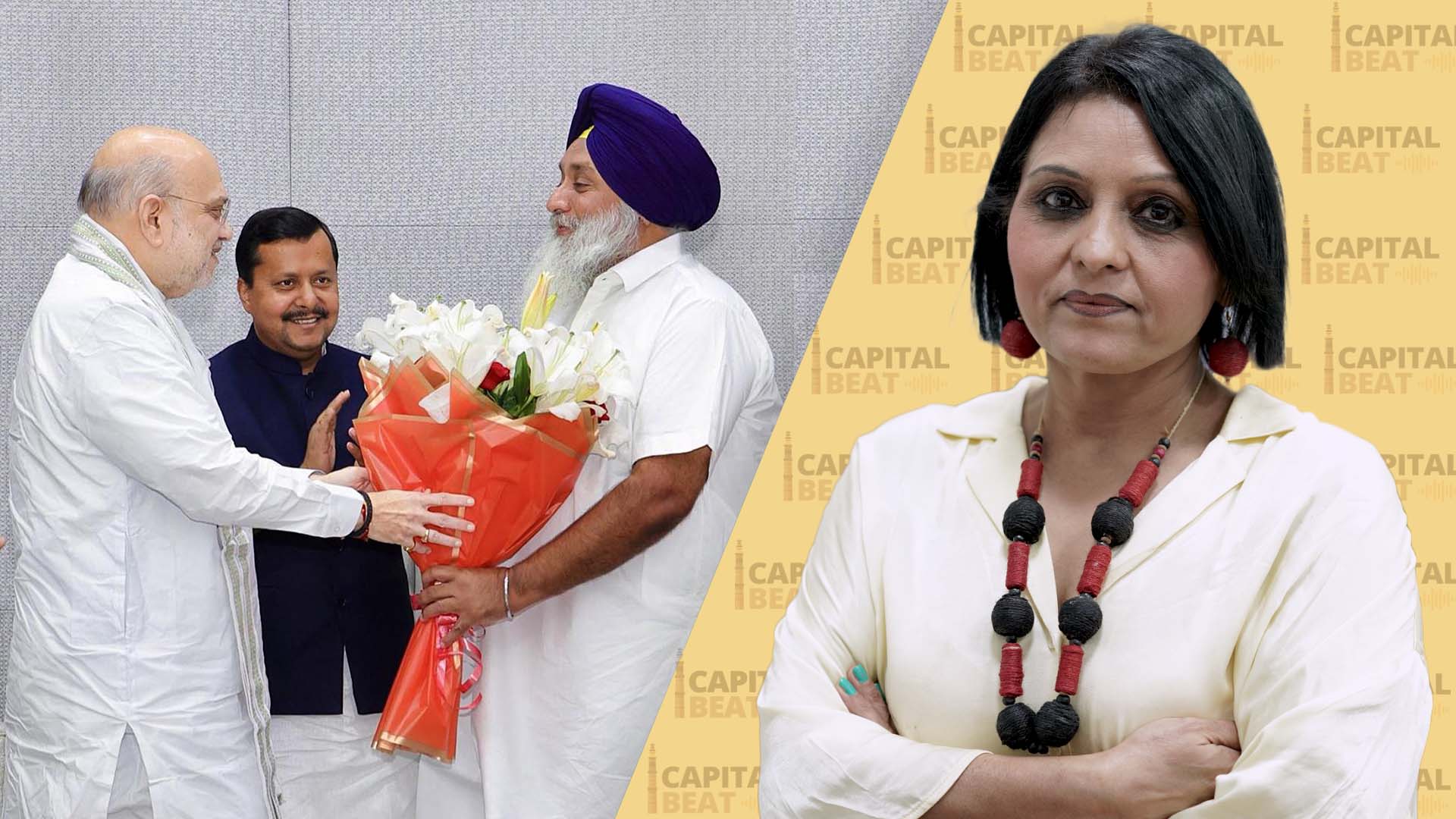
With the Shiromani Akali Dal (SAD) and the Bharatiya Janata Party (BJP) formally reuniting ahead of the 2027 Punjab Assembly elections, a Capital Beat panel debated whether the alliance can revive the fortunes of two parties weakened by electoral setbacks and lingering controversies.
Political compulsion behind reunion
Political analyst Jagdeep S Sindhu argued that the alliance was born out of mutual necessity rather than ideological convergence. He noted that the issues that drove the six-year split, particularly the farm laws, remain unresolved and were conspicuously absent from the alliance announcement.
According to Sindhu, the SAD realised it could no longer replicate past electoral performances amid fragmentation of the Panthic vote, while the BJP abandoned its ambition of contesting all 117 seats independently after assessing ground realities.
Apart from what the parties do, what the electronic machinery is going to do and their conduct of election will fairly decide which party is gaining strength and emerging as the choice of the people
“This comes out of political compulsion… but it is a decision which both the parties think will strengthen them in the election contest.”
He said the reunion transforms what appeared to be a multi-cornered contest into a three-way battle among the SAD-BJP alliance, AAP and the Congress, with a smaller fourth front also emerging.
Electoral baggage remains
Political analyst Akash Deep said the alliance’s significance should not be mistaken for electoral inevitability. He pointed out that the SAD-BJP combine’s performance has steadily declined, from 68 seats in 2012 to 18 in 2017, while the two parties collectively won only five seats in 2022 after contesting separately.
Akash Deep said both parties still face difficult questions. The SAD continues to confront criticism over the farm laws episode, the 2015 sacrilege cases and police firing incidents, while the BJP must explain its position on the farmers’ agitation and the deaths associated with the protests.
Also Read: Sonia Gandhi’s memoir: What she reveals and what she leaves unsaid
“The BJP-Akali reunion is politically significant, but it is not a guarantee of electoral success in Punjab,” he said.
Akash Deep also turned the spotlight on the ruling AAP government, questioning the gap between its 2022 promise of 25 lakh jobs and official figures showing around 65,000-75,000 jobs delivered. He said commitments on a drug-free Punjab, legal MSP guarantees and vacancies in education and healthcare remain unfulfilled.
Congress, AAP and anti-incumbency
BJP leader and political analyst Alok Vats agreed that the alliance stemmed from political compulsion, saying neither party was strong enough to fight alone. “Both have to join hands to make them survive because alone they cannot do anything.”
Vats said no party currently enjoys a decisive advantage. While AAP faces anti-incumbency over unmet promises, the Congress continues to grapple with internal divisions.
If we haven’t given 75,000 jobs without corruption, don’t vote for Aam Aadmi Party. Vote for anyone
Congress leader and advocate, Sanjeet Kumar, seized on that admission, arguing that the alliance was not a natural partnership given the SAD’s earlier exit from the Union cabinet during the farmers’ agitation. He also criticised the AAP government over Punjab’s rising debt and revenue deficit, alleging that borrowing has funded welfare schemes without a long-term economic strategy.
Rejecting suggestions of Congress disunity, Sanjeet said senior leaders had closed ranks under state in-charge Sachin Pilot and were working in tandem ahead of the elections.
AAP defends governance record
AAP spokesperson Ranbir Singh Dhindsa countered that the SAD-BJP alliance had been losing support since 2015 and still faced unresolved questions over MSP, the farm protests, sacrilege legislation, Sikh prisoners and other contentious issues.
Defending AAP’s record, Dhindsa highlighted measures including free electricity, government recruitment, closure of toll plazas, pension reforms, financial assistance for women, property rights initiatives and expanded health coverage.
Also Read: From 130 to 26: SP’s ‘insult’ underscores Congress’s struggle for relevance in UP
“If we haven’t given 75,000 jobs without corruption, don’t vote for Aam Aadmi Party. Vote for anyone.”
He argued that transparent recruitment and economic opportunities had helped reduce outward migration from Punjab.
Uncertain voter mood
Akash Deep challenged AAP’s employment claims and also urged the BJP to clarify its stance on remarks made about protesting farmers by Prime Minister Narendra Modi and BJP MP Kangana Ranaut.
Looking ahead to 2027, Sindhu said voter sentiment remains fluid and it is too early to predict either a clear majority or a hung assembly. He argued that voters are still evaluating the credibility of each party’s promises and record in office.
“Apart from what the parties do, what the electronic machinery is going to do and their conduct of election will fairly decide which party is gaining strength and emerging as the choice of the people.”
According to Sindhu, campaign organisation, booth-level mobilisation and election management could ultimately prove as decisive as political narratives in determining Punjab’s next government.