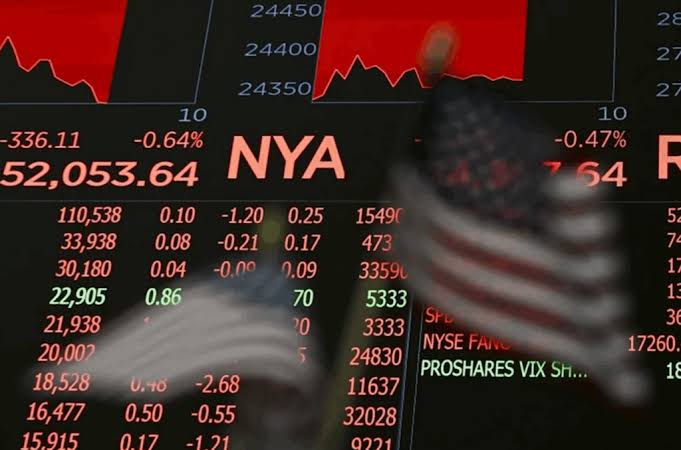
Researchers from the London Business School and the University of Cambridge have warned that artificial intelligence-related stocks could be experiencing a financial bubble comparable to the dot-com bubble of 2000.
The research, highlighted on November 25, 2026, estimated that the probability of AI stocks being in a financial bubble stood at up to 97% in September 2026.
The findings come amid growing concerns over technology company valuations, massive AI infrastructure investments and uncertainty surrounding future profitability.
Nearly 8 Lakh Articles Analysed Using Artificial Intelligence
Researchers Marco Grotteria, Afonso Monteiro and Constantine Yannelis used large language models to examine historical financial journalism dating back to 1843.
The researchers analysed 795,964 articles, of which approximately 486,000 were relevant to financial markets.
The study examined five major indicators:
- Speculative investment narratives
- Regulatory warnings
- Excessive market speculation
- Concerns over company valuations
- Investor excitement and market euphoria
These parameters were used to develop a monthly financial bubble index.
While one analytical model estimated a 97% probability of an AI financial bubble, two alternative models placed the probability at approximately 40%.
However, all three indicated significantly elevated levels of speculative activity.
AI Bubble Indicators Comparable To Dot-Com Crisis
The researchers found that September 2026 readings were comparable to or exceeded levels recorded during the peak of the dot-com bubble in March 2000.
Following that market collapse, the Nasdaq declined approximately 77% by 2002, erasing an estimated $5 trillion in market value.
More recently, the Nasdaq declined over 18% between early October and late November 2026, reflecting growing investor anxiety regarding technology stocks.
However, the researchers’ estimated probability of a financial bubble does not represent a 97% probability of an imminent market crash.
Historically, financial journalism implied an average 20% probability of a major crash within six months of identifying a bubble, compared with an actual historical frequency of just 5.7%.
Growing AI Investments Raise Financial Stability Concerns
The European Central Bank has separately highlighted potential risks associated with rising expenditure on AI infrastructure and increasing dependence on external financing.
Technology companies are increasingly raising funds through equity markets, corporate bonds and private credit to finance their expansion.
Concerns regarding investment returns, competition and interconnected financial exposure could increase market vulnerability if AI-related valuations decline significantly.
AI Bubble Does Not Mean Artificial Intelligence Will Fail
The researchers emphasised that excessive financial speculation does not invalidate AI’s technological potential.
Previous technological revolutions, including the expansion of railways and the internet, also experienced speculative investment cycles.
Artificial intelligence could continue transforming industries even if technology companies experience substantial valuation corrections.
The study encourages businesses, regulators and policymakers to prepare for potential financial disruptions without dismissing the long-term economic benefits of artificial intelligence.
Summary
Researchers from London Business School and the University of Cambridge have estimated up to a 97% probability that AI stocks were in a financial bubble in September 2026. The study analysed nearly eight lakh historical articles and identified speculation comparable to the dot-com era. However, the findings do not establish a 97% probability of an imminent market crash.