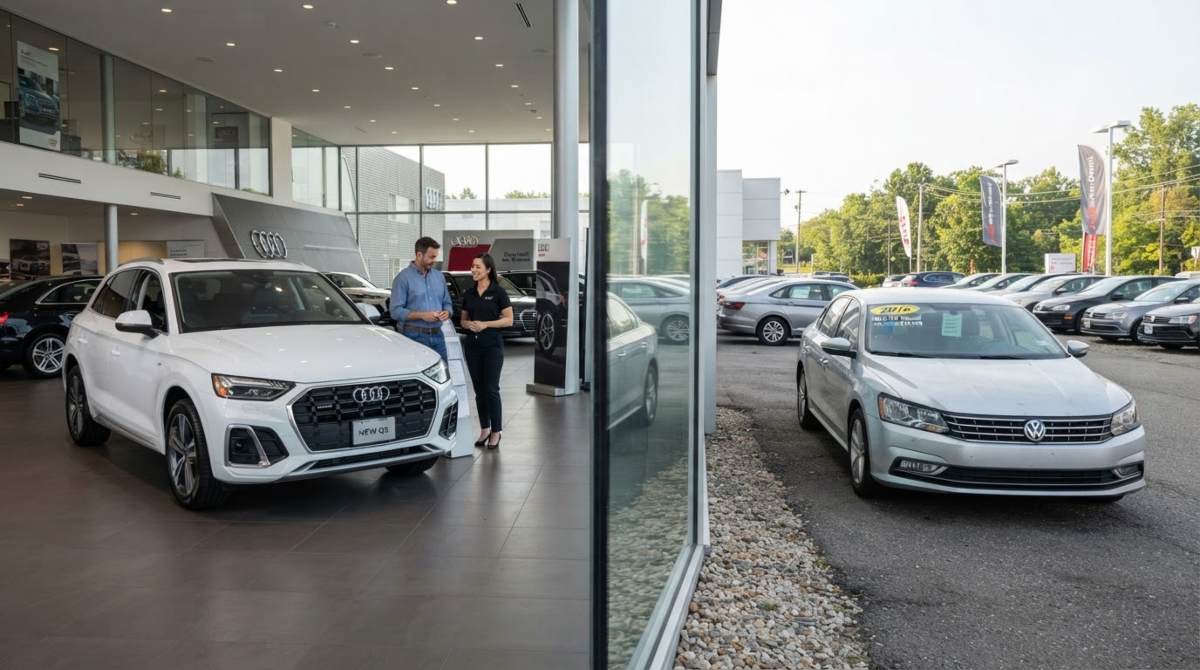
Automobile desk: For any middle class family in our country, buying a car is not just a necessity but a big financial decision. Once a car comes home, people usually drive it for many years. Even in the year 2026, the biggest dilemma facing buyers is whether to get a gleaming new car from the showroom or bring home a good second hand car at less money. If you are also in this dilemma, then do not make up your mind just by looking at the showroom price of the vehicle. To decide how much money will actually come out of your pocket, it is very important to calculate GST, insurance, bank loan interest rates, servicing and the value you will get on selling the car in future.
Often, as soon as buyers visit the dealership, the first thing they ask is mileage, cabin features and ex-showroom price. But the real game starts after this. Road tax, RTO registration, insurance premium and daily expenditure on petrol and diesel can completely change your fixed budget. Many times, the initial cost of high mileage vehicles is so high that it takes years to save fuel.
Benefits and hidden costs of bringing home a new car
The biggest perk of buying a brand new car from the showroom is that you get modern safety features, navigation and a new infotainment system. Due to the warranty provided by the company, there is no need to worry about repairs in the initial years. Also, the vehicle is completely clean, which means there is no fear of its old use or any accident. It is easy to get a loan for a new car from banks and the interest rates are also quite affordable. Good discounts are also available from companies and corporate world during festivals or at the end of the year.
But some aspects of it are also heavy on the pocket. The starting price of a new car is quite high and if a model is in high demand, one may have to wait for months for delivery. The burden of tax and insurance on this is also high. The most important thing is that the price of a new car starts falling rapidly as soon as it comes out of the showroom. If you decide to change your car in two-three years, you may have to suffer a huge financial loss.
When is the option of a second hand car better?
If your budget is limited and you want to enjoy a big car or a top variant for the same money, then an old car can prove to be a great deal. The initial insurance premium of a second hand car is also lower than that of a new one. Since the biggest decline in the value of a car happens during the time of the first owner, there is not much loss on selling it even after driving it for two-three years.
But one cannot trust blindly while buying an old car. It is possible that the vehicle may have been a victim of some serious accident in the past or there may be some fault in the engine which is not visible on the surface. Due to expired or limited warranty, the cost of service and replacement parts may increase suddenly. Additionally, bank loan options on a second hand car are limited and interest rates are higher than that of a new car.
GST rules and nuances of paper verification
There is a big difference between the two options on the tax front also. Under current GST provisions, small petrol and diesel cars attract 18 per cent tax, while most SUVs attract a rate of up to 40 per cent. In contrast, the rules are different in the used car market. If two people buy and sell an old car directly among themselves, then there is no GST on this transaction. Yes, if you buy a car through a used car dealer, you may have to pay GST as per the rules.
Market figures show that people's inclination towards old vehicles has increased rapidly. According to CRIF's 'Wheels and Ambition' report, loans for second-hand cars have grown at a compound annual growth rate (CAGR) of 26.2 percent during the period June 2021 to June 2026. In such a situation, if you choose a used car, then before finalizing the deal, carefully check the accident record, original registration certificate (RC), necessary NOC and service history of the car.