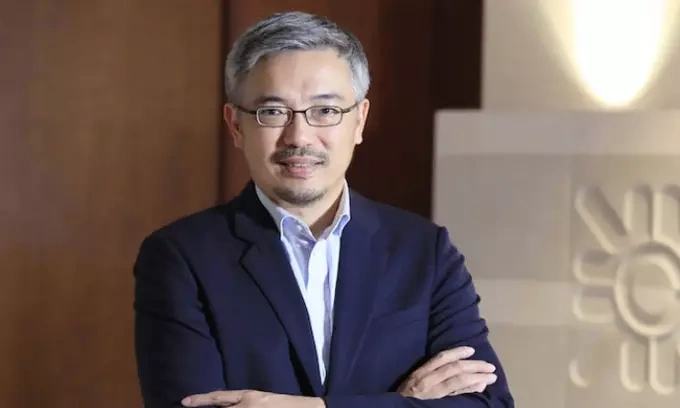
CEO Tos Chirathivat has told a local media outlet that Central Group may no longer need to depend solely on family members to run the business, according to Bloomberg.
With the business environment changing rapidly, he said the priority should be to put the most capable person at the helm to ensure the conglomerate’s long-term survival.
Family-owned conglomerates have traditionally wielded substantial influence in Thailand’s economy, with leadership often handed down through generations even as the businesses grow beyond the country’s borders.
Central Group, in particular, is often seen as one of the more family-dominated groups compared with peers such as the Chearavanonts’ Charoen Pokphand Group.
Since it was founded by Tos’ grandfather as a small family-run shop in Bangkok in 1947, the business has been headed by the Chirathivats, whom now rank as Thailand’s fourth-richest with a combined net worth of US$11.7 billion, according to Forbes.
Tos, a member of the third generation and the group’s executive chairman, guided the group through the 1997 economic crisis and has played a key role in its expansion from a domestic firm into an international conglomerate.
|
Tos Chirathivat, executive chairman and CEO of Central Group. Photo from the company’s website |
To manage the family’s involvement in the business, Central has put in place a governance framework designed to promote transparency and set out clear rules for management and leadership succession, according to Thai newspaper The Nation.
Under the system, leadership positions are subject to elections every four years, with candidates needing the backing of at least 66% of voters to take the role.
The family has also held on to its ownership stakes in the group, while shared fundamental values help relatives resolve differences over business decisions.
“My grandfather and father, we wanted all the family members to be in the company if they wished,” Tos previously told Nikkei Asian Review in 2017.
Effective succession also depends on knowing when to relinquish decision-making authority so emerging leaders can build experience and bring in new ideas, he said in an interview with Bangkokbiznews earlier this month.
Tos credited younger family members with helping Central Group evolve and grow over the decades, while attributing the conglomerate’s lasting stability to the values shared across the Chirathivat family.
“Believe it or not, among the hundreds of people in our family, not a single person has ever sold even one company share,” he said in the interview. “Even without a rule preventing it, everyone remains committed to the same shared values.”
While the Chirathivats retain key leadership and board positions, the conglomerate has increasingly brought professional executives into senior management.
The framework appears to have have served the family well as Central has grown over the years to include Central Pattana, Thailand’s largest shopping mall developer, and Central Retail Group, which operates department stores and hypermarkets in Thailand and Vietnam.
It has also invested in Europe’s luxury retail market with a portfolio including the U.K.’s Selfridges, Italy’s Rinascente and Germany’s KaDeWe.
But Tos’s recent remarks signal a potential shift in how the group approaches succession.
He said in the Bangkokbiznews interview that leadership arrangements should be flexible and guided by what is best for the organization’s future.
Bloomberg also quoted him as saying: “Many family businesses around the world don’t necessarily have family members as their leaders.
“Ultimately, you need to choose the most capable and suitable person to run the business, supported by a strong board and good governance.”