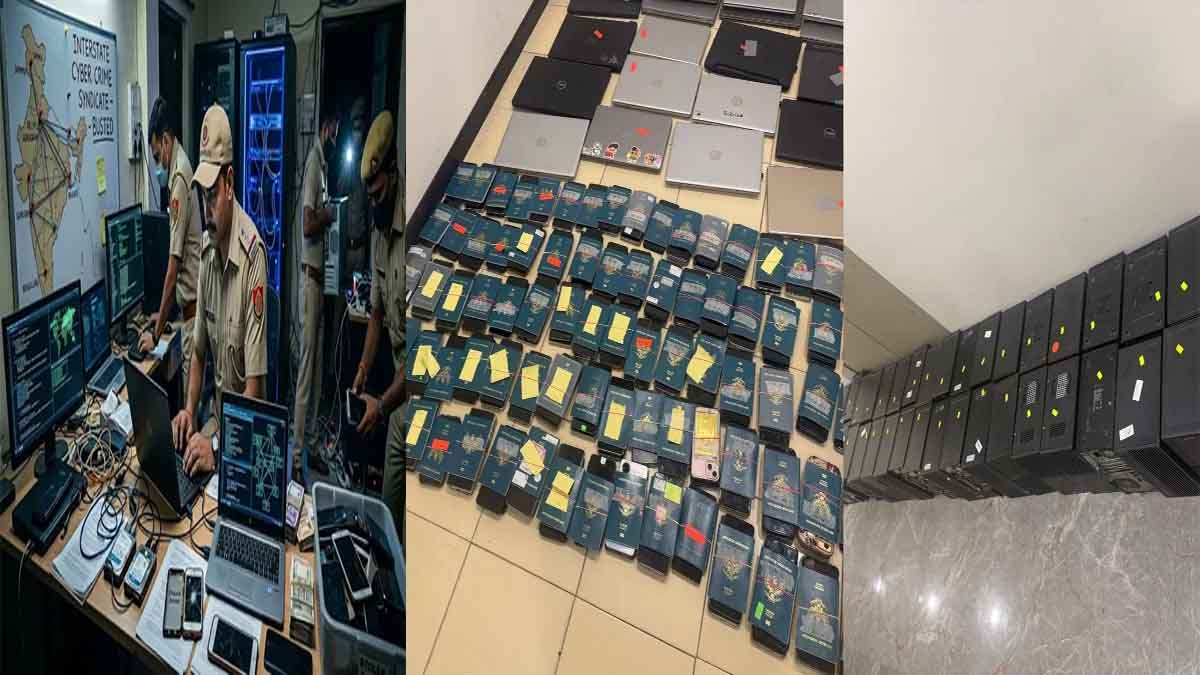
164 foreign nationals from Indonesia and Malaysia, who were brought to India with the lure of jobs, got caught in the clutches of a cyber slavery gang. According to Delhi Police, as soon as they reached India, their passports were confiscated and their movement was banned. After this they were forced to make fake phone calls to defraud the citizens of their own countries. Police said that these foreign nationals were kept in Paying Guest (PG) accommodation, where they were not provided even the basic facilities of accommodation and food. It is alleged that they were given substandard food and were beaten up when they refused to work.
Restrictions imposed on movement by confiscating passports
According to the police, the accused had lured foreign nationals to India by luring them with employment. After reaching here, their passports were confiscated, so that they could not move anywhere as per their wish nor could they easily return back to their country. After this, he was included in the cyber fraud network and forced to make fake phone calls to target the people of his own country.
The police have freed 164 foreign nationals from the clutches of the gang. These include 92 citizens of Indonesia and 72 citizens of Malaysia. 25-year-old Malaysian citizen Tan Guan Wei has been arrested in the case. According to the police, this gang mainly targeted citizens of Indonesia and Malaysia. They were lured by the accused by offering them jobs in India with attractive salaries and better career prospects. After reaching India in the hope of jobs, these people were allegedly pushed into cyber fraud networks.
Passports were confiscated as soon as they reached India
Police said that the passports of foreign nationals were confiscated as soon as they reached India. Due to lack of identity documents, it became difficult for them to leave from there. After this, they were sent to different paying guest (PG) residences, where they were allegedly made to commit cyber fraud.
Allegations of assault on protesters
According to a senior police officer, the gang members allegedly assaulted foreign nationals who refused to work or protested. This was done to scare them and make them follow the instructions of the gang. The investigation so far has revealed that two people were assaulted. The police are investigating the functioning of this entire network, other people involved and aspects related to cyber fraud.
Movement of foreign citizens was done by 40 taxis
According to the police, around 40 taxis were used to ferry foreign nationals from PG residences to the cyber fraud call centre. The living conditions in these residences were very poor. Foreign nationals were given substandard food and their movement was completely controlled. He was not allowed to go out alone or move anywhere as per his wish. According to the police, the gang operators had arranged for around 40 taxis to transport the foreign nationals from the PG residences to the call center and bring them back after the work was over. Their every activity was monitored through these taxis.
According to the police, the gang not only made the foreign nationals operate computers and mobile phones, but also gave them training in special methods of cyber fraud. For this, they were given written dialogues, which had to be used while talking to potential victims. The gang mainly targeted people from Malaysia and Indonesia. Its members allegedly created fake names and social media profiles of women and contacted unknown people. Through these profiles, conversations were initiated with people and an attempt was made to win their trust by gradually developing online relationships with them.
First friendship, then fraud in the name of investment
According to the police, foreign nationals were given training to win the trust of people through negotiations. Once potential victims trusted the gang members, they were persuaded to invest money through fraudulent trading and investment platforms. It is alleged that the gang used to lure high returns on investment using websites and APK based mobile apps. Investors on these platforms saw their money growing, making them feel like they were investing in a legitimate financial scheme. However, in reality their money was allegedly withdrawn through a fraudulent network.
Information about cyber slavery gang was received through email.
The police officer said that about a week ago, the Crime Branch of Delhi Police had received information about this alleged cyber slavery gang through email. After this the officials started gathering intelligence related to the case and kept an eye on the activities of the network. On the basis of investigation, the Crime Branch took action in Dwarka, South-West Delhi and freed 164 foreign nationals. These include 92 citizens of Indonesia and 72 citizens of Malaysia. 25-year-old Malaysian citizen Tan Guan Wei has been arrested in the case. Initially the police had received information that about 60 to 70 foreign nationals were being held hostage and forced to work for cyber fraud. However, 164 foreign nationals were freed during raids on suspected hideouts. This action has exposed the wide network of the alleged cyber slavery gang. Those rescued include 92 citizens of Indonesia and 72 citizens of Malaysia.
Investigation from recruitment to passport confiscation
The police is now busy connecting the links of this entire network. The investigation is being done to find out how the foreign nationals were recruited, who helped them in bringing them to India by luring them with jobs and how their passports were confiscated after reaching here. According to the police, foreign nationals were lured to India with the promise of attractive jobs and better salaries. After this, they were allegedly forced to commit cyber fraud and their movement was controlled. During the investigation, the names of Sunil Kumar and Sushil Bhati have come to light. According to the police, Sushil Bhati used to handle the arrangements for PG accommodation and transportation. Both the accused are currently absconding.
Follow the LALLURAM.COM MP channel on WhatsApp