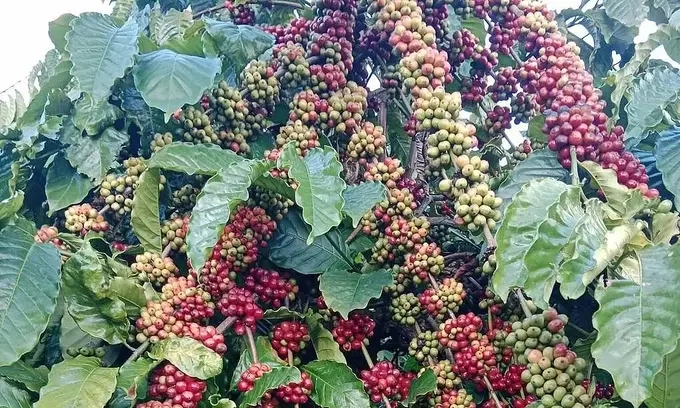
Hai, who has more than a hectare under robusta coffee in central Quang Ngai Province, recently harvested 31 tons of coffee cherries, up 24% from a year ago.
Despite the increase in yields, the harvest only earned her VND465 million (US$18,000) in revenue, a 28.5% year-on-year decline.
As input costs have risen by 15% and labor costs by 10% from a year ago, her profit slumped 43% to VND200 million.
|
Robusta coffee cherries at Hai's farm. Photo by Hai Nguyen |
Hong, owner of a nearby two-hectare farm, sells coffee cherries as she does not have the means to process them into coffee beans.
She says she has been selling her harvest as quickly as possible because prices have been falling by the day. Her revenue slipped 30% this season.
Coffee bean prices have declined since the start of this month. Farmgate prices in major coffee-producing provinces including Quang Ngai, Dak Lak, Lam Dong and Gia Lai are down 17% from a month ago and 36% year-on-year at VND69,500-70,000 per kilogram.
Robusta futures on the London exchange have dropped to their lowest levels in three years as the harvest in Vietnam ramps up, according to Reuters.
The country accounts for roughly 18% of global coffee production and is the top producer of robusta beans.
It has more than 700,000 hectares under coffee, most of which are harvested during the peak season from mid-November to the end of December.
The Vietnam Coffee-Cocoa Association forecasts that production will reach around 2.2 million tons in the 2026-2027 crop year, up more than 5% from the previous year.
Experts warn that prices could fall further in the short term if farmers rush to sell their harvest.
Global supply is also increasing as high prices in previous years prompted farmers in other major producing countries to expand production.
A report by the U.S. Department of Agriculture said global coffee production in the 2026-2027 crop year could rise 6% to a record 189.7 million 60-kilogram bags.
Global consumption, meanwhile, is expected to increase by 3.6% to 179.7 million bags, raising concerns about a supply surplus that could put further pressure on prices.