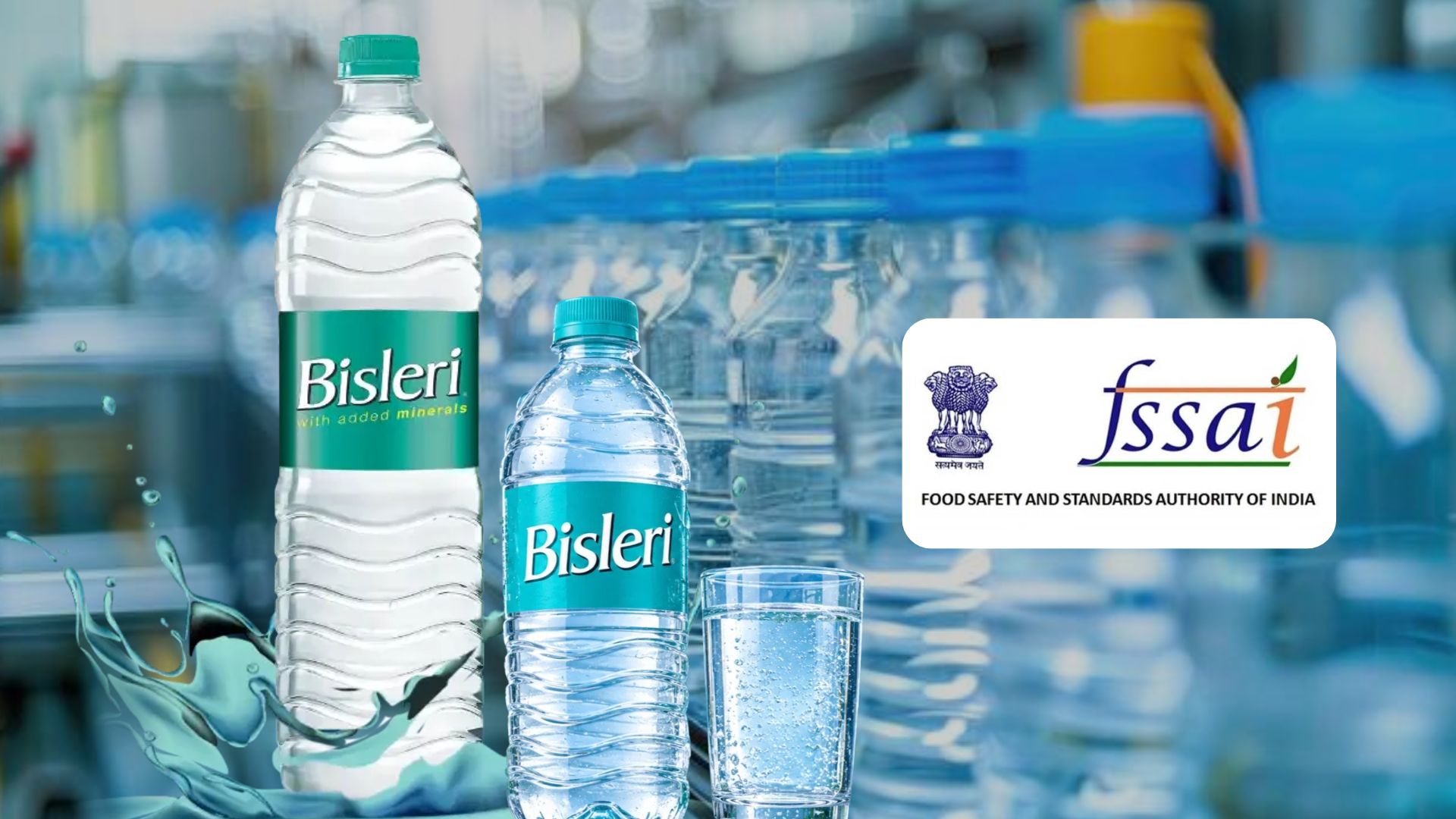
Food regulator FSSAI has sanctioned prosecution against Bisleri International after a packaged drinking water sample collected from its West Bengal plant failed laboratory tests, sources said.
The sample was found to contain coliform bacteria, which can enter water systems through sewage leaks, damaged pipes and other sources, they added.
This action marks the second instance of the Food Safety and Standards Authority of India (FSSAI) sanctioning prosecution against Bisleri International Pvt Ltd, a leading player in the packaged drinking water sector in the country.
Bisleri faces fresh legal action
On Sunday, the FSSAI announced similar legal proceedings after a sample from one of Bisleri’s plants in Goa also failed testing.
Watch | Why was Bisleri water sample declared unsafe by FSSAI?
The West Bengal sample was taken from a plant in Jalpaiguri’s Telipara village. The presence of coliform bacteria was confirmed by both primary and referral laboratories. As a result, the FSSAI prohibited the sale of only one specific batch (batch number PB201) on August 12, 2026, sources stated. In view of the violations of the food safety rules, FSSAI has granted “sanction for prosecution” against Bisleri International.
In the Goa case, the FSSAI had said the “sample was found non-compliant with the prescribed bromate limits and declared unsafe under the FSS Act, 2006.” Following an appeal from Bisleri, the sample was forwarded to a referral food laboratory, which also classified it as “unsafe” due to detection of polynuclear aromatic hydrocarbons (PAHs), according to the regulator.
These laboratory findings confirmed violations related to unsafe food practices, which led the FSSAI to initiate prosecution under the Food Safety Act, 2006.
Company seeks review of conflicting results
In its response, Bisleri International Private Limited said they had already recalled Batch PB201 of its packaged drinking water at the direction of the FSSAI, which prohibited the sale of the batch on August 12, 2026.
“The primary and referral laboratories reported the presence of coliform bacteria in the regulatory sample. Bisleri separately commissioned independent testing of samples from the same batch at an FSSAI-recognised laboratory, which found that the sample met the applicable standard for coliform bacteria and all other applicable food safety standards. The difference between the regulatory and independent findings warrants a thorough review,” the company said.
The company asserted that its product is safe for consumption and that the company would cooperate with the FSSAI to address the issues raised.
FSSAI widens water quality checks
Earlier this week, FSSAI CEO Rajit Punhani stated that the agency is collecting packaged drinking water samples nationwide, with lab testing for quality expected to be completed within one to two months. He emphasised that enforcement actions aim to ensure compliance, not to create panic.
Also read | Bisleri says water is safe, questions FSSAI action over 2025 sample
He noted that the regulator, in the past year, has undertaken enforcement activities for many food as well as beverage products, adding that it would soon start inspection of ‘packaging materials’ used for food items.
Additionally, the FSSAI has expanded the scope of its scrutiny. The central regulator has communicated with state food commissioners and regional directors to enhance surveillance, inspection, and sampling of ‘packaged drinking water and mineral water.’
It also asked them to take action against companies in case of non-compliance.
In this calendar year, the FSSAI has increased enforcement measures against food business operators and e-commerce companies. The regulator has also taken action against manufacturers of energy drinks and alcoholic beverages.
(With agency inputs)