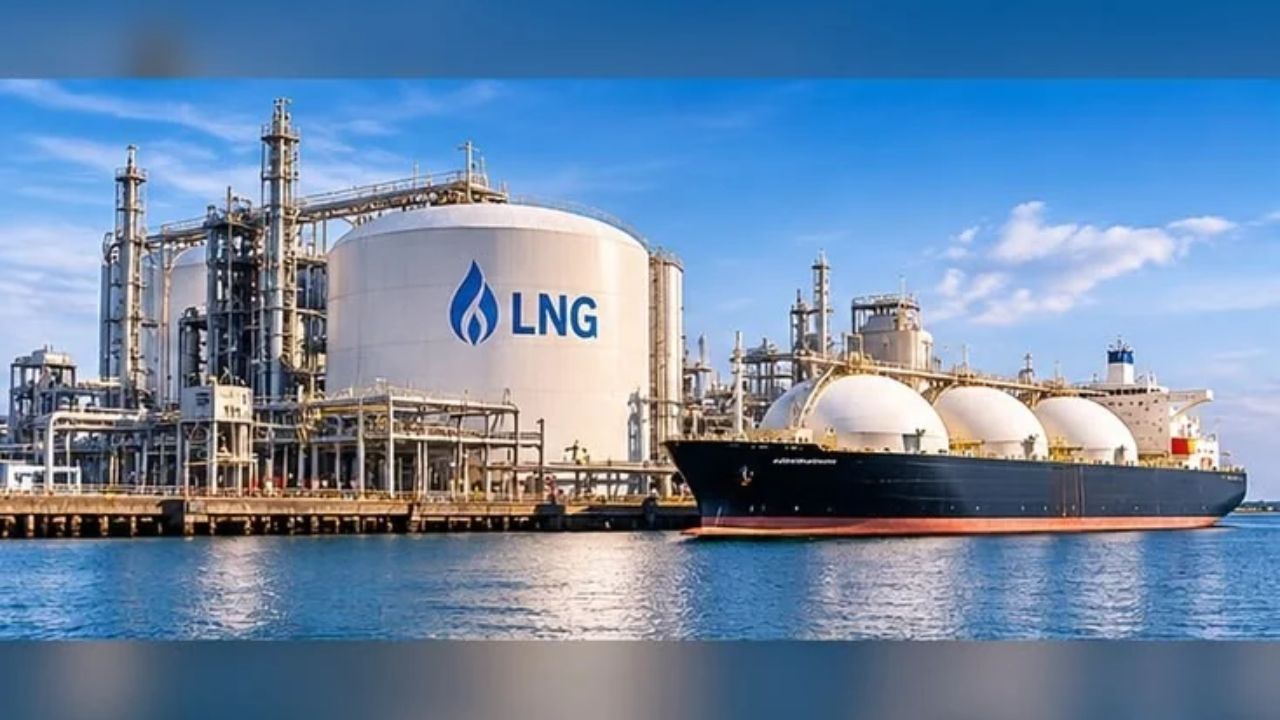
New Delhi: India's imports of liquefied natural gas (LNG) are expected to decline sharply in November, potentially touching their lowest monthly level since March, as elevated international prices, competition from European buyers and a seasonal slowdown in electricity demand weigh on shipments.
The country is projected to import around 1.8–1.9 million tonnes of LNG during November, significantly lower than the 2.85 million tonnes recorded in October. The anticipated decline also marks a reversal of the recovery witnessed over the preceding months, when Indian buyers stepped up purchases to compensate for supply disruptions triggered by the West Asia conflict.
According to vessel-tracking data compiled by commodity analytics firm Kpler, India received approximately 1.73 million tonnes of LNG between November 1 and 27, translating into average daily arrivals of nearly 64,000 tonnes. The projected monthly imports would also be below the 2.20 million tonnes recorded in November last year.
International Price Rally and European Demand Put Pressure on Imports
One of the principal reasons behind the decline is the sharp increase in international LNG prices, which has made imports increasingly expensive for Indian buyers.
Asian spot LNG prices had remained elevated following the outbreak of the West Asia conflict. By mid-to-late October, prices had climbed to approximately $35 per million British thermal units (mBtu), nearly $10 higher than the levels prevailing in mid-September.
The price escalation has prompted Indian importers, particularly those purchasing gas from the spot market, to scale back procurement. With domestic demand also moderating, buyers have found less incentive to secure expensive consignments.
At the same time, European countries have emerged as stronger competitors in the global LNG market. Their gas inventories were unusually low ahead of the winter season, when heating requirements traditionally increase consumption.
European importers, therefore, have been willing to offer higher prices to secure supplies, diverting cargoes that could otherwise have reached Asian markets, including India. African suppliers have been particularly important in this shifting trade pattern.
Energy analyst Natalia Katona, based in Abu Dhabi, told The Indian Express that the combination of easing demand and rising spot prices had encouraged Indian buyers to reduce purchases for November deliveries.
Declining Power Demand Reduces Requirement for Gas
A seasonal moderation in electricity consumption has also contributed to the fall in LNG imports.
Natural gas-fired power generation has declined considerably in November, reducing the requirement for imported fuel. Improved coal availability and a reduction in outages at coal-based power plants have further eased pressure on gas-fired generation.
According to Central Electricity Authority (CEA) data, gas-based electricity generation between November 1 and 25 stood at 980.55 million units, averaging approximately 39.22 million units per day.
This represents a substantial decline from October, when gas-based generation averaged 96.77 million units daily, with total generation reaching 2,999.75 million units.
The corresponding daily average in November 2025 was also higher, at 56.40 million units.
Kpler’s LNG and natural gas analyst Sonal Ranjan attributed the reduced imports to a combination of lower power-sector requirements, improved coal availability and expensive spot-market supplies.
She also pointed out that India's unusually high LNG arrivals in October may have created an inventory cushion, allowing consumers to meet part of their November requirements without purchasing additional cargoes.
Higher prices have particularly affected industrial consumers who are more sensitive to fluctuations in fuel costs.
Security Concerns Around Strait of Hormuz Affect Gulf Shipments
The security situation around the Strait of Hormuz has emerged as another significant factor affecting India's LNG supplies. The strategic maritime passage is critical to global energy trade, particularly for shipments originating from major Gulf producers such as Qatar and the United Arab Emirates (UAE).
Before the West Asia conflict began in late February, approximately 60 per cent of India’s LNG imports passed through the Strait of Hormuz. Although shipments from the Gulf recovered during October, the deteriorating maritime security environment has again complicated the movement of LNG carriers.
Katona said attacks involving LNG vessels had increased since mid-October. Three LNG carriers were reportedly struck by drones or naval mines during October and November. The last reported incidents involving such vessels before this period had occurred in July. The heightened risks have discouraged some carriers from undertaking the passage, contributing to lower arrivals from the Middle East Gulf.
During the earlier phase of the conflict, Qatar and the UAE had adopted measures such as switching off vessel transponders, commonly described as 'going dark', to reduce the possibility of detection.
Ship-to-ship transfers also facilitated the movement of LNG cargoes. Under this arrangement, a vessel transports the consignment through the Strait of Hormuz before transferring it to another tanker waiting in relatively safer waters for onward transportation.
US, UAE and Oman Remain India’s Leading LNG Suppliers
The decline in November has been visible across India's major LNG supply sources, although the United States, UAE and Oman continue to account for the largest volumes.
Kpler data show that India imported approximately 0.42 million tonnes of LNG from the US between November 1 and 27, compared with 0.63 million tonnes during the whole of October.
The UAE supplied around 0.32 million tonnes during the first 27 days of November, against 0.51 million tonnes in October. Oman was the third-largest supplier, with deliveries of approximately 0.30 million tonnes, compared with 0.45 million tonnes in the preceding month.
Qatar, which was India's principal LNG supplier before the West Asia conflict, supplied approximately 0.20 million tonnes during the November period under consideration. Its deliveries had stood at 0.44 million tonnes in October.
Supplies from African countries have also weakened. Angola delivered around 0.14 million tonnes in November, compared with 0.33 million tonnes in October. Nigeria’s contribution similarly declined to approximately 0.14 million tonnes from 0.28 million tonnes.
According to Katona, India received five LNG cargoes from Angola in October, while only two had arrived during the corresponding November period. Nigerian deliveries were expected to fall from four cargoes in October to two in November. US shipments were also projected to decline by two cargoes compared with the previous month.
India Continues to Depend on Imported Gas Despite Supply Disruptions
The decline in November comes against the backdrop of India's substantial dependence on imported natural gas to meet domestic consumption requirements. LNG accounts for approximately half of India’s natural gas requirement, with demand coming from several sectors, including city gas distribution, fertiliser manufacturing, electricity generation and ceramics.
The West Asia conflict had initially disrupted supplies from traditional Gulf suppliers, compelling Indian importers to explore alternative markets and secure cargoes from the United States, Oman and African producers.
Following a decline in March and April, imports recovered steadily over the subsequent months as buyers competed for available spot-market cargoes despite high international prices. Between April and October, India&8217;s average monthly LNG imports stood at approximately 2.38 million tonnes.
October witnessed particularly strong arrivals, with imports reaching 2.85 million tonnes. The anticipated November decline, therefore, reflects the combined impact of weaker seasonal consumption, elevated procurement costs, competition from European buyers and continuing risks to maritime transportation.
For India, the challenge remains balancing the need to maintain uninterrupted energy supplies with the financial implications of procuring LNG in an increasingly competitive and volatile international market.