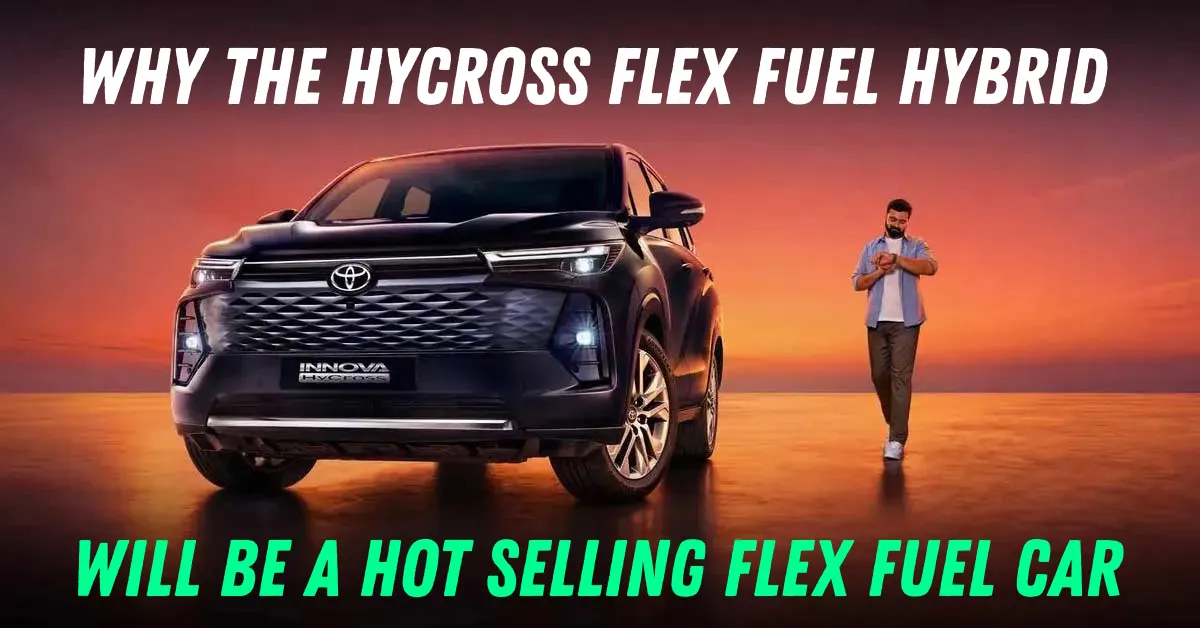
India has nearly 15,000 registered flex-fuel vehicles, but almost none of them are cars. That could change quickly following Toyota’s decision to make its new flex-fuel powertrain standard across the Innova Hycross strong-hybrid range. Unlike a special edition intended to test buyer interest, the new Hycross puts flex-fuel capability into a mainstream family MPV that already has an established customer base.
According to Vahan data cited in a recent report, there were 14,951 flex-fuel vehicle registrations. Two-wheelers accounted for 14,928 of them, leaving just 23 light motor vehicles, in other words the Maruti WagonR Flex Fuel. In percentage terms, motorcycles and scooters represented 99.85% of the total. The figures show how slowly flex-fuel technology has entered the passenger-car market so far.
Toyota launched the updated Innova Hycross Flex Hybrid on November 25, with prices starting at Rs 19.99 lakh, ex-showroom. It combines a locally manufactured 2.0-litre flex-fuel engine with a self-charging strong-hybrid system. Toyota says the engine can use petrol-ethanol blends ranging from E20 to E85, while the combined power output is approximately 197 hp.
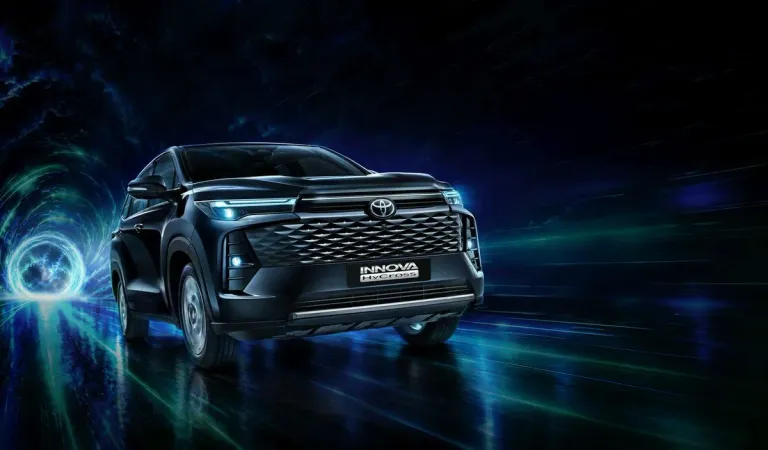
The important point is not merely that Toyota has launched another flex-fuel car. Toyota officials have said that the regular strong-hybrid powertrain will be replaced by the flex-fuel hybrid. Going forward, buyers choosing a hybrid Hycross will get the new technology, rather than having to select a separate, possibly more expensive, flex-fuel variant.
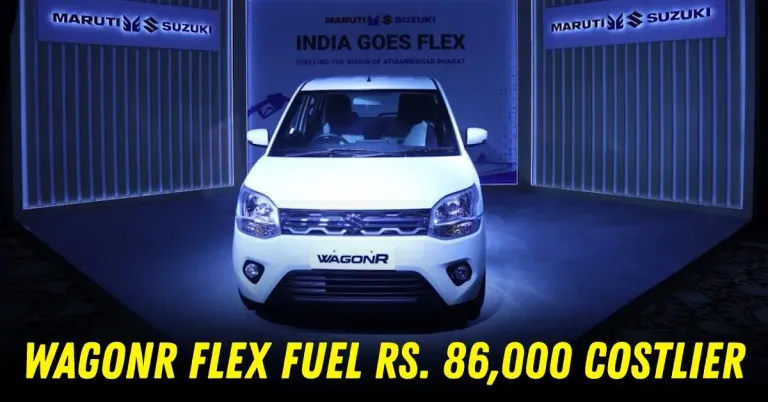
This creates a very different market opportunity from that of the Wagon R Bioflex, which Maruti Suzuki launched earlier this year. The Wagon R’s flex-fuel version comes with a noticeable premium over the comparable regular petrol variant.
In contrast, Toyota is putting the new technology into the core Hycross hybrid line-up, including newly introduced entry hybrid grades. Toyota is not asking buyers to choose between the usual strong hybrid and a separate flex-fuel hybrid.
Consider the scale of the present car market. The entire registered flex-fuel light-motor-vehicle population in the reported Vahan snapshot was just 23. Even modest monthly registrations of a mainstream hybrid MPV could overtake that small base.
That does not mean every Hycross sold will be recorded as a flex-fuel vehicle immediately: registrations lag launches, and Vahan’s fuel-category reporting will need to identify the new versions correctly. But Toyota has provided a credible route to moving this market beyond token volumes.
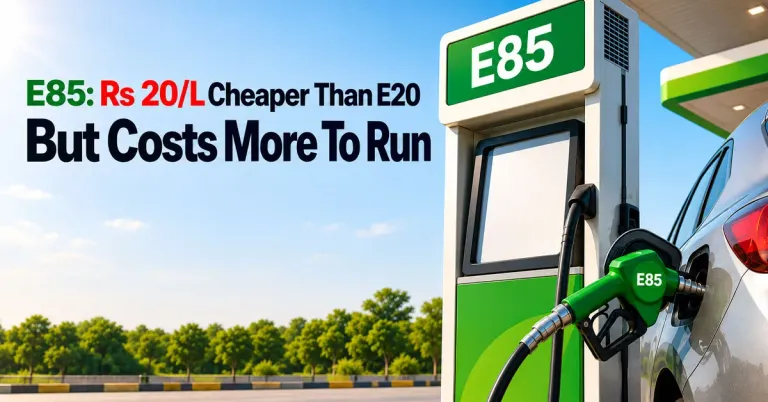
The second advantage is that the Hycross does not depend on widespread E85 availability to be usable. E20 is already the regular petrol blend at many outlets, and Toyota says the new engine can run on it. The owner can fill up with the fuel that is available now and use a higher ethanol blend where it is offered and approved for the vehicle.
That flexibility matters because E85 distribution remains uneven. A family buying an expensive seven- or eight-seat MPV cannot plan its daily commute or highway travel around a handful of alternative-fuel stations. Toyota’s approach removes that particular obstacle without requiring the driver to find a charging point, either. The hybrid battery charges through the vehicle’s normal operation; this is not a plug-in hybrid.
Toyota claims fuel efficiency of 22.58 kmpl on E20, a figure that needs to be judged under the stated test conditions. The company has not established that the vehicle will return the same mileage on E85. Ethanol contains less energy per litre than petrol, so a higher ethanol blend can reduce kilometres travelled per litre, even if the pump price is lower. Actual running costs will depend on the price and availability of the fuel and real-world efficiency.
There is also a qualification to the apparently attractive entry price. Toyota’s Rs 19.99 lakh G Hybrid variant (meant only for taxi fleets, and speed limited to 80 Kmph) should not be compared directly with a differently equipped petrol variant as though the only difference were the powertrain. Buyers need to compare the equipment and on-road price of the exact variants they are considering.
Hybrids and flex-fuel cars do not enjoy the same low GST treatment as battery-electric vehicles. Toyota has previously argued that tax support would help adoption, and a wider availability of high-ethanol fuel would strengthen the case further. Neither is something a buyer should assume will change immediately.
The bigger significance is what happens when flex-fuel compatibility stops being a novelty and becomes part of a popular product. The Hycross already attracts people looking for space, comfort and low fuel consumption.
Those buyers may now add flex-fuel registrations without making ethanol compatibility their main reason for choosing the car. That is why a single model could make such a striking difference to a passenger-car flex-fuel market that currently starts from an extremely small base.