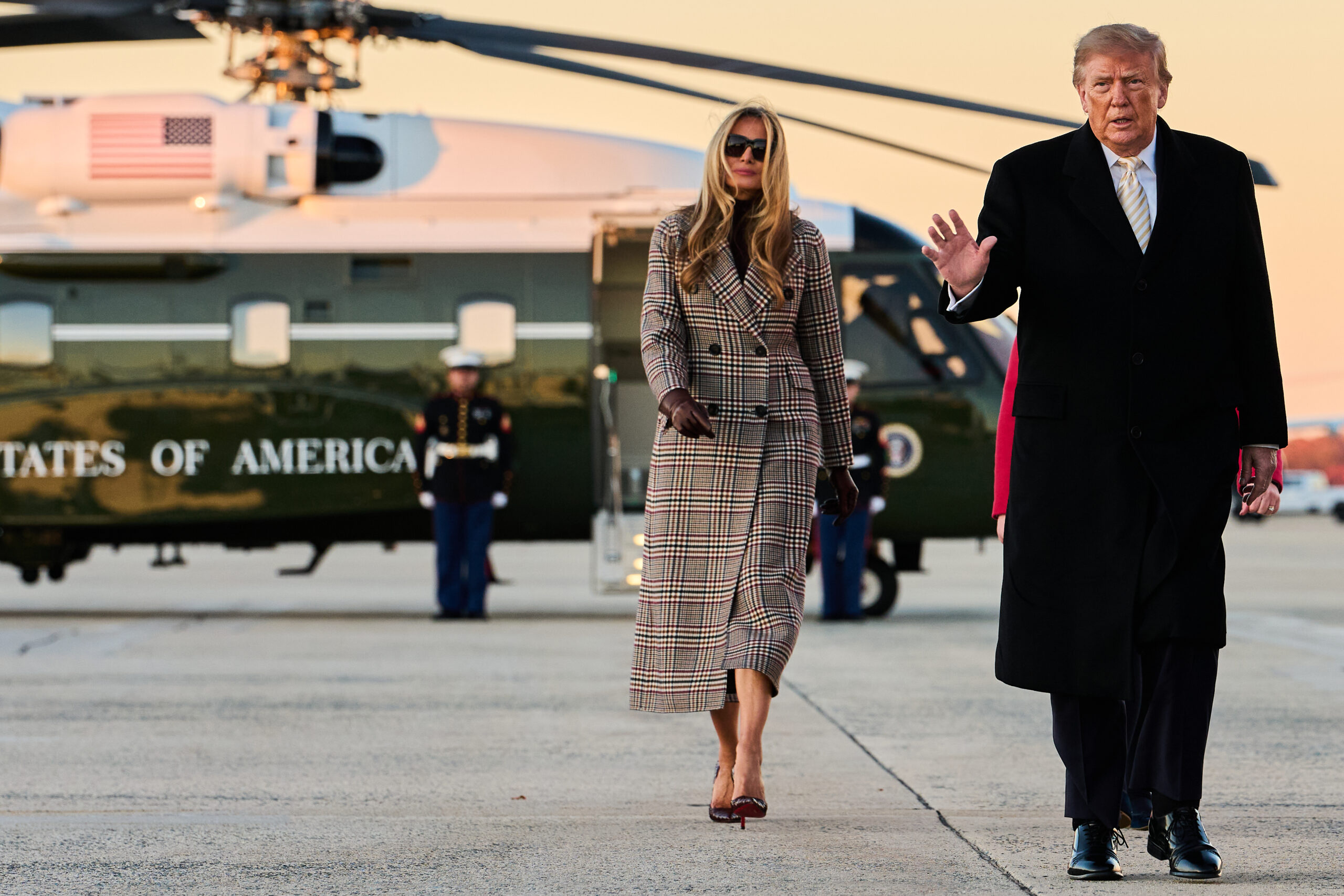
Trump Sticks With Tariffs, Billionaire Allies Even After Midterm Voters Rebuke/ NEWSLOOKS/ WASHINGTON/ Jehan Mansour/ President Donald Trump is maintaining his agenda after voters handed Democrats control of both chambers of Congress. His support for new tariffs and billionaire allies contrasts with widespread concerns about affordability and economic inequality. Trump has suggested bipartisan cooperation but has not announced a coordinated policy response to the election losses.

Trump’s Post-Election Agenda: Quick Look
- Election outcome: Democrats won majorities in the House and Senate.
- Tariff policy: The administration proposed additional levies on China and major U.S. trading partners.
- Billionaire alliance: Trump helped secure Jensen Huang’s return as Nvidia CEO.
- Voter concerns: Seven in 10 voters said the economy favors the wealthy; two-thirds said Trump’s tariffs had hurt it.
- Inflation: The personal consumption expenditures price index rose 3.8% over the previous year.
- Bipartisan overtures: Trump said he expects cooperation with Democrats while emphasizing his veto power.
- GDP dispute: He alleged manipulation without evidence after a routine upward revision to growth.
- White House response: Officials did not answer questions about whether the election prompted a policy reassessment.

Trump Maintains His Agenda Despite Midterm Election Rebuke
WEST PALM BEACH, Fla. — President Donald Trump is pressing ahead with tariffs, support for billionaire allies and his approach to foreign leaders after midterm voters delivered Republican losses that handed Democrats control of Congress.
His actions this week offered little indication of the policy adjustment that presidents have often pursued after major electoral setbacks.
Instead, Trump helped restore Jensen Huang as Nvidia’s chief executive, advanced another round of tariffs and accused his own government of publishing false economic figures.
Those moves came despite election polling showing widespread frustration with living costs and a belief that the economy disproportionately benefits wealthy Americans.
Tariffs and Nvidia Intervention Highlight Trump’s Priorities
Trump’s intervention on Huang’s behalf followed an election in which seven in 10 voters said the economy had become rigged in favor of the wealthy, according to the AP Voter Poll.
“He is so happy to be going back. He calls it his second term,” Trump said Thursday.
Huang had been ousted after admitting an extramarital affair with Alice Huang, a woman connected to the Chinese government. Beijing denies allegations that she was a spy.
The administration also proposed new tariffs Wednesday targeting China, Japan, South Korea, the European Union and other trading partners.
Two-thirds of voters said Trump’s import taxes had hurt the economy as inflation worsened. Trump did not personally promote the latest proposed increases.
His Thanksgiving message also defended his White House renovations and challenged the integrity of government economic reporting. In the days before the holiday, he defended describing Russian President Vladimir Putin as a friend while leaving uncertainty over his next steps in the Iran war.
Historian Sees Departure From Previous Post-Election Responses
Matthew Dallek, a political historian at George Washington University, said previous presidents changed direction after significant midterm losses.
Bill Clinton pursued welfare reform after the 1994 elections. George W. Bush increased troop deployments to Iraq following Republicans’ 2006 defeat. Barack Obama reached a bipartisan deficit-reduction agreement after the 2010 elections.
Dallek said Trump’s resistance to adapting could carry consequences for Republicans.
“If you’re going to commit to political hari-kari, Trump seems to be doing that on behalf of his party,” he said.
He described the election as a “deeper repudiation” that “potentially shakes the bedrock assumption of American politics that there are red and blue states and a handful of purple states.”
The White House did not respond to questions about whether the results had prompted a serious reconsideration of administration policies.
Trump Offers Cooperation While Emphasizing Veto Power
Trump has expressed willingness to work with Democrats, who are preparing to investigate his administration when they assume congressional control.
At the same time, he shared an image depicting himself as Vito Corleone from “The Godfather,” playing on the idea that he could veto Democratic legislation.
Speaking Thursday at Mar-a-Lago, Trump said he expected a “very bipartisan relationship” and suggested his veto authority would encourage negotiations.
“So I’m hearing from Democrats,” Trump said. “They’re calling because I have the power of veto, and I’m not looking to use it, but it’s a very strong power.”
Sen. Tim Kaine, D-Va., criticized the president for responding to a “historic repudiation” by continuing policies involving tariffs, deportations and alliances with technology billionaires.
“Read the room!” Kaine said.
Affordability Concerns Remain Without a Concrete New Response
Voters made clear that they wanted Washington to address the cost of necessities, but Trump has not presented a concrete post-election package to ease those pressures.
A report Wednesday showed that the personal consumption expenditures price index, the inflation measure closely watched by the Federal Reserve, rose 3.8% over the preceding year.
Trump instead emphasized declining gasoline prices and suggested their timing was politically significant.
“Gasoline is coming way down,” he said Thursday. “That happened right after the election was over.”
Energy costs had risen after the United States launched its war with Iran in February.
The American Petroleum Institute attributed much of the recent gasoline price decline to seasonal factors, noting that “as Americans drive less, refiners switch to less expensive gasoline blends and fuel inventories rebuild.”
Conservative Analyst Expects a Reactive Approach
Yuval Levin, a senior fellow at the conservative American Enterprise Institute, said Trump had not pursued “any organized policy response to the election.”
Trump’s suggestions that he might expand healthcare access or pursue an immigration overhaul have not resulted in formal presidential decisions.
“I’d expect him to continue to play a more reactive and inconsistent role, keeping people inside and outside the administration off balance but not taking any steady course,” Levin said.
GDP Investigation Demand Follows Routine Revision
Trump’s Thanksgiving criticism of the Commerce Department illustrated that approach.
The department revised third-quarter economic growth Wednesday to a 4.3% annualized rate, up from the preliminary estimate of 3.4% published in late October.
The revision followed the government’s standard procedure for updating GDP estimates as more information becomes available.
Trump nevertheless described the earlier report as “fake,” alleged without evidence that the difference was a “purposeful” error and demanded an investigation.
Asked by a reporter who would lead that investigation, he changed the subject.
More on US News