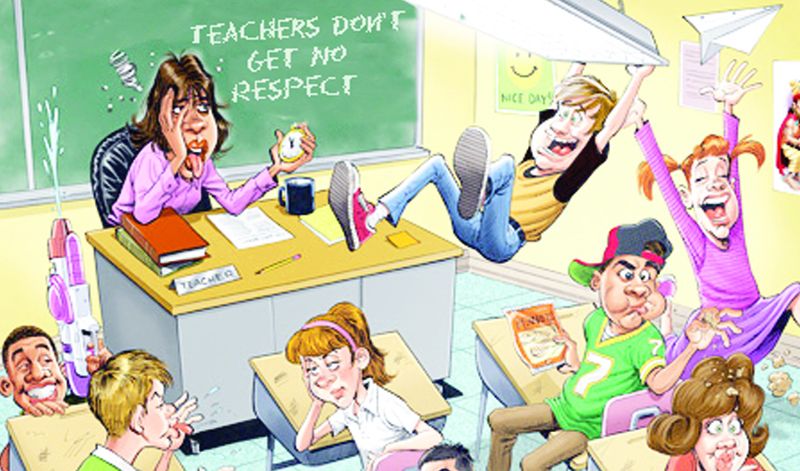
The teacher has traditionally been regarded as the guiding force in a student’s life, a mentor who shapes not only academic abilities but also character, discipline and values. However, in recent years, maintaining respect and discipline in classrooms has become an increasingly challenging task. Instances of disrespectful behaviour, arguments, lack of cooperation and disregard for teachers’ instructions are emerging as serious concerns for educational institutions.
One cannot overlook the changing social environment that influences students’ attitudes. The growing impact of social media, excessive screen time and peer pressure has significantly altered the way children communicate and respond to authority. In many cases, students tend to imitate aggressive language and casual behaviour they observe online, sometimes carrying these attitudes into the classroom.
The findings of the NCERT Teachers’ Mental Well-being Survey 2024 are particularly revealing. Nearly 45% of teachers identified managing student behaviour as a major teaching-learning challenge. This indicates that classroom discipline is not merely an individual teacher’s concern but an issue that deserves attention at the institutional and policy levels.
Another important factor is the changing family environment. Busy schedules, limited parent-child interaction and inconsistent discipline at home may affect a child’s understanding of responsibility and mutual respect. When values such as patience, empathy and accountability are not reinforced at home, schools often find themselves struggling to address behavioural challenges.
The problem is not restricted to teacher-student interactions alone. The PARAKH Rashtriya Sarvekshan 2024, conducted under NCERT, highlights some concerning aspects of school behaviour. According to its national report, 32% of students reported being teased by their classmates, while 25% experienced exclusion from group activities. Furthermore, 22% reported being threatened by fellow students. These figures underline the urgent need to promote empathy, peer sensitivity and responsible conduct within schools.
The increasing academic pressure also contributes to the problem. Students frequently experience stress due to examinations, competition and expectations. When such pressure is not managed effectively, frustration may appear in the form of classroom disturbances, arguments or unwillingness to follow instructions. The growing dependence on instant gratification and digital entertainment may also make it difficult for some students to develop patience and sustained attention.
Interestingly, the issue has also been highlighted internationally. The OECD’s Teaching and Learning International Survey (TALIS) 2024 found that 45% of teachers reported maintaining classroom discipline as a source of stress. The proportion increased to 55% among novice teachers. This suggests that classroom management remains a significant professional challenge even in well-established education systems.
At the same time, the teacher-student relationship is undergoing a transformation. A lack of meaningful communication, misunderstandings and unrealistic expectations on both sides can create emotional distance. Traditional teaching approaches may not always connect with the needs of today’s learners, making it essential for educators to adopt interactive, student-centred and empathetic methods.
However, discipline should never be confused with fear or punishment. A healthy classroom is built on mutual respect, understanding and clearly defined boundaries. Teachers must encourage open communication, recognise individual differences and create an atmosphere where students feel safe, valued and responsible for their actions.
Parents, too, have an equally important role to play. Respect for teachers must begin at home. Children learn through observation, and the manner in which adults speak about educators often shapes their own attitudes towards them. Schools and families must work together to ensure consistency in values and expectations. Educational institutions must also establish clear behavioural guidelines, counselling mechanisms and opportunities for students to develop social and emotional skills.
Ultimately, restoring respect for teachers is not merely the responsibility of educational institutions. It is a collective responsibility shared by parents, students, teachers and society. Teachers deserve dignity, cooperation and recognition for the role they play in shaping future generations.
A society that fails to respect its teachers risks weakening the very foundation on which its future stands. It is time to rebuild the teacher-student relationship through trust, understanding and shared responsibility, because education thrives where respect exists. JAI HIND!