0
BJP has questioned the state’s water-sharing arrangements, while the Congress says the revised policy safeguards Himachal’s financial interests
New Delhi:
The Congress government in Himachal Pradesh has approved a uniform pricing policy for the supply of surplus raw water to neighbouring states, government agencies and eligible industries, fixing the benchmark rate at Rs 100 per 1,000 cubic feet. The earlier rate was Rs 32 per 1,000 cubic feet. The revised rate will be periodically adjusted in accordance with the Wholesale Price Index (WPI).
The decision will apply to existing and future water resources and projects owned by the state, including inter-state multipurpose and water-storage projects. The government has said the policy is intended to establish a uniform mechanism for determining the price of surplus water and ensure financial returns from supplies made outside the state.
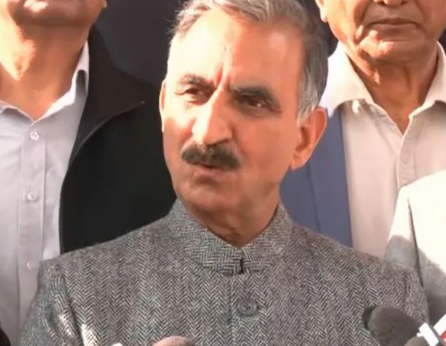
Chief Minister Sukhvinder Singh Sukhu said the state’s water resources had to be recognised for their economic value and that local requirements would receive priority before any external supply was considered. “Water is one of the most important assets of the state, and its economic value must be recognised while entering into any arrangement for supplying surplus water to other states or agencies,” Sukhu said.
The revision represents an increase of more than three times over the earlier benchmark. Linking future revisions to the WPI is intended to account for changes in prices over time and provide a mechanism for adjusting the rate. The policy also establishes a common reference for the state while negotiating the terms of water supply with other states and agencies.
The decision has implications for existing inter-state water-sharing arrangements, particularly projects connected with the Yamuna basin. These include the Kishau Multipurpose Project and the Renuka Ji Dam Project.
Under the Kishau Multipurpose Project, Himachal Pradesh has an allocated share equivalent to 3.154 per cent of the dam’s live storage, amounting to approximately 42 million cubic metres. The state also has an allocated share of Yamuna waters under a memorandum of understanding signed among the Upper Yamuna Basin states.
The agreement envisages three major projects — Lakhwar, Kishau and Renuka Ji dams — for the utilisation of water resources in the basin. The new pricing policy provides a common benchmark for determining the value of surplus water supplied through state-owned projects, subject to the terms of the relevant agreements.
The policy comes amid discussions between the state government and the opposition over Himachal Pradesh’s share and financial interests in inter-state projects. BJP state president Rajeev Bindal had earlier demanded a white paper on the Kishau agreement, raising questions about the state’s water entitlements, irrigation potential and financial implications. He also had accused the Sukhu government of “giving up its water rights to save an annual investment of Rs 135.69 crore”.
For the Congress government, the revised rate is part of its stated position that Himachal Pradesh should receive appropriate financial returns from its natural resources. A Congress spokesperson, requesting anonymity, said the policy would provide a common framework for valuing surplus water while safeguarding the state’s requirements.
“Himachal Pradesh has substantial water resources and the state must receive an appropriate economic return when surplus water is supplied outside its boundaries. The uniform pricing policy is intended to protect the state’s interests while ensuring that the needs of its people, particularly drinking water and irrigation, remain the priority,” he explained.
The government has clarified that water will be supplied to other states only after meeting Himachal Pradesh’s present and future requirements. Drinking water, irrigation, agriculture, environmental protection and developmental needs will remain the priority. Domestic water consumption within the state will not be covered by the new pricing framework.
The financial implications of the policy will depend on the volume of water declared surplus, the demand from neighbouring states and the terms of individual supply agreements. The government has not announced an annual revenue projection from the revised rates.
Sakshi Desai, a researcher on water policies, said the implementation of the pricing mechanism would be important in determining its financial impact and ensuring that the state’s requirements were considered while assessing surplus quantities.
“The real test of this policy will be how the government defines surplus water and translates the benchmark rate into actual revenue. A higher price does not automatically mean higher earnings. The state will need transparent measurement, clear inter-state agreements and a monitoring mechanism to ensure that its water rights and ecological requirements are protected,” she explained.
Under the policy, the state government will determine the quantity of surplus water available for supply outside Himachal Pradesh and apply the revised rates to the concerned agencies and states. The benchmark rate will be subject to periodic revisions linked to the Wholesale Price Index.
The pricing framework will cover existing and future state-owned water projects. Supplies to neighbouring states, government agencies and eligible industries will be governed by the revised rate, while the state’s drinking water, irrigation, agricultural and other requirements will remain outside the surplus-water allocation.