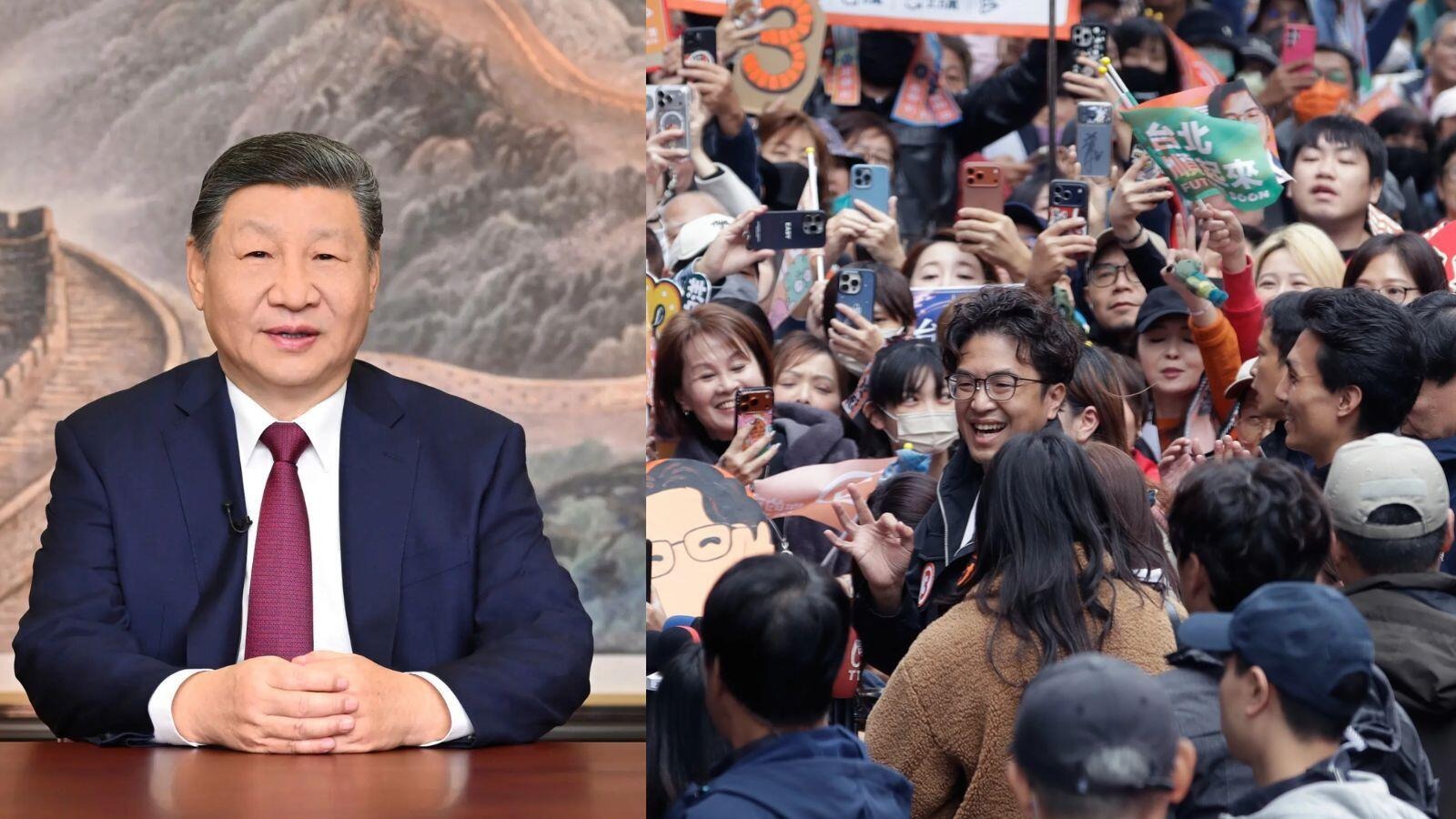
Responding to Taiwan's election results on Sunday, China's Taiwan Affairs Office said it had noted the results, but it would not change the direction of cross-Strait relations. The Chinese statement claimed that Taiwan's mainstream public sentiment is in favor of peace, development, exchange and cooperation. Beijing reiterated that reunification of the motherland is a historical trend that must be fulfilled and no election result can deter this intention. China considers democratically ruled Taiwan an integral part of its territory and has never ruled out the option of using force if necessary. KMT's dominance in Taipei and DPP's regional leap The nine-in-one local elections held on Saturday witnessed an interesting contest between the two big poles of Taiwan's politics. The ruling Democratic Progressive Party, led by President Lai Ching-te, doubled the number of cities and counties it controls, posting its best local performance in a decade. Especially in an important city like Taichung, DPP has strengthened its position by registering victory. On the other hand, in the capital Taipei, the current mayor Chiang Wan-an made a spectacular comeback and reserved this prestigious seat for the opposition party Kuomintang (KMT) and the party captured a total of 11 local governments. Chinese ban on Puma Shen and strategy of military pressure Just before the elections, Beijing had targeted DPP mayoral candidate from Taipei, Puma Shen, who has already been banned by China on charges of separatism. After accepting defeat, Puma Shen addressed the supporters and said that no matter who wins, it is a victory for Taiwan's democracy. Along with political rhetoric, China has also maintained military pressure. On Friday, just before the vote, 33 Chinese military aircraft and 8 warships carried out joint combat patrols around the island, according to Taiwan's Defense Ministry, with several of the planes even crossing the median line. Taiwan government's counterattack and call for 2028 elections Rejecting China's threats, Taiwan's Mainland Affairs Council has advised Beijing to respect Taiwan's democratic system and the people's decision. Taipei made clear that China should initiate pragmatic dialogue with the elected legitimate government without any preconditions and on the principle of equal dignity. President Lai Ching-te also shared a post on Facebook thanking the public for their confidence in the DPP candidates, although he did not directly mention China in his message. Political analysts believe that this strength at the local level will provide a big support to Lai Ching-te's candidature in the 2028 presidential elections, while KMT chairperson Cheng Li-wun has also announced to start preparations for the next general elections from now. Meaning of this development for India and the Indo-Pacific region: The increasing tension in the Taiwan Strait is not limited to China and Taiwan only, but it has a direct impact on the geopolitics and global supply chain of India and the entire Indo-Pacific region. Taiwan is the world's largest semiconductor and advanced chip manufacturing hub, on which India's rapidly growing electronics, artificial intelligence and digital industries also depend. The increase in Chinese military activities around Taiwan and Beijing's aggressive stance raise new concerns about the security of maritime trade routes. India has consistently supported peace, stability and maintenance of status quo in the Indo-Pacific region, so this latest confrontation between Taipei and Beijing is also of great importance for New Delhi's strategic and economic policy makers.