Delhi: Ball-tampering is a controversy in cricket, which is probably one of the oldest controversies. No matter how many efforts have been made to stop it, it is not ending. The case of 'Sandpaper Gate' is of 2018, but even after 8 years its discussion continues. The more we talk about this matter, the more new layers are revealed and new information comes to light. Let us take a look at some such old stories, which were in the news in their time.
Also read: What will be New Zealand's biggest target on the second day against India, Blundell reveals the secret
Mike Atherton (England): This incident is from the 1994 Lord's Test against South Africa, where Mike Atherton was accused of ball-tampering. In the TV footage, he was seen applying mud on the ball. He clarified that he had kept some dust from the used pitch in his pocket, so that his hands and the ball remained dry. Atherton said that he was trying to keep moisture away from the ball and his intention was not to spoil the condition of the ball.
Till date it is not clear what explanation Atherton gave to the match referee Peter Burge, but the referee gave him relief and imposed a fine of only 2,000 pounds.
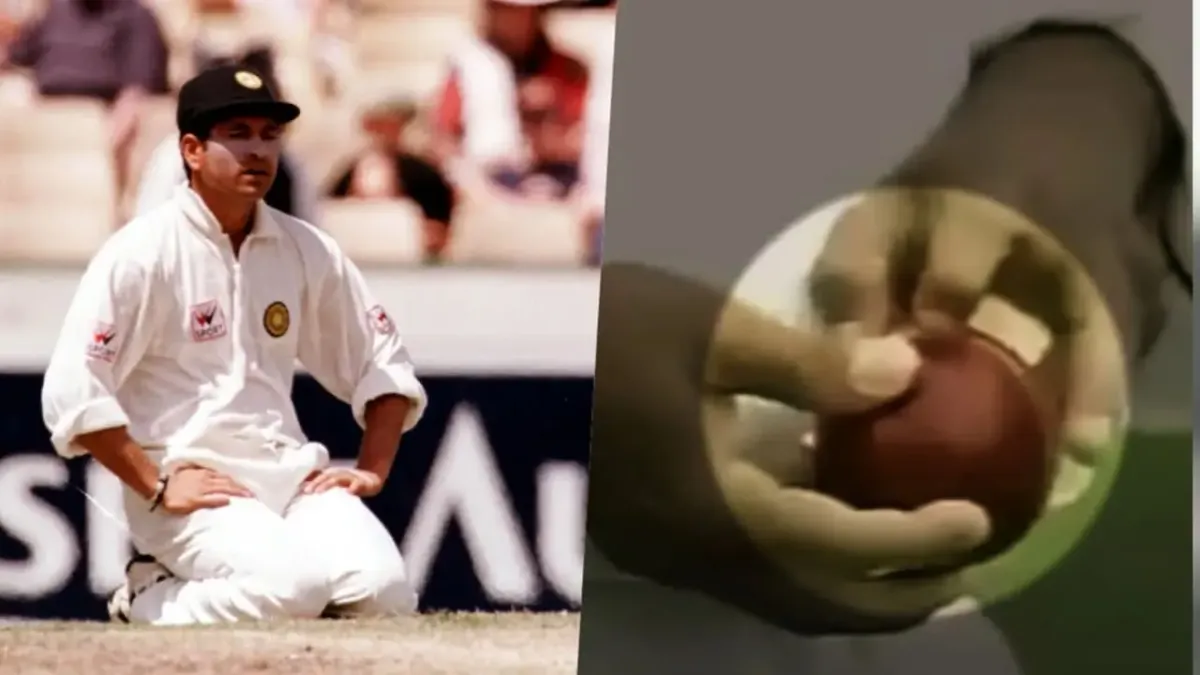
Sachin Tendulkar (India): This case pertains to the Port Elizabeth Test against South Africa. On the basis of TV footage in the second Test of the 2001 series, a legendary player like Sachin Tendulkar was accused of ball-tampering. Match referee Mike Denness imposed a suspended ban of one test match on Sachin.
Actually, in the footage, Tendulkar was seen removing a piece of grass from the ball and this was considered as ball-tampering. Later the ICC admitted that this was a case of cleaning the ball without the umpire's permission. After this the ban imposed on Sachin was lifted.
This case had created a big controversy in India. There was a lot of protest against the allegations against a player like Sachin Tendulkar. In view of the matter, the Indian Board also put pressure and demanded the removal of former England captain Denness as the match referee in the next Test. India had made it clear that if Denness remained the referee, the team would not play the match. The matter became a battle of prestige and ego. Eventually the third Test was played, but it was not given the status of an official Test.
Inzamam-ul-Haq (Pakistan): This incident is from The Oval Test against England in 2006. On the fourth day of the Test, umpires Darrell Hair and Billy Doctrove suddenly stopped play and called for the ball box to change the ball. He did not elaborate, but it was clear that the visiting Pakistan team was suspected of illegally tampering with the condition of the ball.
5 penalty runs were added to England's account and the option of changing the ball was given. After some time, due to bad light, the players came out of the field and this became the T-break. When the time came for the game to start again, Pakistan refused to take the field in protest. Such a case was seen for the first time in the history of Test cricket.
After waiting as per the rules, the umpires declared England the winner and the result of the match was recorded as 'forfit' i.e. Pakistan lost the match.
Captain Inzamam was held responsible for this behaviour, but was later acquitted of ball-tampering by an ICC tribunal. However, he was banned for 4 matches for refusing to play further in the match and tarnishing the image of cricket. Later the result of the test was first recorded as a draw and then as England's victory.
Shahid Afridi (Pakistan): In the 2010 ODI match against Australia in Perth, umpires Paul Reiffel and Ashoka de Silva had taken action against Shahid Afridi. Afridi was the captain of Pakistan at that time and was found guilty of ball-tampering.
Afridi was seen biting the ball with his teeth on TV cameras. The TV umpire saw this incident and informed the umpires present on the field. The ball was changed after talking to Afridi. Pakistan lost that ODI series 5-0.
Initially Afridi clarified that he was smelling the ball, but later he admitted his mistake. He said that he was ashamed of his action and had done it out of excitement. Afridi was banned for 2 T20 International matches.
Also read: Will Rohit Sharma become the captain of Mumbai Indians again? Got a big hint from a picture of MI
Faf du Plessis (South Africa): During the 2016 Test match against Australia in Hobart, South Africa captain Faf du Plessis was caught on camera sucking a mint and then polishing the ball with his saliva. He was found guilty of ball-tampering.
In 2013, during a match against Pakistan, Du Plessis was seen rubbing the ball on the zip of his pants, for which he was fined 50 percent of his match fee. This time Du Plessis was fined the entire match fee and was also given 3 penalty points.