

The war between Russia and Ukraine is over four years old, and it still changes the world politics as not many commentators have anticipated. What many governments used to believe that they would have a brief and decisive military engagement has turned out to be one of the longest and most involved military confrontations ever seen in the European history. The war has changed the geopolitical balance on the continent, sour relationships between the international alliance, interrupted energy markets, and left the world with a tough question of how and when the conflict can finally be stopped.
According to the latest diplomatic events, talks regarding the termination of the war are gaining more and more momentum in the global politics. Earlier this week, reports have had it that a phone conversation between Vladimir Putin and Donald Trump took place wherein possible avenues of de-escalation were discussed. Reports argue that the Russian president offered to take Iranian enriched uranium to Russia as a more widespread geopolitical contingency to stabilize the tensions associated with the current crisis in the Middle East as well as the war in Tehran. Although the proposal itself was apparently dismissed by Trump, the discussion brought to the fore an essential fact, namely, worldwide leaders are relying more on ways to minimize the number of active conflicts that weaken international security.
Of such conflicts, however, the Russia-Ukraine war is the most immediate of them to Europe. As the frontline fighting persists and no clear breakthrough is being made by both parties, governments around the continent are starting to face the fact that the war might go on and on without the necessary serious talks to be made. This is in the context where the Belgium Prime Minister, Bart De Wever has advised the European Union to think of going in a more direct diplomatic outlook.
Addressing the problem, De Wever suggested the European Union to recognize the strategic boundaries of the existing course. Western countries have already given Ukraine a lot of financial and military help since the onset of the war, yet the leader of Belgium hinted that such actions have not been sufficient to compel Moscow to rethink its stand. In his opinion, when the economic pressure and military support fail to make a decisive turn in the course of the conflict, it may be the only way out left, i.e. diplomacy.
As we are not strong enough to threaten Vladimir Putin with the weapons delivered to Ukraine, there is no possibility to choke him economically without the US assistance, thus there is just one way to make a deal, De Wever stated. His words highlight an increasing argument in Europe as to whether it is time that the EU become more involved in brokering a cessation of the war.
Another key point that De Wever made is that the United States had a leading role in the direction in which the conflict went. The Belgian prime minister stated that it would take 100 percent of the U.S. support to bring Russia to a stage where it would genuinely consider the termination of the war. In the absence of this kind of concerted support, he postulated, Europe could hardly have much useful leverage over Moscow.
Simultaneously, De Wever also voiced his apprehensions regarding the course of the U.S. policy, and in his view, the path that Washington pursues can not always coincide with the European interests. He remarked that the US seems to be in agreement with the Russian side more than the European policymakers anticipated, they feared that negotiations would yield an agreement that will not necessarily represent the interest of the European states or Ukraine, as such.
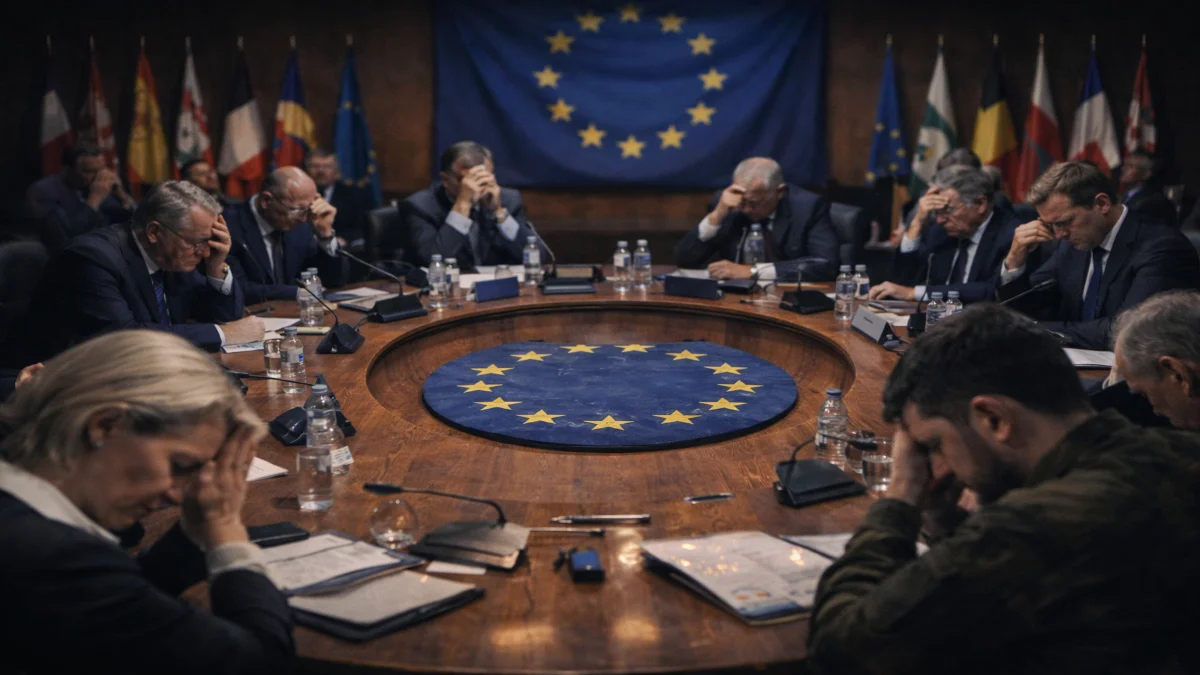
In the case of De Wever, the danger is that he will not be involved in the negotiation process at all. He cautioned that without a specific sign of the EU member states to engage in direct negotiations with Moscow, Europe would be relegated to the periphery as other world powers determine the fate of the war.
In saying this, he was not at the bargaining table where the Americans would urge Ukraine to accept a deal, since they were not mandated to go and negotiate in Moscow. And now I can already tell that it is not going to be a good match of us.
He is alleged to have made the remarks at a time when the European leaders are already in discussions on how to align their diplomatic stand on Russia. The High Representative of Foreign Affairs and Security Policy of the European Union Kaja Kallas has recently said that the bloc has to agree first on what it expects of Moscow and only then they can enter into a direct dialogue with it.
Kallas notes that it would be a wise move to get Russia without European unity to dilute the power of the block. She said that the EU needs to establish its strategic goals: territorial patterns, security assurances, and economical conditions, and only after that it can commence any form of formal negotiations with the Kremlin.
These debates indicate an overall change of the way the policymakers worldwide are thinking about the war. During the initial period of the war, numerous governments were concerned mostly with assisting Ukraine to maintain the war and economic sanctions imposed on Russia. Although such actions raised the war price dramatically in Moscow, they have not delivered a major political impact so far.
The military conflict has dragged on and the humanitarian and economic impacts of the conflict are mounting. Thousands of lives have been lost and millions displaced and even cities destroyed. Meanwhile, the war has upset the world food supply, transformed the energy markets, and aggravated the conflict between the great powers on the geopolitical level.
To most observers, these realities are provoking the feeling that the duty to solve the war is not the responsibility of the immediate sides. Although the main players in the battlefield are still Ukraine and Russia, the effects of the war have turned into international matters. Since increasing energy prices in Europe up to shortages of grain in some regions of Africa and the Middle East, the war has had effects that are experienced far beyond the Eastern Europe.
This increased awareness is causing new demands of diplomacy. It will need painful compromises to bring an end of the war and any settlement that would be negotiated may be criticized by various quarters. However, as it is claimed by numerous observers, the international community would pay even larger bills should the confrontation be prolonged.
The difficulty is in finding an avenue to be followed in a way that would be acceptable by both parties during negotiations. In the case of Ukraine, the sovereignty, territorial integrity, and long-term security issues should be discussed. In the case of Russia, the war has been so much entangled in its internal politics and strategic efforts on the part of the state regarding NATO and western power in the area.
This will mean that diplomacy will have to be well coordinated among the world powers, which comprise the United States, the European Union, and other influential entities. The absence of a single approach would result in the fragmentation or ineffectiveness of the negotiations.
The words by the prime minister of Belgium portray the way in which the discussion about the war is slowly shifting. What started in a war that was mainly characterized by military tactics is slowly turning out to be a matter of diplomacy, political tradeoff and global accountability.
It is still unclear whether these efforts will eventually result in the war being concluded. However, as the war seems to drag on and on after the timeframes previously estimated, one thing is slowly becoming harder not to conclude: the longer the conflict, the more the world leaders are pressed to devise a means to end it.

Comments are closed.