

Dr Ha Hai Nam prescribed targeted therapy, the only possibility to extend her life. But it cost VND100 million ($4,000) a month and was not covered by health insurance, so she refused the treatment.
She told him before leaving: “Every extra day means tens of millions of dong. I’m exhausted and can’t go on.”
Her marriage had fallen apart after her son died, and she lives alone. “Her prognosis was very poor, and the financial burden crushed her will to continue treatment,” Nam said.
At Bach Mai Hospital, Dr Pham Cam Phuong met another patient, a 38-year-old man who had lung cancer that had spread to his bones and liver. Immunotherapy could help him live for years more, but would cost VND50-70 million ($1,900-2,660) a month. Long-term treatment would require billions of dong, far beyond what his family could afford, and so they declined treatment.
“He told me the disease felt like a curse,” Phuong said. “Patients don’t give up because they don’t want to live. They give up because they don’t have enough money.”
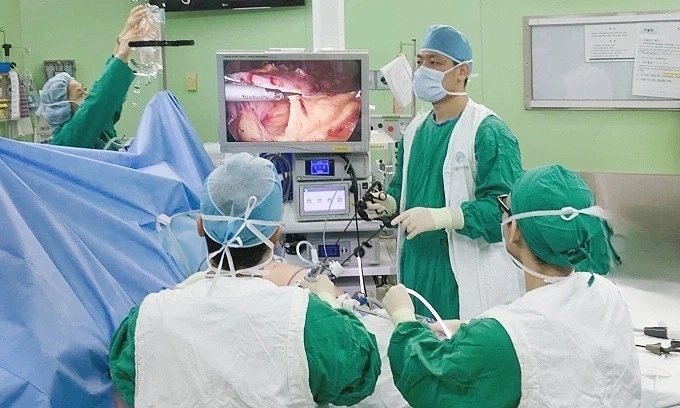
Nam and the medical crew during an operation. Photo courtesy of Nam |
Vietnam records 180,000 new cancer cases each year. On average, treatment costs more than VND176 million ($6,685) per year, while health insurance covers only around VND52 million.
The World Health Organization recommends that out-of-pocket health spending should not exceed 30–40% to avoid “financial catastrophe.” Vietnam targets reducing this rate to below 30% by 2030, but remains far from that goal.
One major problem is that modern treatments develop faster than insurance policies can update. New targeted and immunotherapy drugs can extend life by years, but many are not covered.
Doctors say many patients stop treatment because they do not want to spend their family’s last savings. “Whether to continue or stop becomes one of the hardest decisions we face with patients,” one said.
Immunotherapy is usually considered only after standard treatments fail. Choosing the most expensive option too early can leave patients financially exhausted before completing treatment.
There is some positive news. In 2024 Vietnam approved a more affordable immunotherapy drug containing pembrolizumab priced at VND18 million ($680) per vial, compared to the original brand-name version’s VND60 million ($2,300). Authorities are also reviewing the insurance drug list to make updates.
But doctors say the most important factor is early detection. Many cancers found at an early stage can be cured with surgery alone without the need for costly long-term treatment. Early-stage lung, breast or colorectal cancer often requires simpler, more affordable care, and patients can remain cancer-free for five years or longer.
Doctors also lament that some patients delay treatment because they fear the high costs and turn to herbal or traditional remedies instead. These are often unproven and can cause patients to miss the best window for effective treatment, they say.
The 32-year-old woman who left the hospital did not break down, and only told the doctor she hoped to live until the end of the year for her son’s annual memorial ceremony. “That was all she felt strong enough to wish for,” Nam said.
The burden of cancer affects entire families. A 2017 study of nearly 2,000 patients found that families with a cancer patient were 2.3 times more likely to fall into poverty. After one year, 22% faced severe financial hardship, with 34% unable to afford medicine and 15% not even able to afford food, and nearly 80% having to borrow money to continue treatment.
Comments are closed.