

A gut-friendly dinner doesn’t have to be complicated—this gastroenterologist’s go-to meal is packed with fiber, probiotics and nutrients to support digestion.
Reviewed by Dietitian Kelly Plowe, M.S., RD
Key Points
- A balanced grain bowl with lentils, quinoa, veggies, and yogurt-tahini sauce supports gut health.
- Variety in grains, legumes, veggies, and fermented foods fosters a resilient gut microbiome.
- Fiber, fermented foods, and healthy fats work together to nourish beneficial gut bacteria.
Gut health plays a role in more than just digestion—it’s been linked to immune function, mood and metabolic health. Supporting it doesn’t require a complete diet overhaul—sometimes, it’s as simple as what you put on your plate at dinner. We asked gastroenterologist Pranav Periyalwar, M.D., FACG, FASGEto share his go-to evening meal for gut health that’s both nourishing and easy to customize: a lentil and roasted vegetable grain bowl with quinoa and yogurt-tahini sauce.
This balanced bowl combines fiber-rich plants, fermented dairy and healthy fats to deliver a range of nutrients that support a diverse gut microbiome—all without complicated prep.
The Lentil & Roasted Vegetable Grain Bowl with Quinoa & Yogurt-Tahini Sauce
This hearty grain bowl combines tender lentils, fluffy quinoa and caramelized roasted vegetables like broccoli, carrots, red onion and sweet potato. Peppery greens such as arugula or spinach add freshness, while a creamy yogurt-tahini sauce ties everything together with a tangy, nutty flavor. A drizzle of extra-virgin olive oil and optional toppings like pumpkin seeds or walnuts add richness and crunch.
“As a gastroenterologist, I like meals that combine diverse plant fibers, resistant starch, polyphenols and fermented foods in one plate,” says Periyalwar. “This bowl checks all those boxes.”
It’s also highly flexible. You can prep components ahead of time or swap in different grains, vegetables or proteins depending on what you have in your kitchen. “Another reason I like this meal is that it is easy to scale and rotate ingredients, which helps increase dietary diversity, a key driver of a resilient microbiome,” he adds.
Meals like this are very similar to many Mediterranean-style grain bowls, which have been repeatedly associated with higher microbial diversity and better metabolic health in nutrition and gastroenterology research, says Periyalwar.
How This Bowl Supports Gut Health
Plant Proteins and Whole Grains Feed Beneficial Gut Bacteria
Lentils and quinoa form the base of this bowl, providing a combination of soluble fiber and resistant starch. These nutrients serve as fuel for beneficial gut bacteria, which ferment them into short-chain fatty acids like butyrate—compounds that help support the cells lining the colon and play a role in maintaining gut and immune health.
In addition to their fiber content, both lentils and quinoa provide plant-based protein, which makes the meal more satisfying and balanced. Periyalwar also notes that quinoa is easy for most people to digest.
Fiber-Rich Vegetables Support Microbiome Diversity
Vegetables like broccoli, sweet potatoes and leafy greens provide more fiber and plant compounds that help support gut health. Including a variety of vegetables in your diet can improve the diversity of your gut microflora, which is essential for overall health.
“Broccoli and other cruciferous vegetables contain glucosinolates, which support microbial metabolism and may help maintain mucosal health,” says Periyalwar. In simple terms, they help gut bacteria function more effectively and support the gut lining, which is important for digestion and overall health. You’ll also get polyphenols from leafy greens like spinach and arugula—plant compounds that may further help support beneficial gut bacteria.
Yogurt Adds Beneficial Live Cultures
Fermented foods like dairy contain live and active cultures, such as Lactobacillus and Bifidobacteriumwhich can help support digestion and temporarily add beneficial bacteria to the gut.
Paired with fiber-rich foods like lentils, quinoa and vegetables, these live cultures may be even more effective. Fiber helps feed existing gut bacteria, while fermented foods introduce additional microbes—working together to support a balanced gut environment.
Olive Oil Adds Gut-Friendly Plant Compounds
Extra-virgin olive oil helps round out this bowl, adding flavor along with another source of antioxidant polyphenols. These compounds interact with gut bacteria and have been linked to beneficial changes in both the oral and gut microbiome. Beyond gut health, olive oil is a staple of the Mediterranean diet and has been associated with heart health benefits, including improved cholesterol levels and lower inflammation.
Plant-Based Grain Bowls to Try
Periyalwar’s grain bowl provides the basis of what to look for in a gut-healthy meal: whole grains, vegetables, healthy fats and fermented foods. Here are some more gut-friendly bowl recipes to try:
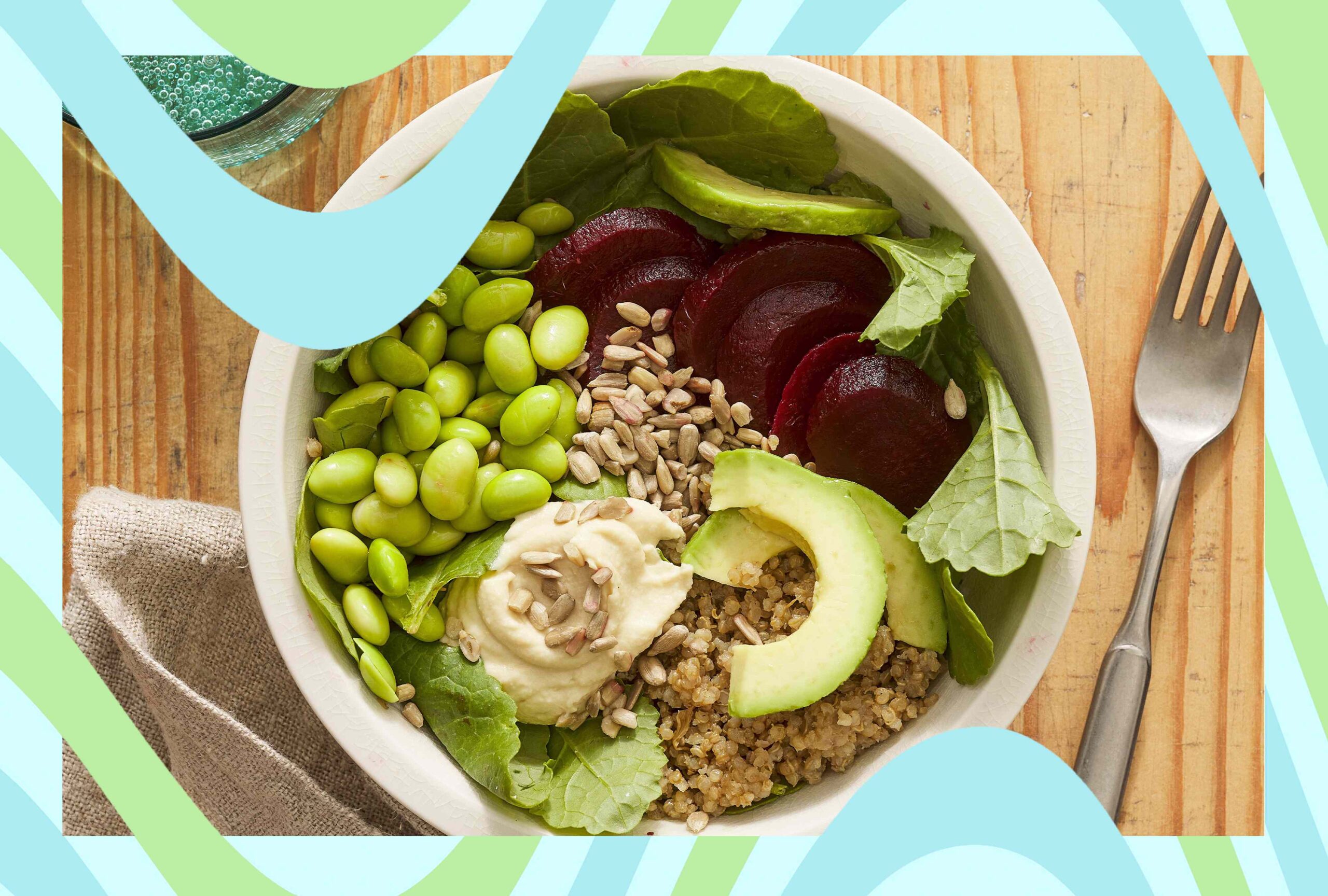
- Vegan Superfood Grain Bowls: A nutrient-packed grain bowl that comes together in 15 minutes with the help of a few convenience-food shortcuts like prewashed baby kale, microwaveable quinoa and precooked beets.
- Bibimbap-Inspired Veggie Bowls: This bowl packs more than seven different plant-based foods to up your gut health.
- Green Goddess Chickpea Bowl: A veggie-packed bowl topped with a Greek-style yogurt-based dressing makes this gut-friendly bowl.
Gut-Healthy Swaps You Can Make
“From a gut health perspective, the most important principle is variety—rotating grains, legumes, vegetables and fermented foods,” says Periyalwar. To mix things up, try these simple swaps:
- Switch up your grains: Instead of quinoa, try farro, barley, brown rice or buckwheat.
- Change the protein: Swap lentils for chickpeas, black beans or cannellini beans.
- Add a fermented boost: Try a kefir-based dressing, or top your bowl with sauerkraut or kimchi. You can also use a miso-tahini sauce.
- Rotate your vegetables: Use Brussels sprouts, cauliflower, eggplant or mushrooms depending on what’s in season.
Our Expert Take
When it comes to gut health, consistency and variety matter more than any single ingredient. Building meals that include a mix of whole grains, legumes, vegetables and fermented foods can help support a healthy gut over time—without requiring a complicated recipe or routine.
This gut-healthy grain bowl makes it easy. It’s flexible, satisfying and simple to adapt based on what you have on hand, making it a realistic option for weeknight dinners.

Comments are closed.