
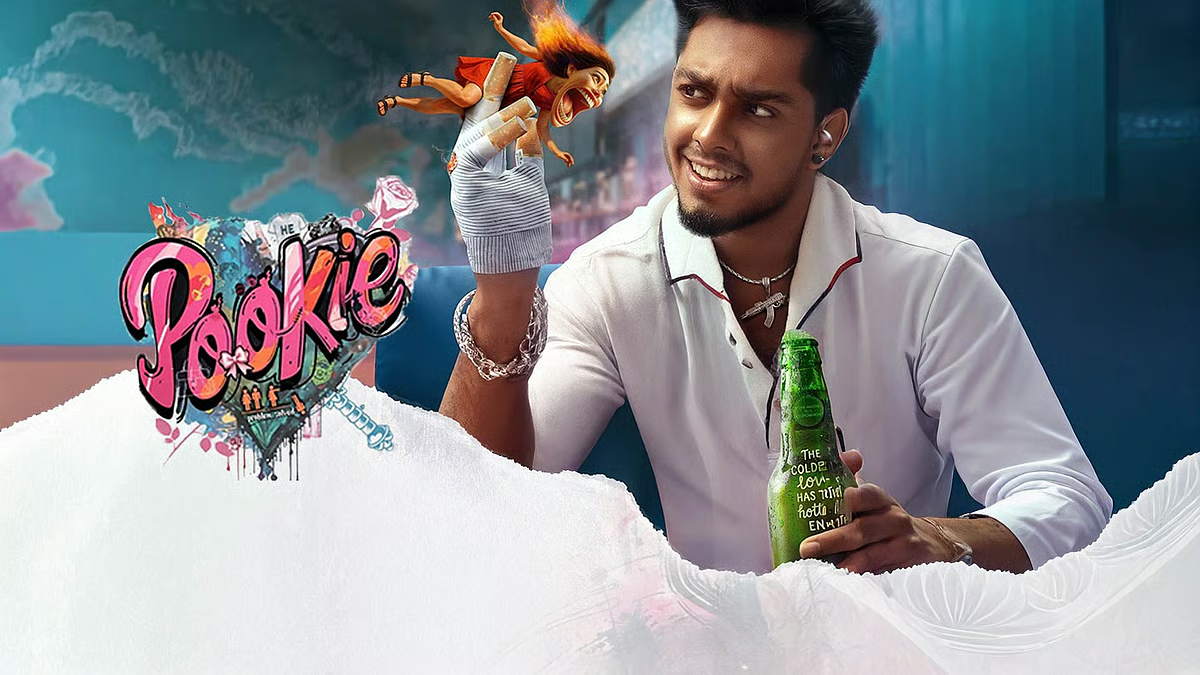

The first half deals with how they cope with the breakup. Terms such as ‘stress eating’, ‘stress shopping’, and ‘binge-watching’ are tossed around to signal a new-gen love story, but without any real sincerity. The coping efforts of the leads neither move us emotionally nor are they laughter landmines. Trending meme templates — from dog-POV dubbing reels to caricatured Instagram influencers — only make the proceedings cornier. Aazhi gets constantly infantilised for no joy. She ends up with a phoney guru in her pursuit of spirituality to overcome the heartbreak, and she realises during her stress eating episode that her ex was right about the menu choice and that she cannot even choose the right kind of food. It does not get more on-the-nose than Kailash insisting that being under her friend’s ‘control’ is undesirable, while being under his is somehow advisable. Meanwhile, Kailash is conveniently portrayed as doing everything right, from his coping mechanisms to his decision to hit the gym and reinvent himself as a fitness enthusiast. What the makers believed to be an interval ‘bang’ too falls flat.
In a rom-com, which has no grand world-saving plots, creating personal and warm characters becomes essential. Shockingly, Kailash and Aazhi are not even one-note. The two are so plastic that they do, eat, watch and buy whatever is trending and fashionable with zero individual idiosyncrasy. The incidents that occur to them, too, aren’t dramatic enough to spur the artificial characters into doing something worth watching. Kailash’s father (Pandiarajan) is insulted by a relative, and only then does he realise that they don’t have their own house. A moment that should have awakened a deeper sense of responsibility in Kailash instead dissolves into a perfunctory gesture, with him booking a flat almost immediately. A ‘flat’ resolution, if you would. The barrage of laboured jokes and Vijay Antony’s jarring songs make Pookie an even tougher watch.
Leaving too much to our guess is not the purpose behind ridding elaborate flashbacks. But Ganesh Chandra has mistaken open-endedness for lazy writing, as his character designs are shy of even being termed as skeletal. We care little about whether Kailash and Aazhi reconcile, because we scarcely know them in the first place. What led to their breakup, what they learnt from it, how they changed for one another, and what they were willing to relinquish for love — these are the elements that make a rom-com absorbing. Pookie mistakes cultural referencing for cultural understanding. By reducing Gen-Z love to buzzwords, the film not only misreads its subject but also robs its characters of interiority. When a romance feels less real than the trends it references, the problem is not generational love — it is unimaginative storytelling.

Comments are closed.